Author: JobsReach Team

  • Job Market in the Netherlands 2024: Key Trends, Opportunities, and Salaries

    Highlights: Trends in the Netherlands Job Market

    • The Netherlands currently has 400,000 job vacancies across various sectors.
    • Jobs in the financial sector in the Netherlands offer salaries around €72,000.
    • As a gateway to Europe, the Netherlands is one of the top countries for employment and business.
    • There are over 120,000 job vacancies in the healthcare sector.
    • The Netherlands is a land of opportunity for professionals, offering high-paying jobs to highly skilled workers.

    *Are you looking for jobs in Netherlands? Find the right one with JobsReach – Job search platform

    Netherlands Job Market 2024-2025

    The Netherlands job market in 2024 is highly resilient, maintaining steady growth despite economic uncertainties. The country’s GDP, currently at 1 trillion euros, is projected to increase by 4.62% over the next decade. High-paying positions are available in sectors such as Sales and Marketing, Finance, Human Resources, Healthcare, and Academia.

    International students with the right skills and experience significantly enhance the Netherlands’ job market, with about 22,000 joining the workforce in 2023. Migrant workers from countries like Germany, Italy, and India are drawn to the Netherlands for its high-paying jobs and flexible working conditions. Many enter through the highly skilled migrant visa, which companies utilize to recruit top-tier professionals. The Netherlands is renowned for its welcoming stance towards international workers, valuing and recognizing their talents and contributions.

    Top Cities in the Netherlands

    Amsterdam – The capital city known for its historic canals, vibrant cultural scene, and major financial hub.

    Rotterdam – Famous for its modern architecture, bustling port, and dynamic nightlife.

    The Hague – The seat of the Dutch government and home to numerous international organizations and embassies.

    Utrecht – Known for its medieval old town, beautiful canals, and a strong educational sector.

    Eindhoven – A technology and design hub, often referred to as the “Silicon Valley” of the Netherlands.

    Maastricht – Rich in history with picturesque streets, it’s a center for European politics and education.

    Groningen – A lively university city with a youthful population and vibrant cultural offerings.

    Almere – Known for its contemporary architecture and extensive green spaces

    Leiden – Renowned for its prestigious university and charming, historic city center.

    Nijmegen – One of the oldest cities in the Netherlands, known for its historical sites and lively festivals.

    Haarlem – A picturesque city with historic buildings, museums, and close proximity to Amsterdam.

    Trends in the Netherlands Job Market for 2024

    Here are the key job market trends in the Netherlands for 2024:

    • Employers are offering flexible contracts to boost productivity.
    • The Netherlands aims to bridge the gap between permanent and flexible employment to maintain balance.
    • There are 500,000 job vacancies, driven by the growth of start-ups in the country.
    • Many companies prefer hiring migrant workers due to the high volume of applications from this group.
    • As an economic powerhouse with a growing GDP, the Netherlands continues to have substantial job opportunities.
    • The Netherlands is known for its attractive housing benefits, with low rent costs and additional allowances.

    In-Demand Skills in the Netherlands

    Here is a list of skills that are highly sought after in the Netherlands:

    • Technical skills
    • Problem-solving abilities
    • Effective communication
    • Conflict resolution skills
    • Soft skills

    You can explore the most in-demand jobs in the Netherlands.

    In-Demand Jobs and Average Salaries in the Netherlands

    The following table provides a list of in-demand jobs along with their average salaries.

    The top five jobs in the Netherlands are as follows:

    IT Sector Jobs in the Netherlands

    • Job Openings: The Netherlands has 37,000 job vacancies in the IT sector, highlighting a strong demand for tech talent.
    • Specializations: There is an urgent need for technology specialists, particularly those with expertise in automation and advanced technologies.
    • Market Size: The IT sector in the Netherlands has a substantial market share, reported at USD 46 billion.
    • Opportunities: The sector offers diverse career paths, including roles in software development, cybersecurity, data analysis, and IT infrastructure management.
    • Growth: The IT industry continues to expand, driven by technological advancements and increasing digitalization across various sectors.

    *Are you looking for Information Technology sector jobs in Netherlands?

    Fintech Jobs in the Netherlands

    • The Netherlands is leading in technological advancements, leading to 89,000 job vacancies in the Fintech sector.
    • Professionals with expertise in AI-driven automated accounting are particularly sought after and can command high salaries.
    • There is a strong demand for financial analysts in the country.
    • Experienced accounting professionals can expect average salaries ranging from €70,000 to €72,000.
    • Investment in the stock market has grown significantly from approximately USD 9 billion in 2010 to USD 256 billion in 2024.
    • Interest in cryptocurrencies like Ethereum and Bitcoin has also surged, with investments reaching USD 200 billion in 2023.

    Engineering Jobs in the Netherlands

    • Job Openings: The Netherlands has a substantial number of engineering job vacancies, reflecting strong demand in various sectors.
    • Average Salary: Engineers in the Netherlands earn between €48,000 and €50,000 annually, depending on experience and specialization.
    • Talent Needs: There is an ongoing need for skilled engineers from around the world to address gaps in expertise and labor.
    • Market Share: The engineering sector contributes significantly to the Dutch economy, with a market share of USD 13.69 billion.
    • Opportunities: The sector offers diverse opportunities across fields such as civil, mechanical, electrical, and software engineering, driven by innovation and infrastructure development.

    *Are you looking for Engineering job in Netherlands?

    Aviation Jobs in the Netherlands

    Aviation jobs in the Netherlands span various sectors, including airlines, airports, aircraft maintenance, and aerospace engineering. Key roles include:

    • Pilots & Flight Attendants: Employed by airlines like KLM and Transavia.
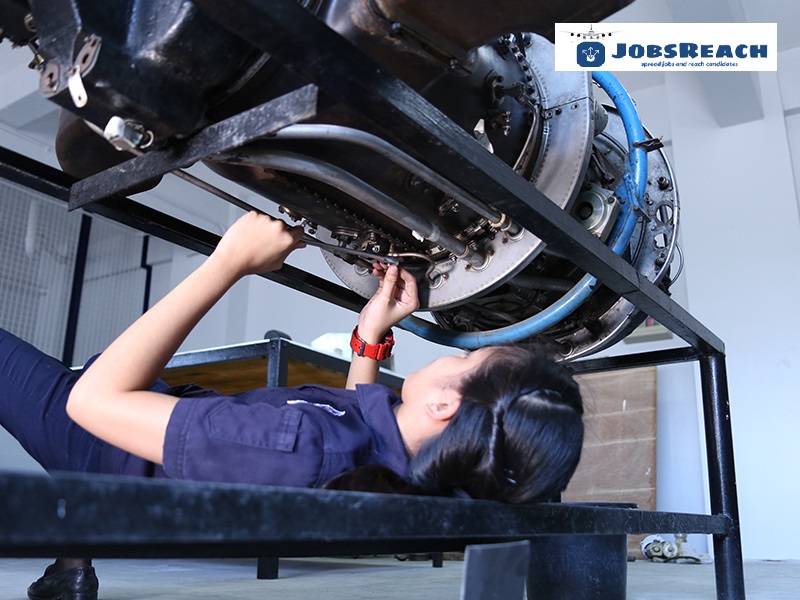
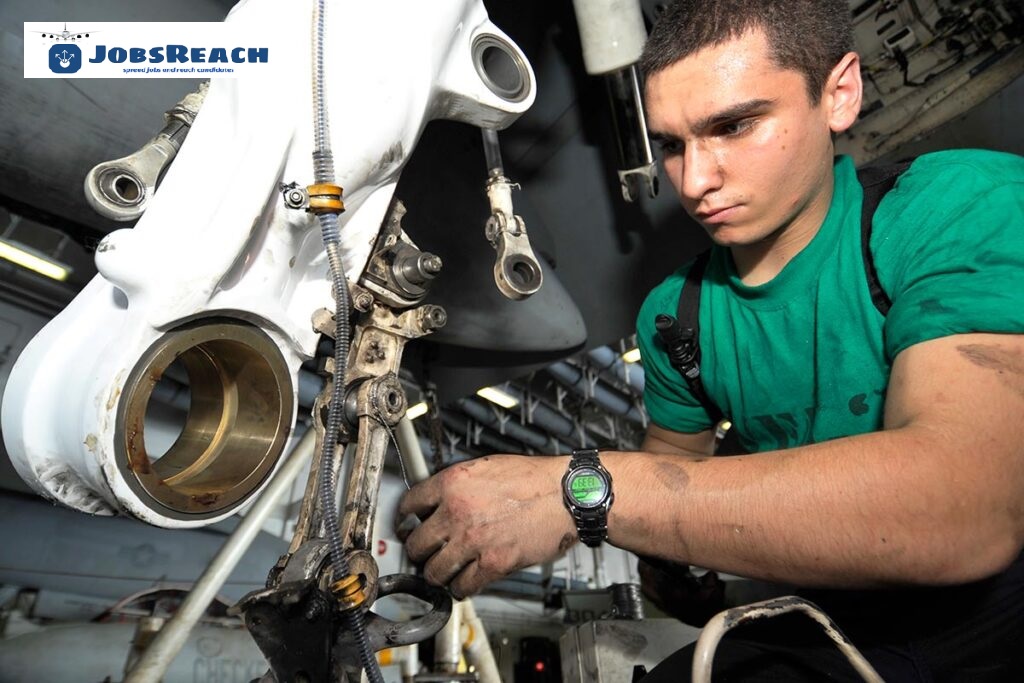
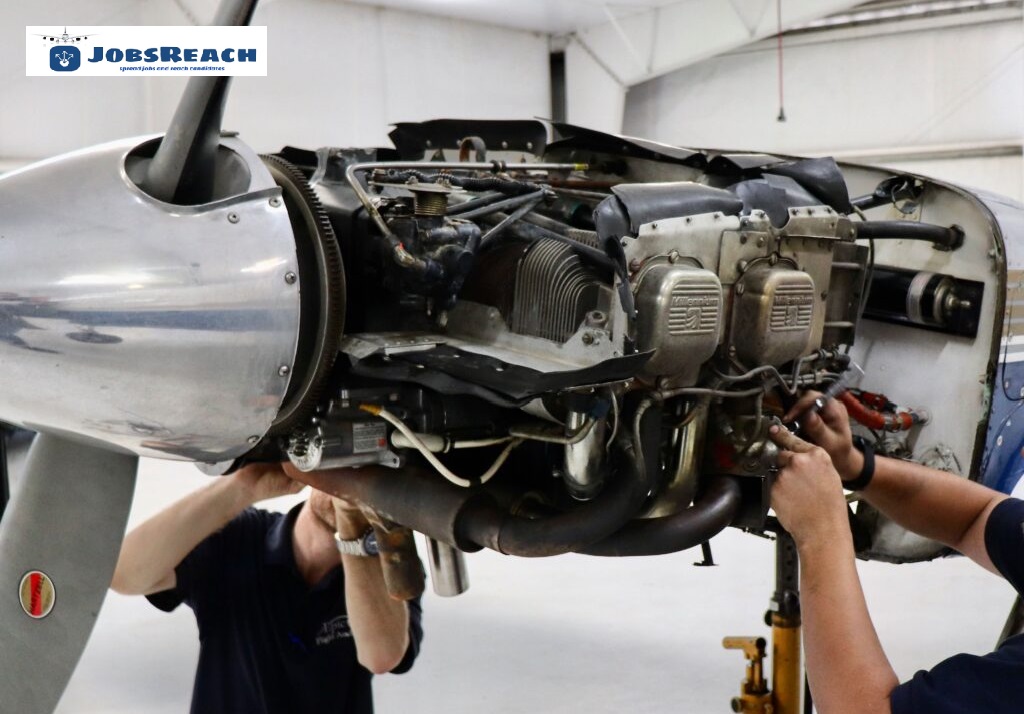
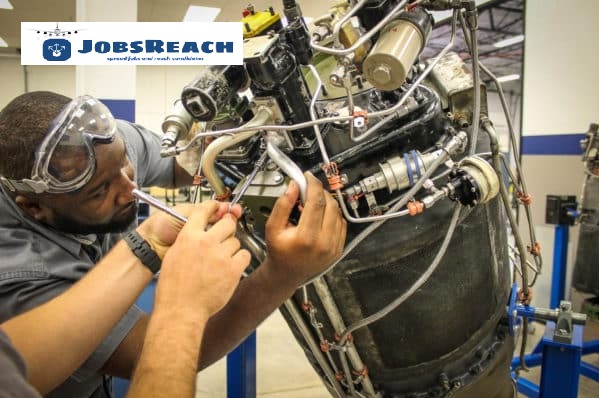
    • Aircraft Technicians & Engineers: Focused on maintenance and development.
    • Air Traffic Controllers & Ground Crew: Working at airports like Schiphol.
    • Logistics & Cargo Handlers: Managing air freight operations.
    • Flight Instructors & Aviation Trainers: Educating future aviation professionals.

    *Are you looking for Aviation jobs in Netherlands?

    Healthcare Jobs in the Netherlands

    • The healthcare sector has a significant number of job vacancies, reflecting high demand.
    • Professionals in healthcare roles are needed to address various medical and support needs.
    • Average salaries in healthcare vary depending on the role and experience.
    • The sector is actively recruiting from both domestic and international talent pools.
    • The Netherlands offers a strong healthcare infrastructure and supportive working conditions for medical professionals.

    *Are you looking for Healthcare jobs in Netherlands?

    Logistics Jobs in the Netherlands

    • The logistics sector in the Netherlands is expanding, with numerous job vacancies available.
    • Roles in logistics cover a wide range of functions, including supply chain management, warehousing, and transportation.
    • The average salary in logistics varies by position and experience level.
    • The Netherlands is a key logistics hub in Europe, known for its advanced infrastructure and strategic location.
    • The sector actively seeks skilled professionals to manage and optimize supply chain operations.

    Benefits of Working in the Netherlands

    • High Quality of Life: The Netherlands offers a high standard of living with excellent healthcare, education, and infrastructure.
    • Competitive Salaries: The country provides attractive salaries and benefits across various sectors.
    • Work-Life Balance: Dutch work culture emphasizes a good work-life balance, with reasonable working hours and ample vacation time.
    • Strong Job Market: There are numerous job opportunities across diverse industries, including technology, finance, healthcare, and engineering.
    • Social Security: Employees benefit from robust social security systems, including health insurance and pension schemes.
    • International Environment: The Netherlands is highly international, with many English-speaking workplaces and a welcoming attitude towards expatriates.
    • High Quality of Work Environment: Modern offices, innovative workspaces, and a supportive work culture contribute to a positive work environment.
    • Cultural Richness: The country is known for its rich cultural heritage, vibrant cities, and diverse cultural experiences.
    • Excellent Transportation: The Netherlands boasts an efficient public transportation system and well-maintained roads, making commuting convenient.

    Many employees find they can focus better and complete tasks more efficiently when working remotely. Explore Remote Work Statistics & Trends In 2024.

    Essential Strategies for Navigating the Netherlands Job Market

    1. Research the Industry: Gain a clear understanding of the demand for your skills and identify key sectors that are actively hiring. Stay informed about industry trends and salary benchmarks.
    2. Network Actively: Build and leverage professional connections through networking events, industry meetups, and platforms like LinkedIn. Networking can lead to valuable job opportunities and insights.
    3. Customize Application Materials: Tailor your CV and cover letter to meet Dutch job market expectations and the specific requirements of each position you apply for.
    4. Acquire Relevant Experience: Ensure you have the necessary experience and qualifications that match the demands of the Dutch job market, including any relevant certifications or local language skills.
    5. Use Job Portals and Recruiters: Explore job opportunities through Dutch job boards and recruitment agencies. Websites such as JobsReach, Indeed.nl, LinkedIn and Glassdoor.nl can be useful for finding openings.
    6. Understand Work Authorization: For international candidates, be knowledgeable about visa and work permit requirements. The highly skilled migrant visa is often used by non-EU professionals.
    7. Prepare for Interviews: Familiarize yourself with common Dutch interview practices, such as competency-based questions. Research the company and be ready to demonstrate how your skills fit the role.
    8. Learn Dutch: While many Dutch professionals speak English, learning Dutch can improve your job prospects and help with integration into both the workplace and local community.
    9. Consider Relocation Assistance: If relocating from abroad, use relocation services to assist with finding housing, handling administrative tasks, and settling into the Netherlands.
    10. Stay Updated: Keep abreast of changes in employment laws, job market conditions, and emerging trends to effectively adapt your job search strategy.

    How can JobsReach help you?

    JobsReach helps you to find your dream job in a short time

    • Distribute job vacancies to targeted candidates
    • Unlimited opportunities
    • Personalized job Notifications
    • Write personalized motivation letter with JobsReach AI
    • Update profile and auto generate resume in pdf format
    • Share Jobs to Friends
    • Ask recommendations from colleagues
    • Receive feedback for the jobs applied
    • Many more features

    You can explore the top job sites in the Netherlands to find the best talent in 2024.

  • 7 Tips for Securing Quality Employment as an Aircraft Mechanic

    Are you searching for a job as an Aircraft Mechanic? Finding quality employment in this specialized field can be challenging, but there are several strategies that can help you secure the best position. In this blog post, we’ll share 7 tips for finding quality employment as an Aircraft Mechanic. Read on to discover how you can enhance your chances of landing the job you want in this competitive market. With these tips and strategies, you’ll be on your way to a rewarding and lucrative career as an Aircraft Mechanic!

    You can also explore the Essential Information to Know Before Becoming an Aircraft Mechanic.

    1.Keep Up with Industry Developments

    To secure quality employment as an aircraft mechanic, it’s crucial to stay updated on the latest industry knowledge. Research relevant aviation databases and organizations to stay informed about aviation regulations, safety standards, and technological advancements.

    Mechanics must also keep up with certification requirements to legally practice their trade. Gaining specialized certifications for specific aviation systems or aircraft types can further demonstrate a high level of expertise and enhance marketability.

    Proactively seeking additional education on new aviation technologies can be advantageous when searching for employment. Showing initiative in acquiring more knowledge indicates to employers a strong commitment to aviation excellence.

    2.Obtain Professional Certification

    Obtaining certification as an aviation professional is crucial for aircraft mechanics seeking quality employment. Certification assures potential employers that you have the required knowledge and skills to perform aviation-related tasks safely and effectively.

    Achieving aviation certification involves completing a designated aviation course and passing an exam approved by the Federal Aviation Administration (FAA). After certification, it’s important to stay updated on aviation technology, safety protocols, design schematics, and other relevant concepts to maintain your certification status.

    Continuing education courses can help you stay current with aviation advancements and keep your certification valid. Pursuing reputable aviation certifications can greatly enhance your employment opportunities as an aircraft mechanic.

    3.Connect with Industry Professionals

    Connecting with aviation professionals is a crucial strategy for finding quality employment as an aircraft mechanic. Building relationships within the aviation industry can provide valuable insights into the job market and uncover potential job opportunities.

    Networking may also help you gain contacts who can offer recommendations or direct you to aviation schools for further training or certifications. To enhance your networking efforts, attend aviation events like seminars, trade shows, and conventions, reconnect with former colleagues, and consider joining aviation associations and clubs.

    Regardless of the approach, networking plays a vital role in securing a qualified position in the aviation industry.

    4.Investigate Various Employers

    Researching potential aviation employers is a crucial step for anyone seeking a career as an aircraft mechanic. Understanding prospective employers helps you identify quality job opportunities and determine where you might be the best fit.

    Effective research includes examining employer policies, safety records, and client or customer reviews. Additionally, familiarizing yourself with relevant labor laws in your area is beneficial, as aviation employers often adhere to stringent safety and practice standards.

    The more effort you invest in researching various aviation employers, the better positioned you will be to find high-quality employment.

    5.Be Adaptable

    Securing quality employment as an aircraft mechanic requires adaptability. The aviation industry can be highly competitive, and depending on the region and available programs, employers may not always have immediate openings for aircraft mechanics. However, those who remain flexible may find opportunities to enter the aviation maintenance field.

    Being open to new experiences or considering different locations can significantly expand your job prospects. Additionally, gaining cross-training and certification in other areas of aviation, such as UAV drones, helicopter aviation, or aviation maintenance, can further enhance your career opportunities.

    Flexibility allows you to explore new horizons and opportunities within the aviation industry, increasing your chances of finding quality employment as an aircraft mechanic.

    6.Broaden Your Skill Set

    To remain competitive in the aviation industry, aircraft mechanics must continually enhance their skills. While experience is crucial for securing quality employment, obtaining advanced certifications and specialized training can set you apart from other candidates.

    Expanding your skill set through aviation-related college courses or attending specialized workshops can significantly benefit you. This demonstrates a deeper understanding of aviation engineering and systems, making you more valuable to employers.

    When seeking quality employment, actively look for opportunities to enhance your aviation knowledge and skills.

    7.Make Use of Job Boards

    As an aircraft mechanic, using job boards is a valuable strategy for discovering quality aviation employment opportunities. Numerous websites list aviation-related job postings, often providing detailed information about the company and the position.

    Thoroughly researching available positions and finding a good match between employer and employee can give you an advantage in securing quality aviation employment. Additionally, job boards can offer networking opportunities, helping you build professional connections.

    JobsReach Aviation is an effective approach for aircraft mechanics to find employers who appreciate their skills and expertise.

    Conclusion

    Securing quality aviation employment as an aircraft mechanic is achievable with dedicated effort and strategic approaches. By researching potential employers, staying adaptable to job opportunities, expanding your skill set through education and certification, and networking with industry professionals, aspiring aircraft mechanics can enhance their job search.

    JobsReach Aviation utilizes social networking to globally distribute job opportunities to professionals across the aviation industry, including pilots, aircraft engineers, mechanics, ground staff, and others.

    With the right dedication and effort, securing a rewarding position in aviation mechanics is well within reach. Here’s how to effectively hire an aircraft mechanic.

  • 10 Essential Information to Know Before Becoming an Aircraft Mechanic

    Are you thinking about becoming an aircraft mechanic? If so, it’s important to recognize the significant responsibilities that come with the role. As a certified aircraft mechanic, you will be tasked with maintaining and repairing airplanes to ensure the safety of passengers and crew. Before you embark on this career path, it’s crucial to understand what it entails. In this blog, we’ll discuss 10 essential things you need to know before becoming an aircraft mechanic. Continue reading to get an inside look at this rewarding career. You can also explore tips for securing quality employment as an aircraft mechanic.

    1.Aircraft Mechanics Are Responsible for the Maintenance and Repair of Aircrafts

    Becoming an aircraft mechanic demands extensive knowledge of aviation and aviation safety. This role involves maintaining and repairing various aircraft systems and components, including the fuselage, wings, engine, hydraulics, and fuel system.

    To become a certified aircraft mechanic, you must complete rigorous training and education. This includes mastering aviation terminology, maintenance practices, safety measures, basic electrical functions and principles, aerospace materials and hardware, and all engine systems and propellers.

    Additionally, working as an aircraft mechanic requires exceptional attention to detail to meet both customer expectations and the safety regulations set by the Federal Aviation Administration (FAA).

    For those passionate about aviation, being an aircraft mechanic is a rewarding career. With dedication and hard work, you can contribute to the advancements in the aeronautical field!

    2.They must possess a thorough understanding of aviation systems

    Aircraft mechanics require a deep understanding of aviation systems, specifically hydraulics, pneumatics, and electrical systems. This knowledge is crucial for passenger safety, as mechanics must accurately interpret service manuals to diagnose mechanical issues and perform repairs correctly.

    They must have an intimate understanding of aviation systems, focusing on components such as powered lift systems, propellers, and navigation and communication equipment. A typical day might involve troubleshooting component malfunctions with aviation test equipment like multimeters, replacing engine parts, running aviation computer diagnostics, and responding to emergency calls as needed.

    Therefore, exceptional technical knowledge of aviation systems is essential for the job and must be acquired before becoming an aircraft mechanic.

    3.Aircraft mechanics must be proficient in reading blueprints and schematics

    As an aircraft mechanic, interpreting blueprints and schematics is crucial for effectively diagnosing and repairing malfunctions. Schematics are detailed diagrams that outline the design of an aircraft’s systems and components, while blueprints offer additional visual guidance related to each part of the system.

    To accurately address any mechanical issue, it’s essential to understand these blueprints and schematics to pinpoint the exact source of the malfunction. Therefore, aircraft mechanics must have a comprehensive understanding of how each component works and interacts with others to ensure that repairs are both precise and safe.

    4.They must be capable of using hand tools and power tools safely

    Being an aircraft mechanic involves using a variety of hand and power tools for disassembling, assembling, inspecting, and repairing aircraft systems. Proper tool use is crucial for making precise adjustments and repairs safely. Familiarity with a broad range of tools is necessary for effective diagnosis and repair.

    Mechanics must also understand the correct use of each tool to avoid damaging the aircraft or its systems during repairs. This includes keeping tools in good condition and storing them safely.

    Additionally, understanding safety measures when working with hand and power tools is important. This includes wearing protective eyewear and gloves, and being aware of potential hazards in the work environment.

    By adhering to these practices, aircraft mechanics can ensure that all repairs are performed accurately and safely.

    5.They may need to work overtime or on weekends, as aircraft often require maintenance outside of regular business hours.

    Those considering a career as an aircraft mechanic should be prepared for extended hours to meet the maintenance needs of aircraft. The aviation industry operates around the clock, requiring mechanics to often work outside of regular business hours, including evenings and weekends.

    This role may also involve travel if maintenance is needed away from home, and flexibility in scheduling is essential to accommodate the demands of airlines.

    Therefore, before pursuing this profession, it’s important to be comfortable with the possibility of working beyond standard working hours.

    6.Aircraft mechanics must have a high school diploma or equivalent. Additionally, they may need an associate’s degree or certification from an accredited aviation school.

    To become an aircraft mechanic, a high school diploma or equivalent is required. Additional qualifications, such as an associate’s degree from an accredited aviation school or certification from the Federal Aviation Administration (FAA) or the National Center for Aircraft Technician Training (NCATT), are also advantageous.

    These qualifications demonstrate a commitment to the field and can enhance employment prospects as an aircraft mechanic. Additionally, a valid driver’s license may be necessary in certain situations.

    Therefore, having the appropriate qualifications, certifications, and licenses is essential for those pursuing a career as an aircraft mechanic.

    7.They must pass a Federal Aviation Administration (FAA) physical exam every two years.

    To work in the aviation industry, aircraft mechanics must pass a physical examination conducted by the Federal Aviation Administration (FAA) every two years. This exam includes tests for hearing, vision, respiratory function, cardiovascular health, and neurological status. The purpose is to ensure that all personnel working on aircraft are physically capable of performing their duties.

    Additionally, since the role may involve handling hazardous materials and working in challenging conditions, maintaining a valid physical examination is crucial.

    Therefore, individuals considering this profession should ensure they are in good physical condition to pass all FAA requirements.

    8.Aircraft mechanics typically earn between $34,000 and $67,000 annually

    Aircraft mechanics typically earn between $34,000 and $67,000 per year. The salary range varies based on experience, qualifications, and the region of employment.

    Additionally, benefits such as health insurance, pension plans, and paid vacation days may be offered, depending on the employer.

    Therefore, individuals considering a career in aviation should be aware of the potential earnings and ensure their qualifications and experience are of a high standard to maximize their earning potential.

    For insights into the broader employment landscape, explore the 2024 Job Market in the Netherlands, including key trends, opportunities, and salary ranges.

    9.They can find employment with airlines, aircraft manufacturers, or government agencies

    The aviation industry is highly competitive, and job opportunities are not guaranteed. However, aircraft mechanics can find employment with airlines, aircraft manufacturers, or government agencies.

    Each of these employers may have different qualifications and experience requirements, so it is important to research the specific criteria before applying for positions. Additionally, many employers prefer candidates with up-to-date FAA certification.

    Therefore, those considering a career as an aircraft mechanic should ensure they have the appropriate qualifications and certifications to enhance their chances of securing employment.

    10.Aircraft mechanics must pursue continuing education and training to stay current with the latest advancements in aviation technology

    The aviation industry is continuously evolving, so aircraft mechanics must keep up with the latest technology to remain employed.

    Fortunately, there are numerous continuing education opportunities available to help them stay ahead. Many employers also offer additional training, such as seminars, workshops, and online courses.

    Therefore, aircraft mechanics should take advantage of these development opportunities to stay informed about industry advancements. This will help them stay competitive and enhance their chances when applying for positions in the aviation industry.

    Conclusion

    Aircraft mechanics are crucial to the aviation industry, as they ensure that all aircraft are in safe working condition. Those interested in this profession should obtain the necessary qualifications, certifications, and licenses to enhance their chances of securing employment.

    Moreover, staying current with the latest technology and industry advancements is essential to remain competitive and successful. With the right qualifications and ongoing training, aircraft mechanics can enjoy a rewarding career in the aviation industry.

    Here JobsReach reaches candidates across the globe with relevant opportunities, attracting ideal applicants for the job vacancies posted by employers on our platform, and makes hiring possible without boundaries. JobsReach has no limits, connecting with potential applicants from anywhere in the world directly, without intermediaries.

    JobsReach Aviation is an effective approach for aircraft mechanics to find employers who appreciate their skills and expertise. Here’s how to effectively hire an aircraft mechanic.

  • A deficit of aviation technicians could result in a slowdown of air traffic

    1.The role of the Licensed Aircraft Maintenance Engineer

    Aircraft maintenance vs annual technical car inspection

    Aircraft maintenance is akin to the annual technical inspection required for cars, albeit with more stringent regulations and complexities. While cars undergo maintenance and inspections typically once a year to ensure safety and performance, aircraft maintenance is governed by detailed European and national legislation. These regulations mandate that before each flight, every essential component undergoes meticulous checks, regardless of whether any issues have been identified.

    Each aircraft follows a meticulously prepared maintenance schedule created by the manufacturer, encompassing every part, engine, and airframe parameter. Airlines are legally obligated to have their fleets maintained by approved aircraft maintenance organizations, overseen in the Netherlands by the Human Environment and Transport Inspectorate (IL&T).

    Strict rules

    The Licensed Aircraft Maintenance Engineer is a certified aviation technician under the Dutch Aviation Act (Luchtvaartwet) and international regulations. Known as “GWKs” in the Netherlands, these ground engineers hold a European Aircraft Maintenance License (AML), issued by the Dutch KIWA Register on behalf of the Minister of Infrastructure and Water Management. This license is nearly identical to the “Commercial Pilot License” required for Dutch airline pilots.

    Each aircraft type requires a separate authorization. A ground engineer can only certify maintenance and release the aircraft for service after successfully completing all relevant courses, on-the-job training, and practical training for that specific aircraft type.

    Crucial role in flight safety

    Ground engineers authorize an aircraft for service after maintenance has been completed. They are responsible and liable for overseeing all maintenance activities, including those performed by non-licensed personnel like mechanics. Regulators position ground engineers as the “last line of defense” to minimize aviation safety risks. Only the ground engineer has the authority to determine if the aircraft is fit to return to service after maintenance.

    Working conditions

    Maintaining aircraft is a genuine passion for aeronautical technicians. Working on a machine that lifts 250 tons with hundreds of passengers and complex engines delivering immense power is a unique and challenging job.

    However, the working conditions for mechanics and GWKs can be tough. Since commercial flights operate 24/7, maintenance is performed in continuous shifts, including nights, weekends, and public holidays. Some tasks are done in confined spaces or hard-to-reach areas, and line maintenance on the platform requires working in all weather conditions.

    Despite these challenges, thousands of aviation technicians in the Netherlands pursue their profession with great satisfaction. Every day, mechanics and ground engineers ensure that millions of passengers, as well as their colleagues in the cockpit and cabin, can board with confidence and enjoy a safe flight.

    Lengthy training course

    To become a GWK, one must complete a basic technical education, such as an Aircraft Mechanics course. This includes obtaining the practical and theoretical Part 66 modules required for approving and ensuring maintenance on an aircraft. The EU highly regulates the content and examination of these modules. In the Netherlands, only two training institutes, located in Hoogerheide and Maastricht, are certified to conduct these examinations.

    Upon passing the required exams, the student receives a basic AML and can now be called an “aircraft mechanic,” eligible to apply for positions in the technical department of an airline or an aircraft maintenance company.

    This initial job marks the beginning of further training to obtain the full AML and progress to the position of GWK with certification privileges. Achieving professional maturity as a ground engineer, with demonstrable experience on a specific aircraft type or helicopter, typically takes 7 to 12 years.

    Regular exams and training are necessary to maintain the validity of the aircraft type authorization.

    Personal liability

    The special privilege of releasing an aircraft for service is highlighted by the fact that GWKs can be held personally liable if they make mistakes in their work. In severe cases, the Public Prosecution Service may even initiate criminal prosecution. This responsibility cannot be transferred to the employer or covered by an insurance company.

    2. Shortage

    Shortage of new mechanics

    The enthusiasm for technical careers among young people has been declining for years, as evidenced by various surveys and studies. This trend is evident in aviation, where the influx of new mechanics mirrors the low interest seen in other technical industries.

    Furthermore, numerous vacancies and opportunities for young technicians entering the labor market have led to increased competition. Consequently, many new employees leave aviation within their first five years. As a result, these new mechanics do not stay long enough to advance to the position of ground engineer.

    This situation threatens the continuity of flight operations. In the near future, the decreasing number of GWKs due to retirements will be compounded by the lack of mechanics progressing to their licensed career phase. With the combined overall number of mechanics and GWKs in decline, there will eventually be insufficient personnel to meet the demands of aviation maintenance.

    Minimum staffing levels are at risk

    Similar to other sectors, the aging population is contributing to the increasing shortage of aviation technicians. In the coming years, many experienced colleagues will retire, taking with them their invaluable knowledge and expertise.

    For airlines and maintenance companies, these developments pose a significant challenge in maintaining the minimum staffing levels required for ongoing flight operations.

    These issues are not concerns for the distant future. Without intervention, by 2025, the shortage of aviation technicians could already lead to severe disruptions in airline flight schedules.

    Additionally, the scarcity of aviation technicians is not confined to the Netherlands. This shortage is anticipated to be a global problem in the coming years, as highlighted in industry publications.

    Consequences of flight reduction at Schiphol

    The Dutch government plans to reduce Schiphol’s flight numbers by 12% to 440,000 from 2023, aiming to mitigate noise and environmental impacts on local residents. The expectation is that flight numbers could rebound if quieter and more environmentally friendly aircraft are adopted.

    However, even if this plan, with its legal complexities, is implemented, its short-term impact on the shortage of aviation technicians will be limited. Growth in aviation is projected to remain robust, with quieter aircraft already in transit. The impending shortage of technicians during a period of reduced flight numbers may temporarily mask the crisis due to the lengthy training required. Therefore, addressing the urgent need to resolve the shortage of aviation technicians remains crucial, irrespective of any flight reductions at Schiphol.

    3. JobsReach Aviation

    JobsReach Aviation offers an innovative approach to connecting aviation professionals globally, spreading opportunities, and addressing resource shortages in the aviation industry.
    𝐉𝐨𝐛𝐬𝐑𝐞𝐚𝐜𝐡 𝐀𝐯𝐢𝐚𝐭𝐢𝐨𝐧 mission is to provide a platform where aviation professionals can directly access job opportunities from airlines around the world, bypassing intermediaries.

    𝐉𝐨𝐛𝐬𝐑𝐞𝐚𝐜𝐡 𝐀𝐯𝐢𝐚𝐭𝐢𝐨𝐧 connects employers directly with talent, eliminating intermediaries and boosting 𝐜𝐨𝐬𝐭 𝐞𝐟𝐟𝐢𝐜𝐢𝐞𝐧𝐜𝐲 𝐛𝐲 𝐮𝐩 𝐭𝐨 𝟗𝟎%. By utilizing multiple social media platforms and diverse channels, we provide candidates with a broader range of opportunities. Unlike other job platforms that target only 10-15% of the candidate pool, JobsReach aims to 𝐞𝐧𝐠𝐚𝐠𝐞 𝐨𝐯𝐞𝐫 𝟗𝟓% 𝐨𝐟 𝐩𝐨𝐭𝐞𝐧𝐭𝐢𝐚𝐥 𝐜𝐚𝐧𝐝𝐢𝐝𝐚𝐭𝐞𝐬 by reaching them on the channels where they are most active and accessible, finding the best among those available.

    4.Possible solutions

    The “Labour market shortage technicians” report offers several recommendations for addressing the shortage of technicians, which are deemed significant and promising. Additionally, You can also explore the Essential Information to Know Before Becoming an Aircraft Mechanic.

    Enhance innovation in labor-saving processes:

    Given the rapid growth in supply relative to the demand for technicians in current demographic, economic, and political conditions, the optimal approach is to moderate the demand for technicians. This involves prioritizing innovations and innovation subsidies focused on labor-saving processes, complemented by social innovation. This strategic shift aims to deploy labor more intelligently while maintaining productivity with fewer technicians.

    Aviation regulations are highly stringent, leaving little room for maintenance organizations to deviate from established standards.

    Innovations like drone usage for visual inspections still require extensive research to ensure their safety and suitability for aviation applications.

    Furthermore, there is an opportunity for maintenance organizations to enhance the efficiency of work processes and job roles through further optimization.

    Promote a cultural shift towards embracing technology:

    The technology sector predominantly employs older men in full-time roles, which limits flexibility in working hours and discourages many young people and women from pursuing careers in this field. Introducing a cultural shift that promotes diversity and offers more flexible working arrangements could help attract a broader range of technicians. This change is crucial for increasing the sector’s workforce.

    Airlines and maintenance companies should explore different scheduling options beyond traditional rosters. For instance, adopting varied service combinations like those used by Air France Industries could be beneficial. Additionally, airlines can invest in aircraft capacity that allows maintenance to be conducted during daytime services instead of overnight shifts.

    Generate greater enthusiasm for technology from a young age:

    The number of young people pursuing technical training at the master’s level is increasing, while enrollment at the MBO level is declining. Additionally, many young students leave technical education during their studies, particularly at the MBO level. Several stakeholders suggest that insufficient exposure to technology in education, starting from primary school, contributes to this trend. Increasing early and frequent exposure to technology can lead more young people to choose technical education and careers.

    Several Dutch technical companies, like ASML, have initiated programs to introduce primary school students to technology through guest lectures. This approach could also be beneficial for aviation technology, including engaging secondary school students.

    Airlines can play a significant role by inviting students to visit hangars and observe aircraft maintenance operations. Consideration could also be given to providing part of the training through company schools, enhancing students’ engagement with the aviation industry.

    To encourage greater participation, offering employment contracts at the start of company courses and traineeships could provide assurance to aspiring aviation technicians. Here’s a guide on how to effectively hire an aircraft mechanic.

    Increase investment in the matching and training of individuals entering from related fields:

    Expanding the scope of lateral entry beyond traditional credentials and job experience to encompass all relevant skills and competencies can significantly broaden the pool of potential candidates entering the technology sector. However, due to the scarcity of individuals possessing the mandatory AML certification (approximately 1,500 in the Netherlands) and the extensive experience required for GWK positions, we see limited potential for lateral entry to alleviate the shortage of aeronautical technicians.

    Establishing a collaborative network for technical training initiatives:

    In the study, multiple stakeholders suggest that creating collaborative regional networks (network organizations) could enhance technical training by pooling expertise, funding, and organizational resources. This approach allows for economies of scale, enabling smaller technology firms to offer more comprehensive training programs for technicians.

    Ensure that primary employment conditions are attractive:

    HBO graduates in technology have seen a stronger growth in hourly wages compared to MBO graduates. Therefore, it is advisable, where feasible, to consider enhancing primary employment conditions, particularly for MBO graduates. This could potentially increase the supply of MBO students, boost lateral enrollment, and reduce attrition, thereby partially addressing the high demand for MBO graduates.

    Based on our analysis of current technical job openings, we have identified a shortfall of up to 20% in entry-level salaries at KLM Group technical departments compared to today’s technical labor market standards. This shortfall increases to 25% or more when comparing with end-of-scale salaries. JobsReach Aviation takes responsibility for connecting aviation professionals globally, spreading opportunities, and addressing resource shortages in the aviation industry.

    We also emphasize the importance of fringe benefits as critical tools for both recruitment and retention. For instance, expanding reimbursements from sustainable employability budgets (e.g., for sports memberships and health programs), offering flexible leave options, and increasing employer-sponsored training opportunities (even if not job-related) are strategies that can enhance attractiveness. Airlines could also extend employee discounts on airline tickets to further incentivize and retain talent.

    Providing employees and applicants with clearer insights into career advancement opportunities within the company is crucial. Solutions to facilitate easier transitions from rotating shifts to day shifts during one’s career should be explored, considering that the loss of shift work allowances currently poses a significant barrier to internal mobility.

    In today’s labor market, MBO students with technical education experience greater salary development compared to HBO students (Telegraaf article). Promoting this advantage more effectively among high school students could further bolster interest in technical careers.

    Frame the labor shortages in technology within a societal context:

    The challenging labor market for technicians poses a significant threat to the quality and continuity of technical sectors in the Netherlands. Concurrently, multiple sectors of the economy are grappling with tight labor conditions. Increased competition among sectors in addressing labor shortages diminishes the effectiveness of solutions in the long term. Therefore, efforts to alleviate the shortage of technicians must be integrated with strategies aimed at addressing shortages in education, healthcare, law enforcement, food supply, and other sectors.

    5. Conclusion

    JobsReach Aviation reaches the right talents with relevant opportunities. JobsReach Aviation unites aviation professionals globally, offering a unique platform to discover opportunities and facilitating career advancement. It’s your 𝐨𝐧𝐞-𝐬𝐭𝐨𝐩 destination for finding opportunities around you.

    JobsReach Aviation is an effective approach for aircraft mechanics to find employers who appreciate their skills and expertise. You can also explore tips for securing quality employment as an aircraft mechanic.

  • How to employ an aircraft mechanic

    In the aviation industry, the importance of an aircraft mechanic is paramount. These experts ensure flight safety, resolve complex issues, and are essential for seamless operations. With the industry’s ongoing expansion, securing the right aircraft mechanic is more critical than ever.

    Mordor Intelligence projects that the aviation market will expand by $54 billion by 2028, making it essential to have a skilled aircraft mechanic.

    This blog will walk you through the key steps to ensure you hire not just any mechanic, but a dedicated professional who maintains the highest standards of safety, competence, and teamwork.

    From identifying your hiring requirements and creating compelling job descriptions to verifying certifications and evaluating soft skills, this comprehensive guide explores the intricate process of choosing the ideal candidate. Whether you’re an airline, a maintenance facility, or a private aircraft owner, the principles outlined here will assist you in assembling a team of skilled mechanics who are not only technically proficient but also fit well with your organization’s culture. Additionally, you can also checkout the Essential Information to Know Before Becoming an Aircraft Mechanic.

    Significance of aircraft mechanics

    Aircraft mechanics are the unsung heroes of aviation, playing a crucial role in ensuring the safety and functionality of aircraft. These skilled professionals are the guardians of the skies, tasked with meticulously inspecting, repairing, and maintaining aircraft to the highest standards.

    Flight safety is the top priority in aviation, and aircraft mechanics are pivotal to this commitment. With their expertise, they thoroughly examine every aircraft component, from engines to avionics, ensuring each system functions perfectly. Their work is crucial in preventing mechanical failures during flight, ultimately protecting the lives of passengers and crew.

    Additionally, regulatory compliance is fundamental in aviation, and aircraft mechanics are essential in maintaining these standards. Through meticulous inspections and strict adherence to maintenance protocols, they ensure that aircraft meet stringent regulations. This commitment not only guarantees flight safety but also ensures that the aircraft remain certified and airworthy.

    In essence, aircraft mechanics are the foundation of aviation, combining technical expertise with a steadfast dedication to safety. Their proficiency not only maintains the operational integrity of aircraft but also inspires confidence in the millions of passengers who fly daily. Without the commitment and precision of aircraft mechanics, the aviation industry would not achieve its heights. You can also explore tips for securing quality employment as an aircraft mechanic.

    Clarifying your staffing requirements

    Selecting the right aircraft mechanic starts with a precise understanding of your unique needs and criteria. Accurately defining these requirements is essential to identifying a candidate who integrates smoothly into your aviation team and fulfills the role’s expectations.

    Defining Skills and Expertise: Begin by detailing the specific skills and expertise you need from an aircraft mechanic. Factor in the types of aircraft your organization handles, the maintenance protocols required, and potential technical complexities. Whether you seek proficiency in avionics, engines, airframes, or a blend of these specialties, precision in this aspect is crucial.

    Levels of Experience: Decide on the level of experience you seek in a candidate. Are you interested in entry-level mechanics who are motivated to develop their skills, or do you need senior mechanics with substantial industry experience to provide leadership and mentorship?

    Certifications and Qualifications: Various aircraft necessitate specific certifications and qualifications. Specify the FAA certifications, licenses, and educational backgrounds required for the position. This ensures that your candidates are legally authorized to conduct maintenance duties.

    Soft Skills and Team Compatibility: While technical abilities are essential, evaluating soft skills is equally critical. Evaluate the candidate’s capacity to collaborate effectively within a team, communicate clearly, and adapt to the dynamic environment of aviation operations.

    Future Growth Potential: Consider the future requirements of your organization. Are you seeking a mechanic capable of advancing into a leadership role? Clearly defining these goals from the outset will aid in selecting a candidate aligned for long-term growth.

    In conclusion, a thorough grasp of your hiring requirements forms the bedrock of a successful recruitment endeavor. This clarity enables you to attract candidates with the appropriate skills, experience, and attributes to thrive as aircraft mechanics in your aviation team.

    Creating a compelling job description

    A well-crafted job description is essential for a successful aircraft mechanic hiring process. It serves as the initial point of contact between your organization and prospective candidates, offering a clear outline of the role and its expectations.

    Clear Position Title and Overview: Begin with a precise and accurate job title that reflects the role, such as “Aircraft Mechanic” or “Aviation Maintenance Technician.” Follow this with a brief overview that outlines the main responsibilities and the importance of the role within your organization.

    Responsibilities and Duties: Detail the primary responsibilities and duties the candidate will perform. Include tasks such as aircraft inspections, repairs, and maintenance. Specify the types of aircraft involved and any specialized tasks required.

    Qualifications and Prerequisites: Clearly outline the necessary qualifications, certifications, and licenses candidates must have. This should include FAA certifications, A&P licenses, educational background, and any specific training requirements.

    Skills and Abilities: Specify the technical skills and abilities required for the position, such as expertise in diagnosing aircraft issues, using specialized tools, and adhering to maintenance protocols.

    Work Environment and Hours: Provide a brief description of the work environment, whether it is in a hangar, workshop, or field. Indicate if the role involves shift work or specific working hours.

    Company Overview: Offer a concise overview of your organization, including its values and mission. This helps candidates grasp the broader context of the position.

    Application Instructions: Specify how candidates should apply, whether through an online application portal, email, or other methods. Include the application deadline if applicable.

    Equal Opportunity Statement: Highlight your commitment to diversity and equal opportunity employment.

    A well-crafted job description not only attracts qualified candidates but also establishes a transparent and efficient hiring process. It ensures that potential candidates clearly understand the role’s responsibilities and expectations, leading to more informed applications and a better fit for your organization.

    Finding candidates

    Identifying the right aircraft mechanic for your team necessitates a strategic approach to sourcing candidates. By utilizing diverse channels and methods, you can broaden your reach and attract a pool of qualified candidates.

    Aviation Job Boards: Specialized online job boards focusing on aviation and aircraft maintenance are invaluable resources. Platforms like JobsReach Aviation, AEROjobs and Aviation Job Search are popular among industry professionals.

    Aircraft Maintenance Associations: Organizations such as the Aircraft Maintenance Technicians Association (AMTA) typically offer job boards and networking opportunities that facilitate connections with potential candidates.

    Social Media: Utilize platforms like LinkedIn to post job openings and engage with individuals who have relevant experience. LinkedIn groups focused on aviation can also facilitate networking opportunities.

    Aviation Schools and Training Centers: Reach out to local aviation schools and training centers. Graduates seeking employment often value opportunities to begin their careers with established organizations.

    Career Fairs and Workshops: Participate in aviation-themed career fairs and workshops. These events enable direct engagement with potential candidates and allow you to showcase your organization.

    Employee Referrals: Encourage current employees to recommend qualified candidates. They can help identify individuals who may be a good fit for your team.

    Networking Events: Attend industry conferences, seminars, and workshops. Networking in person can help establish connections with both active job seekers and those not actively looking.

    Recruitment Agencies: Consider collaborating with recruitment agencies specializing in aviation. They can streamline candidate identification and screening processes.

    By diversifying your candidate sourcing strategies, you enhance your chances of finding the ideal aircraft mechanic who not only possesses the necessary technical skills but also aligns well with your organization’s values and culture.

    Assessing technical proficiency

    Evaluating the technical proficiency of potential aircraft mechanic candidates is crucial to ensuring they can effectively maintain and repair aircraft. Here’s how to assess their technical skills effectively:

    Skills Assessment Tests: Implement or develop tests that simulate real-world scenarios aircraft mechanics face, covering diagnostics, repairs, and tool usage.

    Portfolio Review: Request candidates to share a portfolio showcasing past projects to evaluate the quality of their maintenance and repairs.

    Hands-On Tasks: Include practical tasks during interviews, such as component assembly or troubleshooting, to observe their skills firsthand.

    Technical Interview: Prepare technical questions about aircraft systems, maintenance procedures, and safety protocols to gauge their knowledge.

    Scenario-based Questions: Present hypothetical maintenance scenarios and assess their problem-solving approach.

    Reference Checks: Contact previous employers to verify their technical skills and work performance.

    Certification Verification: Confirm the validity and relevance of their certifications and licenses.

    Using these methods ensures you select aircraft mechanics capable of maintaining the safety and reliability of your aircraft fleet.

    Confirming certifications and licenses

    When hiring an aircraft mechanic, verifying their certifications and licenses is more than a procedural step; it’s essential for ensuring the safety and reliability of your aviation operations. Valid certifications and licenses indicate a mechanic’s qualifications, expertise, and adherence to industry standards.

    FAA Certifications: Begin by confirming that the candidate holds the necessary Federal Aviation Administration (FAA) certifications, such as the Airframe and Powerplant (A&P) license. This certification demonstrates their competency in aircraft maintenance and repair.

    License Verification: Validate certifications and licenses by cross-referencing them with official FAA databases to ensure their authenticity and prevent potential misrepresentation.

    Specialized Endorsements: Ensure the mechanic possesses any specialized endorsements or type ratings required for the specific aircraft your organization operates.

    Current Compliance: Check the expiration dates of certifications and licenses to ensure they are current. Staying updated with renewals is crucial for meeting industry standards.

    Background Checks: Consider conducting background checks to further verify the candidate’s credentials and uncover any discrepancies.

    Verifying certifications and licenses is critical for upholding the performance and safety standards of your aircraft. By following these steps, you demonstrate your commitment to maintaining excellence and compliance in aviation operations.

    Evaluating interpersonal skills and compatibility within the team

    While technical competence is crucial for an aircraft mechanic, evaluating soft skills and alignment with your team’s culture is equally essential. Mechanics operate within a collaborative and dynamic environment that requires effective communication, adaptability, and teamwork.

    Communication: Assess how well candidates convey technical information clearly and succinctly. Effective communication is vital for interacting with colleagues, supervisors, and possibly passengers regarding maintenance procedures and concerns.

    Adaptability: Aviation evolves rapidly, requiring mechanics to adjust to new technologies and procedures. During interviews, discuss instances where candidates demonstrated flexibility and adept problem-solving in challenging situations.

    Teamwork: Since mechanics often work in teams, their ability to collaborate harmoniously is critical. Inquire about their experience working with diverse teams and their willingness to share knowledge and support their colleagues.

    Attention to Detail: Soft skills also encompass attention to detail, essential for meticulous maintenance and safety. Ask candidates about their methods for double-checking work and their adherence to protocols.

    Conflict Resolution: Aircraft maintenance teams may encounter disagreements. Evaluate how candidates handle conflicts constructively, prioritizing safety and teamwork in their solutions.

    Cultural Alignment: Assess candidates’ alignment with your organization’s values and culture, particularly regarding safety, professionalism, and continuous improvement.

    By evaluating a candidate’s soft skills and team fit, you ensure they bring not only technical expertise but also the interpersonal qualities necessary to excel in a collaborative aviation environment. This holistic approach enhances overall team performance and fosters a culture of trust and unity.

    Executing impactful interviews

    Interviews form the cornerstone of your aircraft mechanic selection process, offering a crucial opportunity to assess a candidate’s qualifications, skills, and fit for your team. A well-structured interview can uncover valuable insights beyond what’s stated on their resume.

    Structured Questioning: Prepare a blend of technical and behavioral questions to evaluate both the candidate’s expertise and soft skills. Inquire about specific maintenance challenges they’ve faced and their approach to resolving them.

    Work Experience: Discuss their previous roles, focusing on the types of aircraft they’ve worked on and the complexity of their tasks.

    Problem-Solving Ability: Present hypothetical maintenance scenarios to gauge their problem-solving skills, showcasing their critical thinking and decision-making capabilities.

    Safety Focus: Evaluate their adherence to safety protocols by asking how they identify and mitigate potential risks in their work.

    Team Collaboration and Communication: Assess their ability to collaborate within a team and effectively communicate with colleagues, supervisors, and other stakeholders.

    Passion and Knowledge: Explore their enthusiasm for aircraft maintenance and their commitment to staying updated with industry advancements.

    Scenario-Based Queries: Pose real-world situations and inquire about their strategies for handling them, highlighting their practical application of knowledge.

    Request Examples: Encourage candidates to provide specific examples from their experience to support their claims of skills and achievements.

    An effective interview process extends beyond technical verification, allowing you to gauge a candidate’s attitude, adaptability, and alignment with your organization’s values. By employing a well-rounded set of questions, you can ensure a thorough assessment and confidently select aircraft mechanics who excel in their role and enhance your team.

    Conclusion

    In the aviation industry, precision and excellence are of utmost importance. Hiring an aircraft mechanic with the right technical skills, certifications, and licenses is fundamental to maintaining these standards. However, it doesn’t end there. The significance of soft skills, teamwork, and cultural alignment cannot be overlooked.

    As you select the next member of your aviation maintenance team, remember that you’re not just hiring a mechanic; you’re bringing on board a professional who will play a crucial role in the safety and success of your aircraft operations. By following the steps outlined in this guide, you’re not only ensuring the effectiveness of your operations but also contributing to the ongoing advancement of aviation safety and excellence.

    JobsReach Aviation is a dedicated platform designed for aviation where aviation professionals can directly access job opportunities from airlines around the world.

    At JobsReach Aviation, we specialize in connecting talented professionals with exclusive opportunities in the aviation industry. By focusing on niche markets, we ensure that you find the perfect match for your skills and career aspirations. 

    JobsReach Aviation connects you with a community of aviation professionals, including pilots, aircraft engineers, mechanics, ground staff, and more.

  • Remote Work Statistics & Trends In 2024

    New data highlights the extensive impact of remote work on professionals, employers, and the broader workforce. JobsReach, the premier career service for remote and hybrid work, has released the 2024 Report. The report reveals that a significant majority of people prefer either fully remote (51%) or hybrid (46%) job setups, and it delves into the latest data, statistics, and insights regarding the current state of remote work.

    The JobsReach 2024 Report offers a detailed, numerical analysis of the wide-reaching effects of remote work on various key areas. These include job and hiring trends, employee wellbeing and productivity, multi-generational workforces, and the future of work, among others.

    2024 State of Remote Work Overview

    JobsReach Report discovered that 63% of individuals prioritize “having remote work” over salary (61%), a flexible schedule (55%), work-life boundaries (54%), and having a good boss (48%). According to JobsReach Work Insights Survey, 95% of workers desire some form of remote work. Specifically:

    • 54% want to work from home full-time
    • 41% prefer a hybrid work arrangement
    • Only 5% favor full-time office work

    Women show a stronger preference for fully remote work environments than men, with 58% of women identifying remote work as ideal, compared to 42% of men who prefer to work from home full-time. A Gallup survey indicated that 8 in 10 people are working in either a hybrid or fully remote setup. Owl Labs reported that 67% of managers anticipate changes in their employer’s remote and hybrid work policies within the next year, despite 79% of managers believing their teams are more productive when working remotely.

    Remote Talent Attraction & Retention

    JobsReach Report revealed that 56% of professionals know someone who has quit or plans to quit due to return-to-office mandates. In a JobsReach survey, the primary reasons workers expressed interest in changing careers were:

    • Remote work options (50%)
    • Higher pay (48%)
    • Better work-life balance (46%)

    Gallup found that employers benefit from a larger talent pool, a stronger employee value proposition, and reduced turnover.

    Employer Benefits & Cost Savings

    Research from Global Workplace Analytics indicates that businesses lose $600 billion annually due to workplace distractions. Remote work can mitigate these losses by reducing attrition and unscheduled absences while boosting productivity. In fact, a JobsReach survey revealed that 77% of professionals feel more productive working remotely than in a traditional office setting. Additionally, JobsReach Generations at Work Report found that 80% of Gen Z and Gen X and 76% of millennials report higher productivity when working from home compared to the office.

    The JobsReach Work Insights Survey also noted that nearly one-third (30%) of professionals believe remote and hybrid work positively impacts their career growth. You can check out Report on Candidate Experience.

    JobsReach helps employers in clearly defining job requirements for candidates using AI. It also suggests salary expectations based on current industry standards and trends to attract suitable candidates without missing out on top talent. Operating on the principle of transparency, JobsReach ensures that every job published on the platform discloses salary ranges, perks, and other benefits. This information is widely distributed to attract the right candidates for JobsReach’s partner companies.

    Remote Worker Financial Savings

    JobsReach estimates that remote workers save, on average, $6,000 or more annually, while employers can save up to $11,000 per remote employee. According to JobsReach Remote Work & RTO Pulse Report, 63% of professionals are willing to accept a salary decrease to work remotely, with 17% willing to take a 20% pay cut. However, pay reductions might not be necessary, as WFH Research has found that remote workers earn an average of $19,000 more than their in-office counterparts. You can look through Salaries in the Netherlands 2024.

    Remote Employee Mental & Physical Health

    According to JobsReach Report, a significant majority of respondents believe that remote work has a positive impact on employees’ mental (93%) and physical health (90%). JobsReach 2023 Work Insights Survey found that 96% of workers think a remote or hybrid work arrangement would be best for their mental health. The same survey reported that 48% of respondents identified “decreased stress levels” as the top health benefit of remote work. Other benefits cited include:

    • Less burnout (36%)
    • Healthier food choices (35%)
    • Reduced anxiety and depression (34%)
    • Improved overall mental health (33%)
    • Better sleep (32%)
    • Increased exercise (30%)
    • Improved overall physical health (28%)

    A JobsReach survey conducted with Mental Health America revealed that employees with flexible work options reported better mental health compared to those without, who were nearly twice as likely to experience poor or very poor mental health.

    Challenges of Remote Work

    JobsReach Work Insights Survey identified several key challenges associated with remote work:

    • Not getting out often enough (28%)
    • Overworking/working more (28%)
    • Working across time zones (19%)
    • Developing strong relationships at work (19%)
    • Troubleshooting technology issues (18%)
    • Dealing with non-work distractions (17%)
    • Feeling “invisible” to the boss (16%)

    Multi-Generational Support of Remote Work

    JobsReach Report reveals strong support for remote and hybrid work options across generations: Gen Z (40%), millennials (56%), and Gen X (75%). Nearly half of millennials (45%) and about two-thirds of Gen X (62%) prefer working remotely full-time. Although only 22% of Gen Z workers favor a fully remote setup, a significant majority (73%) support a hybrid work environment. The same survey found that only 11% of Gen Z are working remotely full-time, compared to 27% of millennials and 42% of Gen X. This limited access to remote work for Gen Z may contribute to their feeling that their identity is too closely tied to their job (88%), compared to 68% of millennials and 52% of Gen X.

    Remote Work by Location

    Research by WalletHub indicates that not all states are equally conducive to remote work, with some offering more favorable conditions than others. Based on 12 metrics, Delaware, Utah, Maryland, Connecticut, New Jersey, and the District of Columbia are among the best locations for remote work.

    You can explore the top job sites in the Netherlands to find the best talent in 2024.

    Future Projections: Remote Work Is Here to Stay

    JobsReach has observed a steady increase in remote and hybrid job postings over the years. Certain career fields and companies have consistently posted a high volume of remote and hybrid roles, making them strong prospects for job seekers. You can also find the most in-demand jobs in the Netherlands.

    Top Companies for 100% Remote Jobs

    1. CVS Health
    2. Robert Half International
    3. UnitedHealth Group
    4. Kelly
    5. Thermo Fisher Scientific
    6. Randstad
    7. Kforce
    8. BCD Travel
    9. Aston Carter
    10. Aquent

    The Top Careers for Remote Jobs

    1. Computer & IT
    2. Marketing
    3. Accounting & Finance
    4. Project Management
    5. Medical & Health

    Top Companies for Hybrid Jobs

    1. Robert Half International
    2. Kelly
    3. LHH – Lee Hecht Harrison
    4. Creative Financial Staffing – CFS
    5. Randstad
    6. New York Life
    7. Allied Irish Bank – AIB
    8. Lincoln Financial Group
    9. Aston Carter
    10. Elevance Health

    The Top Careers for Hybrid Jobs

    1. Accounting & Finance
    2. Administrative
    3. HR & Recruiting
    4. Computer & IT
  • Report on Candidate Experience

    Is candidate experience important?

    Candidate experience refers to the interaction a candidate has with a potential employer throughout the hiring journey, spanning from job posting to job offer.

    Many businesses have encountered numerous hiring challenges this year, including reduced applicant numbers, evolving job seeker expectations, and heightened competition for top talent.

    In addressing these challenges and ensuring optimal team recruitment, how crucial is candidate experience? Does every aspect of the hiring process significantly influence your ability to secure the right individual for your team?

    To answer these questions, we conducted a survey of 500 recent job applicants, analyzing their feedback on their hiring process experiences. Our goal was to determine one fundamental query: Does candidate experience truly make a difference?

    The conclusion is clear: yes. The candidate’s experience during a company’s hiring process profoundly influences their decision to accept or decline a job offer.

    What are job seekers seeking when they apply for jobs?

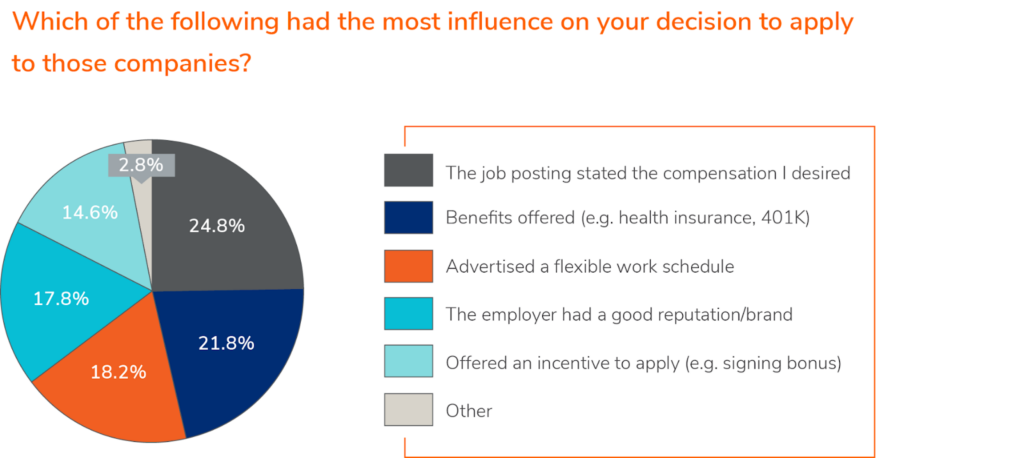
    In the past year, 49% of job seekers have contemplated leaving their current job, with dissatisfaction over pay being the primary reason. Therefore, it’s not unexpected that when asked what influenced their decision to apply for a new job, the top response was “the job posting listed the compensation I was seeking.”

    reasons job seekers apply to jobs

    Do job seekers truly care about the hiring process?

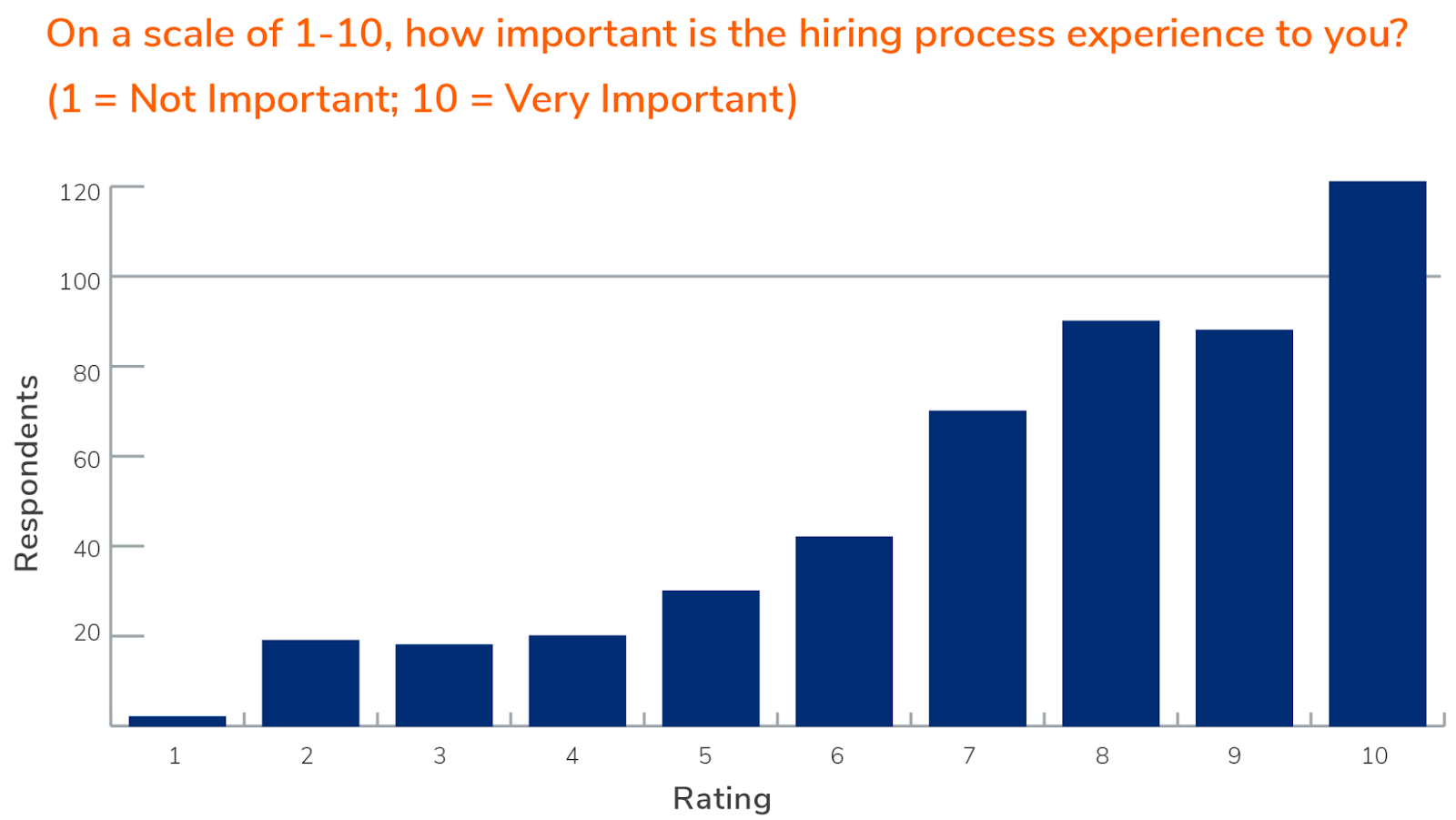
    how important is the hiring process to job seekers

    We asked job seekers to rate the importance of the hiring process to them. The overwhelming majority gave it a rating between 7 and 10, indicating that most candidates pay close attention to how a company conducts its hiring process. Very few considered it of low importance.

    Regarding their current or most recent employer, 83% of employees rated their candidate experience in the hiring process as positive. Additionally, 76% of candidates stated that a positive experience influenced their decision to accept a job offer. Explore to find the most in-demand jobs in the Netherlands.

    What are the consequences of negative candidate experiences?

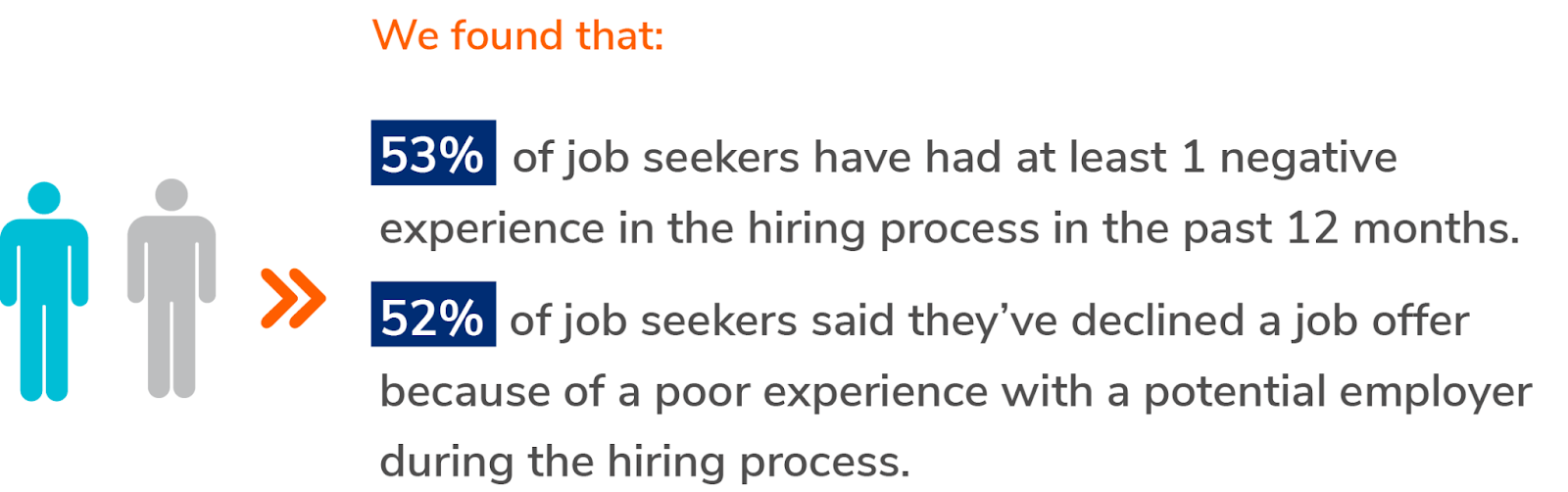
    Our findings reveal that 53% of job seekers have encountered at least one negative experience during the hiring process in the past year, and 52% have declined a job offer due to a poor experience.

    impact of a negative candidate experience

    Consider the countless hours your business invests in hiring and recruiting. If you’ve created a negative candidate experience, half of your offers will be declined. As a result, employers often have to settle for their second or third choice for a role, leading to the biggest challenge businesses face today: making the right hires.

    What contributes to a negative candidate experience?

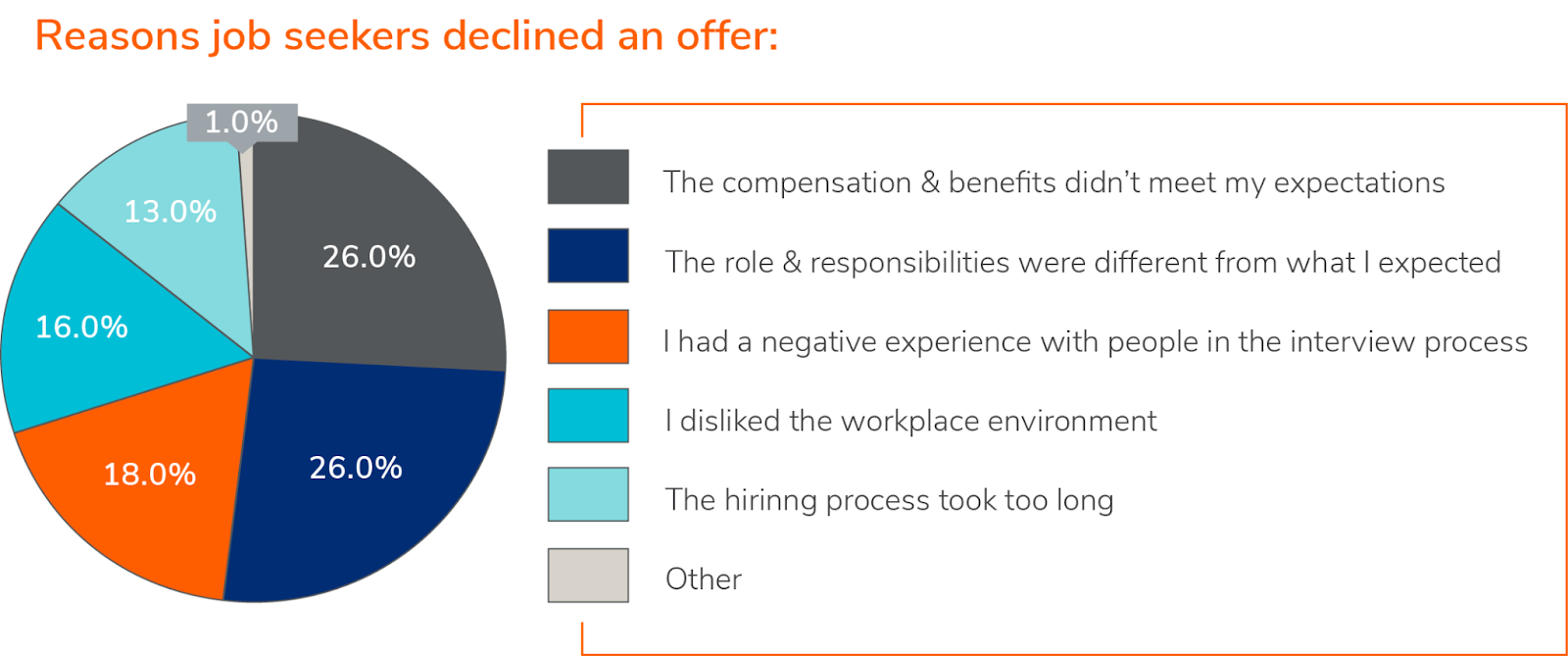
    When we looked at the reasons job seekers classified those experiences as being negative, here’s what we found:

    reasons job seekers decline an offer

    The top two reasons candidates turned down job offers were “the compensation and benefits not meeting expectations” and “the role and responsibilities were different than I expected”

    How does the candidate experience affect your employer brand?

    The impact of a poor candidate experience goes beyond the disappointment of a declined job offer—it has serious consequences for your employer brand, or your business’s reputation as a workplace.

    • 35% of candidates reported leaving a negative review online after a negative experience.
    • 60% of candidates reported leaving a positive review online after a positive experience.

    This is significant because more than half of job seekers abandon their interest in a company after reading negative reviews on employer review sites like Glassdoor and JobSage. Don’t let negative candidate reviews define your employer brand and cause you to miss out on top talent.

    Candidate ghosting 

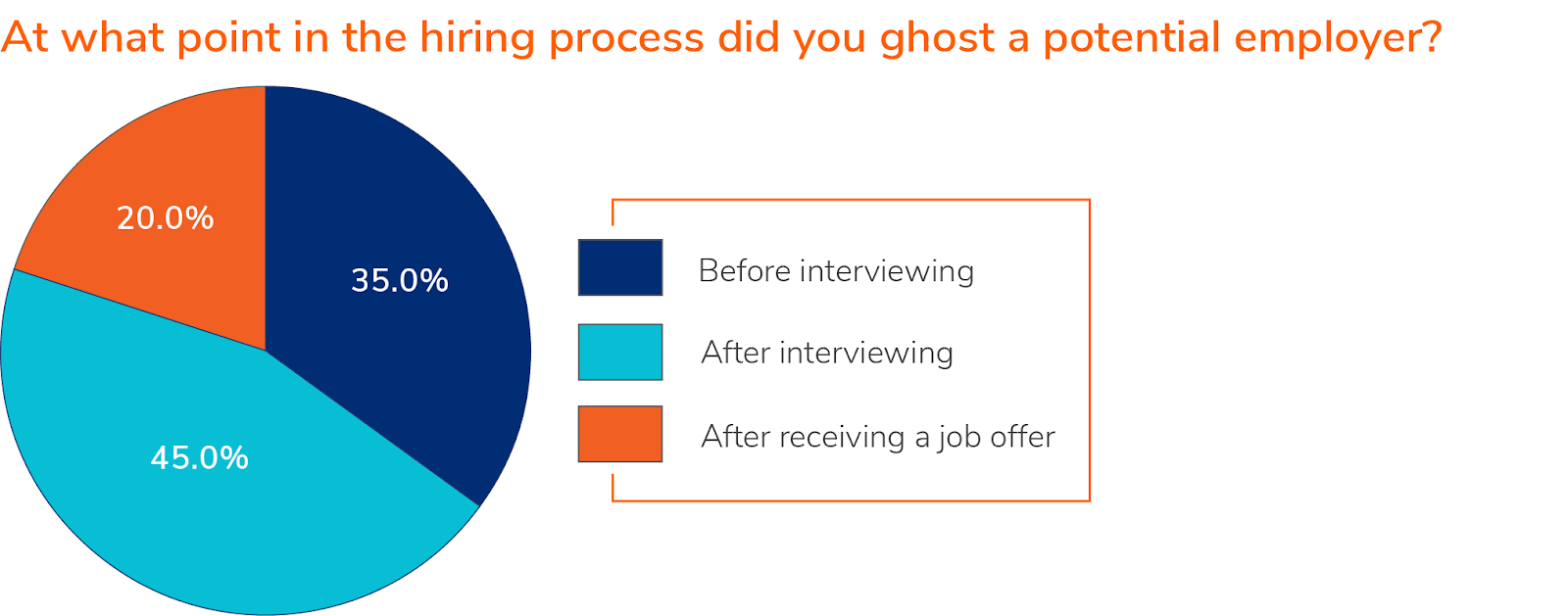
    Candidate ghosting refers to the increasingly common issue where a candidate suddenly stops responding during the hiring process. This can manifest as a candidate not showing up for a scheduled interview or abruptly ceasing all communication after initial contact. It’s always frustrating when a candidate ghosts, but our findings show that 45% of ghosting incidents occur after the interview stage.

    when do candidates ghost

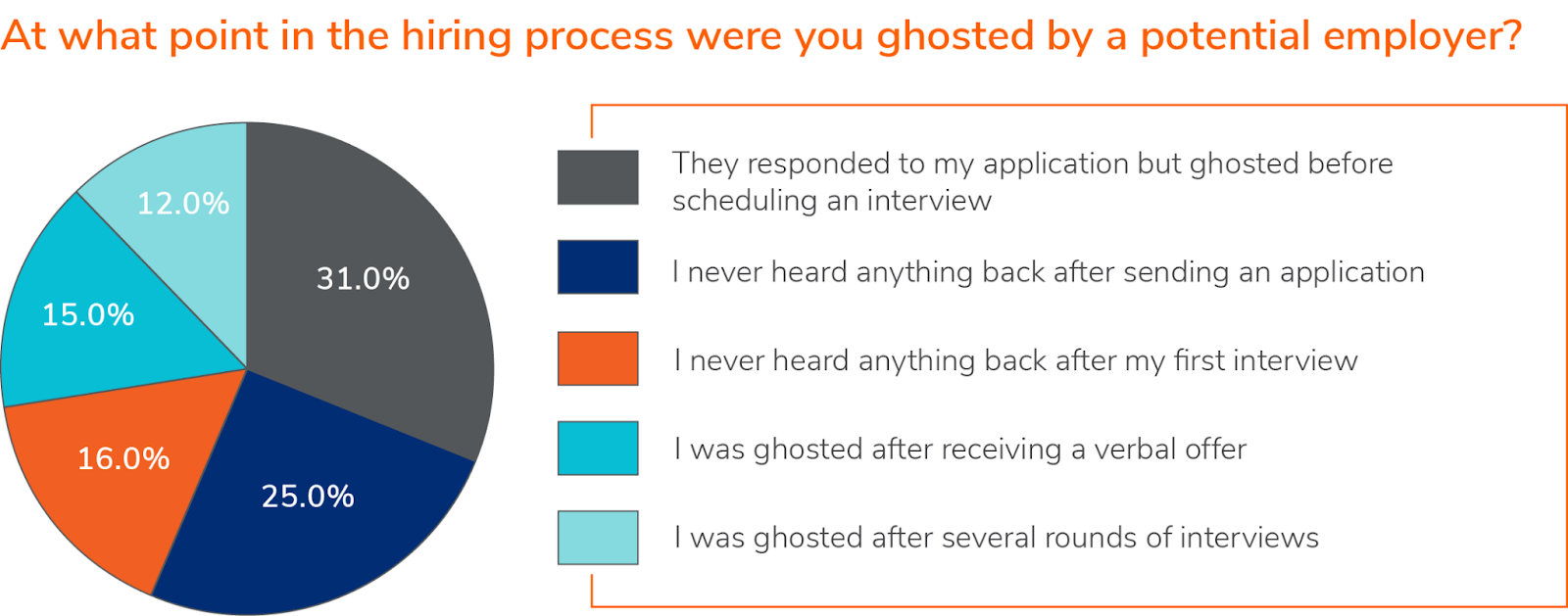
    However, it’s important to recognize that ghosting isn’t one-sided—employers have also been guilty of this behavior. In fact, 53% of candidates reported being ghosted by an employer. Additionally, 31% mentioned that after receiving an initial response to their application, the employer then ghosted them before scheduling an interview.

    when do employers ghost

    Employer ghosting can significantly harm the candidate experience and potentially damage your employer brand. Even if you decide not to hire someone, the impression you leave with them could affect your ability to attract other top candidates in the future.

    Ways to enhance the candidate experience

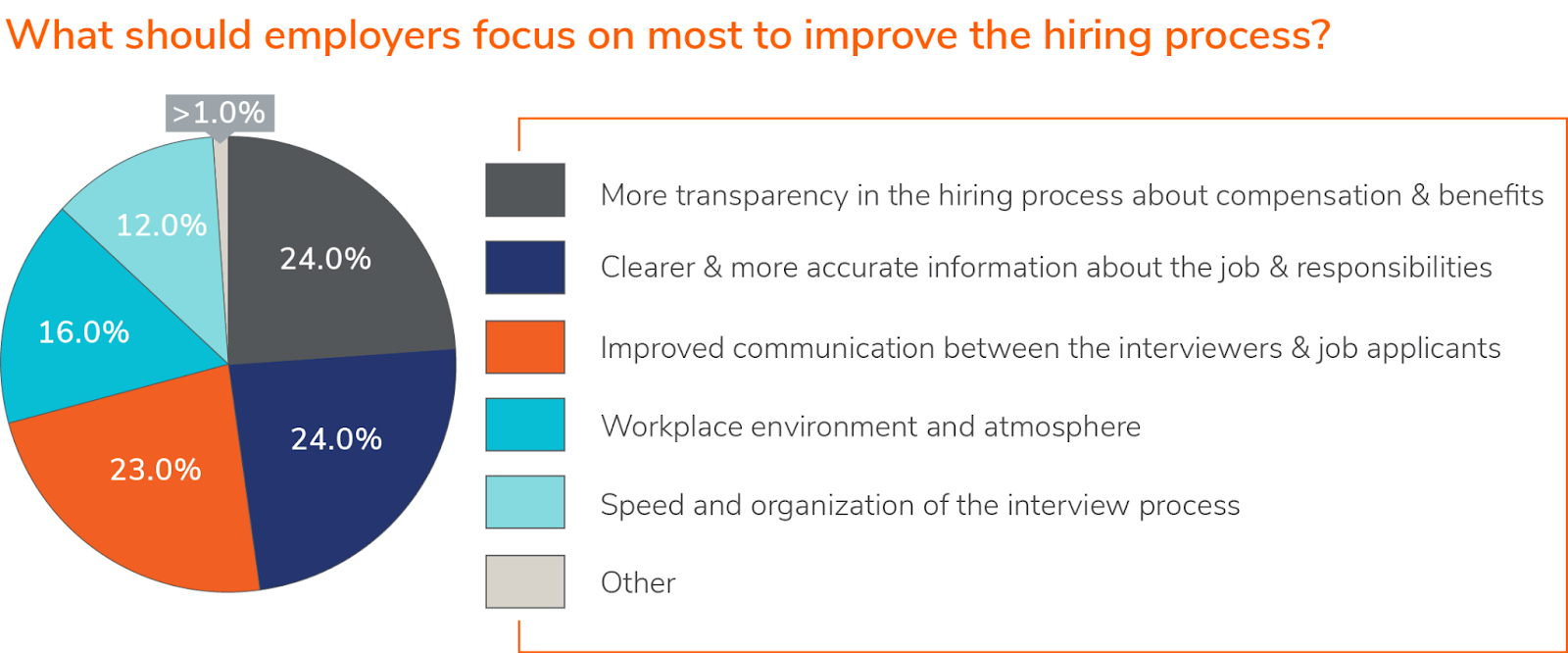
    Here’s what we found when we asked job seekers to identify what employers could do to improve the hiring process that would have the most impact on candidate experience. 

    how to improve the candidate experience
    1. Enhance transparency in the hiring process regarding compensation and benefits.
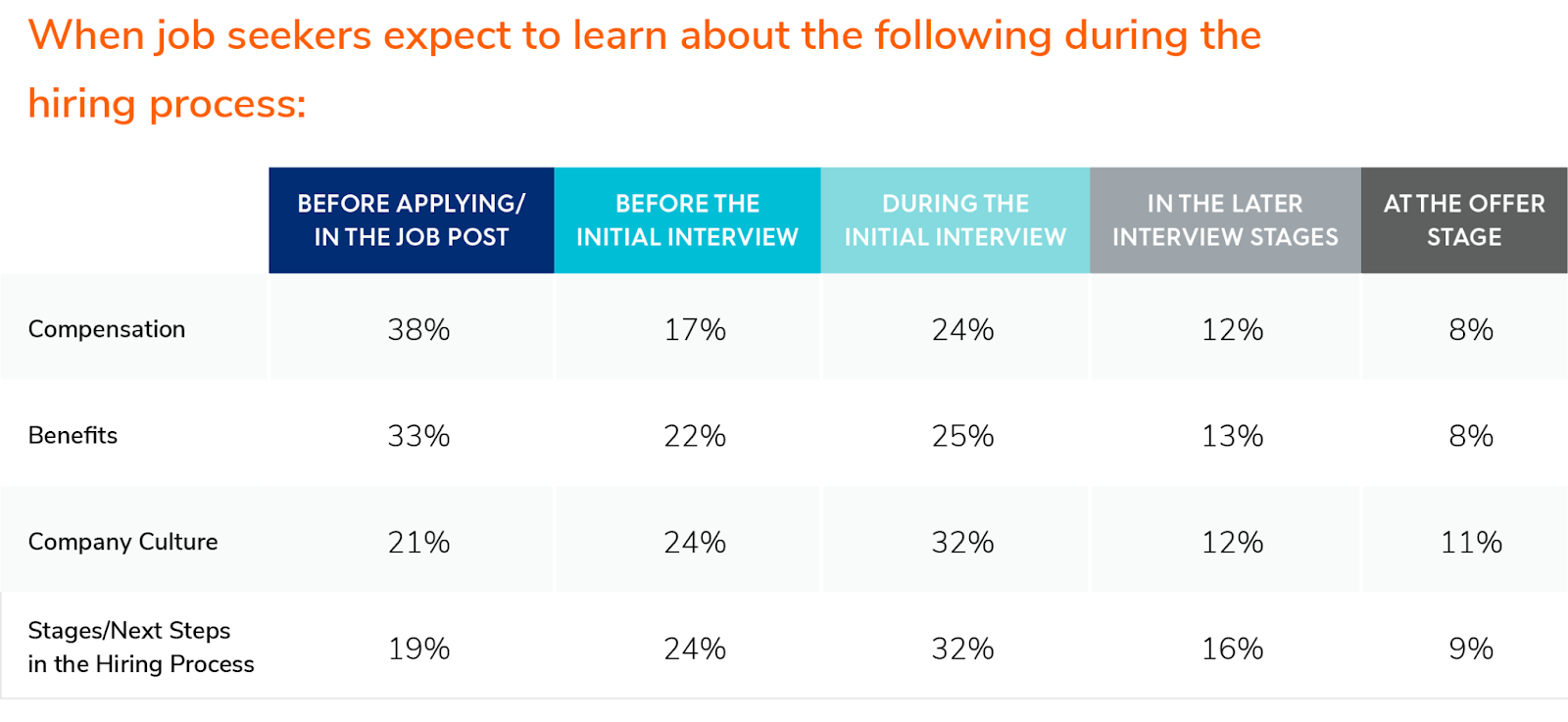
      Job seekers seek comprehensive details about a position earlier in the hiring process to make informed decisions. For instance, 38% of job seekers anticipated being informed about compensation from the outset of the job posting. This presents a significant and straightforward opportunity for employers to improve the candidate experience while also enhancing the effectiveness of their applicant screening process, as candidates will self-assess suitability based on this information.
      • JobsReach fosters transparency between job seekers and employers, keeping applicants updated at every step. 
        Even if a candidate isn’t selected, employers can provide constructive feedback to help them improve.
    what job seekers expect to learn during the hiring process

    According to a job seeker we interviewed, “Compensation and benefits are seldom discussed until after a rigorous and inconvenient interview process. Employers should prioritize upfront communication about what applicants care about most—salary, benefits, and working conditions, including career advancement opportunities.”

    1. Ensure job postings provide clear and accurate information about the role and its responsibilities.
      Take the necessary steps to ensure that your job postings are comprehensive and accurately depict the responsibilities of the position. Candidates rely on these postings to envision themselves working for your company. If they discover later that the information is inaccurate, they will feel their time has been wasted.
      • In JobsReach, job postings are clearly and accurately describe the role and its responsibilities.
    2. Enhance communication between interviewers and job applicants.
      Prompt and frequent communication with potential employers is highly valued by applicants and contributes significantly to a positive candidate experience. It’s crucial to maintain this throughout the entire hiring process, not just with selected candidates.

    Here are some strategies to improve communication with candidates:

    • Respond to all applicants promptly after they apply—Consider automating this process with email templates or using text recruiting.
    • Clearly communicate the steps and timeline of the hiring process upfront—32% of candidates expect to receive information about the next steps during the initial interview. Provide candidates with a clear understanding of what to expect.
    • Keep candidates informed about their status in the hiring process—If a candidate reaches out to you for an update, it’s a sign that communication could be improved. Remember, candidates often pursue multiple opportunities simultaneously, and keeping them informed can help you retain top candidates and avoid missing out on your preferred choices. Explore Remote Work Statistics & Trends In 2024.

    Conclusion

    𝐉𝐨𝐛𝐬𝐑𝐞𝐚𝐜𝐡 is a next-generation platform for jobs that directly connects ideal candidates with relevant job opportunities and completely removes the need for intermediary staffing and recruitment agencies to find new job opportunities.

    JobsReach engages with ideal candidates wherever they are, promotes job opportunities, raises awareness of their future potential, and transforms them into prospective candidates.

    𝐉𝐨𝐛𝐬𝐑𝐞𝐚𝐜𝐡 allows employers to request feedback and recommendations from candidates’ former colleagues to verify their qualifications and experience.

  • Expenses for LinkedIn Recruiter in 2024

    LinkedIn, the largest professional networking platform with over 1 billion users across more than 200 countries, introduced LinkedIn Recruiter in 2008. This new staffing solutions product offered premium features and services tailored to meet the specific needs of corporate staffing departments.

    The tool has become a popular choice for talent acquisition specialists and recruiters to find and engage with candidates on the platform. However, its pricing remains somewhat mysterious. In this article, we’ll explore the costs of LinkedIn’s recruiter packages and discuss whether they offer good value for money. You can also checkout Key Trends, Opportunities, and Salaries in the Netherlands.

    What is LinkedIn Recruiter? 

    LinkedIn Recruiter is a premium service provided by LinkedIn, tailored specifically for recruiters. It functions as an enhanced version of a standard LinkedIn profile, enabling recruiters to access a broader talent pool, obtain contact information for potential candidates, and manage the recruitment process more efficiently.

    LinkedIn Recruiter is an entirely separate platform that enables recruiters to search for candidates using Boolean search, a method that refines online searches through specific keywords and operators. Recruiters can then contact candidates via InMails, private messages that allow direct communication with other LinkedIn members without requiring a prior connection.

    What are some of its benefits?

    LinkedIn Recruiter beats a regular LinkedIn profile in the following ways: 

    Advanced search filters: Find candidates based on specific criteria such as skills, location, education, industry, and more.

    Direct candidate outreach: Send InMails and identify candidates who are available to message. You can also send bulk messages through your dashboard.

    Pipeline management: Add candidates to a “project” to organize your messaging and receive alerts when they change jobs or get promoted.

    What are LinkedIn’s recruitment packages? 

    LinkedIn Recruiter comes in two packages: 

    Recruiter Lite

    This option is cost-effective, designed for individual recruiters or small teams, and includes the following features:

    • Network access visibility: Up to 3rd-degree connections
    • Search filters: 20+ filters
    • Search alerts: 10
    • InMail messages: 30

    Recruiter Corporate

    This is the premium and most powerful solution. 

    • Network access visibility: Full access to all profiles
    • Search filters: All search filters
    • Search alerts: 50
    • InMail messages: 150

    LinkedIn Recruiter’s pricing considerations

    LinkedIn does not disclose the prices of its recruitment products upfront and determines charges on a case-by-case basis. The actual costs are disclosed by their sales team after assessing your company and specific requirements. They then provide a customized price based on the following factors:

    • License Quantity: The cost per seat decreases marginally with larger license purchases.
    • Company Size and Industry: Larger companies and those in competitive industries may incur higher costs.
    • Geographical Location: Pricing varies based on location.

    LinkedIn Recruiter expenses

    According to industry research and reports, here are estimated costs:

    • Recruiter Lite: Approximately $170 per month for one license, with $270 per month for licenses 2 to 5.
    • Recruiter Corporate: Roughly $12,960 per seat annually (equivalent to about $1,080 per month).

    Extra charges associated with LinkedIn Recruiter

    InMails :

    InMails are messages sent to individuals outside your network. With Recruiter Corporate, you receive a monthly allocation of 150 InMails, and with Recruiter Lite, you receive 30.

    If you’re new to recruitment or entering a new market, relying solely on your monthly InMail allowance may not be sufficient to engage potential candidates, especially considering the average response rate of 18-25%.

    So, what are the costs for additional InMails? They are priced at a significant $10 each. This means that if you need an extra 100 InMails, and typically expect 18-25 responses, it would cost you $1,000.

    Job posting :

    If you intend to advertise a job opening on LinkedIn to attract qualified candidates, note that posting a single job is free. However, unpaid job posts do not rank on the first page and have limited visibility in searches.

    Similar to other job boards, increasing the visibility of your job post requires purchasing promoted posts and setting a budget. The higher your budget, the higher your job post will rank.

    Alternatively, LinkedIn offers a contract model through its Talent Solutions department. You can specify criteria for a role (e.g., Machine Learning Engineer, San Francisco, 7+ years of experience), set up the job post to run for six months, and get billed at the end of the period based on the number of qualified candidates who apply.

    Is it worth it?

    Typically, the answer to this question would be a resounding no. However, since LinkedIn’s inception in 2003, it has come to dominate the recruitment sector. Today, competing effectively often necessitates investing in a LinkedIn Recruiter corporate license and a substantial number of InMails.

    Is there an alternative? 

    There are several alternatives to purchasing a costly LinkedIn Recruiter license:

    Free options:

    • Utilize your connections: LinkedIn permits you to send up to 100 connection requests per week. Once connected, you can message individuals at no cost, so maximize this option.
    • Use an email-finding tool: Basic LinkedIn searches still allow you to find candidates, though limited to a certain number of pages without a premium subscription. You can identify candidates and extract their email addresses using free trials of email scraping tools like ContactOut or Lusha.
    • Create content: Building your personal brand by sharing relevant and valuable content on LinkedIn is effective in attracting potential candidates. Write blogs, LinkedIn posts, and host webinars discussing industry trends and insights.

    Job boards

    Consider signing up for various job boards like Indeed, Monster, or Glassdoor to post job listings and attract candidates actively seeking new opportunities. Here’s a synopsis of why opting for a job board might be preferable over LinkedIn Recruiter:

    • Active job seekers: Job boards draw users actively searching for new roles, unlike LinkedIn where not all users may be actively looking. This ensures you reach a pool of candidates more likely to apply, potentially streamlining your hiring process.
    • Cost-effectiveness: Job boards often offer more budget-friendly options compared to LinkedIn Recruiter subscriptions, with tiered pricing structures based on your specific needs.
    • Enhanced visibility: Posting on relevant job boards expands your company’s visibility beyond existing networks, attracting a broader array of talent that may not be accessible through LinkedIn alone.

    However, keep in mind the following considerations:

    • Limited access to candidate profiles: Job boards typically do not provide the same level of detailed candidate information as LinkedIn Recruiter.
    • High volume of applications: Expect to receive numerous applications, including many from candidates who may not be suitable for the role. This necessitates significant time and effort to filter through applications.
    • Passive candidate pool: Up to 70% of the workforce consists of passive candidates who are not actively seeking new opportunities. Relying solely on active job seekers may limit your access to potential talent.

    JobsReach

    A compelling alternative to LinkedIn Recruiter is JobsReach, an AI-powered recruitment platform that utilizes AI and social media strategies to precisely identify desired candidates without relying on traditional Boolean searches and share job vacancies and attract ideal applicants.

    JobsReach standard subscriptions

    Here are its primary features:

    • No Candidate database: JobsReach does not rely on candidate database to match candidates, It reaches wider audience through social media platforms where potential candidates are actively engaged.
    • Precision and customization: JobsReach enables highly specific searches based on criteria such as job title, location, company history, skills, published work, and niche expertise.
    • Contact details: Gain access to accurate contact information including emails and phone numbers to directly reach out to candidates, similar to LinkedIn.
    • Personalized outreach: JobsReach provides Inbox service to send personalized communication with other registered members.
    • Talent Insights: Utilize data-driven recruitment insights to understand a company’s talent strategy in depth.

    JobsReach, powered by GeniusArena Software B.V., revolutionizes modern recruitment by offering access to millions of talents, scalable candidate engagement, and data-driven insights at a fraction of the cost compared to LinkedIn Recruiter. JobsReach provides standard and flexible subscription plans, allowing small and medium enterprises as well as large corporations to hire the right candidates cost-effectively.

  • JobsReach Vs. Indeed Vs. LinkedIn: Which job board will assist you in securing your next hire?

    Table of Contents

    • JobsReach vs. Indeed vs. LinkedIn: At a Glance
    • How do the platforms compare?
    • Conclusion

    In our present economy, workers hold significant leverage, granting them the ability to choose among employers. Therefore, when hiring, it’s essential to distinguish yourself appropriately to attract the right candidates who can contribute to your company’s objectives.

    A crucial aspect of this process is placing your job listing in the appropriate venue. While there are numerous online job boards available, two prominent platforms stand out as favorites among candidates across various industries and locations. In this examination of Indeed versus LinkedIn, we’ll explore the advantages and disadvantages of each platform and offer guidance on determining the most suitable platform for connecting with potential job applicants for your company.

    JobsReach vs. Indeed vs. LinkedIn: At a Glance

    JobsReach, Indeed and LinkedIn stand out as premier platforms for job seekers, yet each offers a distinct user experience (UX). Indeed prioritizes aligning employers with candidates who fit posted job listings, whereas LinkedIn emphasizes assisting individuals in expanding their professional networks and advancing their careers by connecting with others. While job listings are a supplementary feature on LinkedIn, they are not the primary focus.

    Typically, employers can avail themselves of the opportunity to post open positions for free on both platforms simultaneously. However, the disparity in how each platform facilitates connections with candidates may influence where you allocate your resources to engage with the most suitable individuals.

    JobsReach

    JobsReach for a next-generation job platform that stands out by attracting ideal candidates for every job opportunity through a targeted mass social media recruitment strategy, rather than relying on a large candidate pool like Indeed or LinkedIn.

    𝐉𝐨𝐛𝐬𝐑𝐞𝐚𝐜𝐡 allows employers to request feedback and recommendations from candidates’ former colleagues to verify their qualifications and experience.

    JobsReach engages with ideal candidates wherever they are, promotes job opportunities, raises awareness of their future potential, and transforms them into prospective candidates.

    Indeed

    Best used as

    Job search engine

    Cost for Sponsored Jobs

    $5 to $499

    per day

    Stands out for

    On-platform virtual interviews

    Editor’s Take

    Indeed has recently outpaced its rivals to emerge as the most visited online job board in the United States, with an impressive 63.7 million monthly users. It has become one of the primary destinations for job seekers seeking opportunities, making it a highly desirable platform for employers to showcase their listings.

    Employers have the option to post job openings on Indeed at no cost, with the additional opportunity to enhance visibility through sponsorship. Sponsored posts operate within a daily budget set by the employer, ranging from $5 to $499 per day, with payment based on a variable rate for each click on the listing. Moreover, employers can access a database of job seekers’ résumés and communicate with potential candidates through a monthly subscription.

    Indeed surpasses its competitors in search functionality. While the platform offers features such as career advice, company reviews, and salary comparisons akin to other job posting sites, its primary focus lies in its job search utility.

    Pros & Cons
    • #1 job search site in the U.S.
    • Low-cost job ads
    • On-platform virtual interviews
    • Subscription required to contact candidates in résumé database
    • No free trial for Indeed Resume Search
    • Popular site means more competition for candidates

    LinkedIn

    Best used as

    Professional network

    Cost for Sponsored Jobs

    Daily budget of your choice

    Stands out for

    Free network to search and contact candidates

    Editor’s Take

    LinkedIn, primarily a social network, offers both advantages and disadvantages compared to traditional job boards. With a network of 770 million users, it provides extensive reach, though not all users are actively seeking jobs. The platform serves various purposes, from connecting with colleagues to researching sales prospects.

    Integrating job search capabilities into an active social network allows LinkedIn to leverage extensive user activity to identify strong candidates for positions. This continuous engagement means many users are active on the platform even when they aren’t job hunting, making it an excellent venue for building relationships beyond the confines of job descriptions and résumés. Job seekers can discover opportunities through your company’s platform activity, in addition to traditional job listings.

    Users can search for relevant profiles—acting as dynamic résumés—and contact most users for free. Job postings can be made at no cost, with the option to promote them using a daily budget. Companies with significant hiring needs can upgrade to a Premium account with a Recruiter seat, providing enhanced search capabilities, easier contact options, and a comprehensive recruiter dashboard.

    Pros & Cons
    • Utilization of comprehensive public data and applicant activity
    • Free profile searches and candidate outreach
    • Establish and maintain ongoing connections with candidates and new hires
    • Expensive monthly subscription for Premium features
    • Job seekers might be less active compared to those on dedicated job board sites

    How do the platforms compare?

    JobsReachIndeedLinkedIn
    Free Posting OptionYesYesYes
    Cost for Premium PostsNAPay-per-click pricing based on a daily budget between $5 and $499 per dayCost per unique view on a daily budget you choose
    Search RésumésYes, subscription required to contact candidatesYes, subscription required to contact candidates ($100 to $250 per month)No, but profile search is free and open to all users
    Employer DashboardFreeFreeIncluded with free posting, advanced features with Recruiter Lite for $119.99 per month
    Unique FeaturesThe job posting will be shared on social media to directly reach potential candidates.Schedule and conduct virtual interviews on-platformSocial network, learning resources for ongoing employee engagement
    Free TrialOne free monthN/A (free by default)One free month of Premium
    Customer SupportOnline FAQs, email support formOnline FAQs, email support formOnline FAQs, email support form; live chat and phone number for sales

    Job listings on both platforms are similar, but the context for connecting with candidates is quite different. Indeed functions mainly as a search engine, whereas LinkedIn operates primarily as a social network. Job seekers visit Indeed to find information on available positions, while they use LinkedIn to cultivate professional relationships. Keep this context in mind when developing your strategy for promoting and recruiting for open roles.

    Highlighting Top Applicants

    As applications flood in on these popular networks, you need a method to quickly vet them. Indeed leverages the information in your job listing to rank top applicants based on their résumés, placing them at the top of your list for easy identification.

    LinkedIn uses its extensive user data to match applicant profiles with your job listing and company profile, highlighting the top candidates for you.

    Applicant Ranking

    As applications arrive on LinkedIn, you can assess and rank candidates’ suitability for the role. When you mark candidates as “good,” LinkedIn uses their profile and application information to display the job listing to similar job seekers.

    On Indeed, you can rank your top candidates, and the platform will automatically decline the other applicants on your behalf.

    Virtual Interviews

    Through Indeed, you can arrange a virtual interview with a candidate and conduct it directly on the platform.

    Conclusion

    The process of posting jobs on Indeed versus LinkedIn is quite similar—you can post for free and enhance a listing based on your budget. However, the fundamental purpose of each platform creates a unique experience in connecting with candidates.

    LinkedIn may be more suitable for a small company aiming to establish a personal connection with candidates before hiring. Job seekers have the opportunity to follow your company’s profile and review current and former employees to gauge their potential fit within the team. Additionally, reaching out via direct message on LinkedIn might feel more personal compared to a message on a job-search platform.

    Indeed is designed to streamline the hiring process with effortless job posting, integration with applicant tracking systems (ATSs), and on-platform interviews. Its search engine functionality is highly accurate and beneficial for job seekers, potentially increasing the visibility of your post to the right audience.

    In most scenarios, leveraging both platforms for free can be advantageous in reaching a broader audience. Assess your priorities and target candidate pool to determine where to allocate more resources, whether boosting listings or utilizing advanced hiring tools. Explore about Which Job Board Is the Best For Your Business?

    JobsReach revolutionizes the hiring process by not solely relying on candidate databases and the 15-25% of active job seekers. It effectively targets the remaining 75% who are passive job seekers while still engaging active candidates. Leveraging social media, JobsReach connects candidates with potential opportunities and ensures all potential candidates are informed about the opportunities available for them to take the next step in their career paths. This approach attracts the right talent to quickly fill employers’ vacancies directly without the need for intermediaries or additional investments.

  • Indeed Vs. Monster Vs. JobsReach : Which Job Board Is the Best For Your Business?

    Monster vs. Indeed vs. JobsReach: At a Glance

    JobsReach, Indeed and Monster provide convenient options for posting jobs, creating customized applications, tracking applicants throughout the hiring process, and managing postings effortlessly. They also offer subscription plans tailored to the anticipated number of requests or clicks from potential candidates in response to your postings.


    JobsReach

    Free Plan

    Yes

    Screening Questions

    Yes

    Free Trial

    One month

    Editor’s Take

    JobsReach is a next-generation job platform that connects candidates with matching opportunities effortlessly, right where they are engaged. Unlike traditional platforms that require job seekers to spend significant time searching and applying for jobs, JobsReach simplifies the process.

    JobsReach tackles the inefficiencies of traditional hiring methods by using advanced technology to cut hiring expenses for companies.
    JobsReach offers an innovative approach to filling vacancies with qualified candidates without inflating costs and without any intermediaries.

    Employers can start using JobsReach for free with the introductory Free plan. JobsReach provides adaptable subscription choices such as Weekly, Monthly, and Yearly plans, customized to meet diverse employer requirements. The Weekly subscription is priced at 40 Euros, while the Monthly Business Plan costs 125 Euros and the Monthly Enterprise Plan costs 1250 Euros. Opting for the Yearly subscription offers savings of over 17% on the total cost. Additionally, JobsReach provides both manual and recurring subscription choices, enabling employers to manage their costs efficiently while benefiting from a next-generation job platform.

    Pros & Cons
    • Has its own ATS
    • AI creates job description
    • Smart screening questions designed to optimize initial candidate evaluations
    • Salary recommendations aligned with industry standards
    • AI-generated feedback on the candidate’s suitability for the open position
    • No integration with other job boards
    • limited number of companies adapted to next-gen job platform
    • Can’t integrate your own ATS

    Indeed

    Free Plan

    Yes

    Screening Questions

    Yes

    Free Trial

    Not needed, it’s free

    Editor’s Take

    Sixty-one million people worldwide use Indeed every month for job hunting. Indeed simplifies the job search process by sending alerts when new positions match a seeker’s criteria. Moreover, it’s free for employers to post job listings, making it an excellent option for those on a budget. However, to increase visibility, you might want to invest in promoting your job listing. You can set your budget and only pay when a candidate views your post.

    Indeed also provides screener questions, allowing you to customize queries for potential candidates to streamline the applicant pool. If you sponsor a post, you gain access to Instant Match, enabling you to invite candidates who align with your job description to apply.

    Pros & Cons
    • There are over 200 million resumes in its database
    • It’s free
    • Gauge an applicant’s skill with an assessment
    • It doesn’t syndicate your job post to other boards
    • Some applicants mass apply to jobs they aren’t qualified for
    • High volume of competition

    Monster

    Free Plan

    Yes

    Screening Questions

    No

    Free Trial

    Four days

    Editor’s Take

    Monster offers three paid plans: Starter, Standard, and Premium. The Starter plan costs $279 per month, providing one active job slot and up to 50 resume views. The Standard plan, at $399 per month, includes three active job slots, cross-posting to hundreds of other job boards for 30 days, and 150 resume views. The Premium plan offers five active job slots, the same cross-posting as the Standard plan, and 250 resume views.

    Opt for the Starter plan if you have a single job opening, the Standard plan for small but growing teams, and the Premium plan for rapidly expanding teams. With Monster+, you can post jobs for free but won’t have access to Monster’s résumé database. You can promote these listings on a pay-per-click basis.

    Struggling to create an effective job description? Monster has the solution. Select from a collection of over 500 templates to create a compelling job description. Not only does Monster offer guidance on customizing these templates for your specific role, but it also excels in educating candidates. Throughout their job search journey, candidates receive valuable tips and advice from Monster.

    Pros & Cons
    • Has its own ATS
    • 500-plus job description templates
    • Monster+ lets you post jobs for free
    • No screening questions
    • Must have a Standard plan or higher for cross-posting
    • Can’t integrate your own ATS

    Monster has two separate divisions: the regular Monster and Monster+ (beta). With Monster, you can integrate your own applicant tracking system (ATS) and search its resume database. Meanwhile, with Monster+, you can post jobs for free and opt to sponsor the listing for a fee, although access to its resume database is not included.

    Indeed boasts a database of over 200 million resumes and functions as an aggregator, displaying your job postings alongside others sourced from external platforms. Both platforms offer the option to promote your listings on a pay-per-click (PPC) basis, ensuring payment only when the ad performs, such as when someone clicks on your listing.

    Choose Indeed if you’re aiming to attract international candidates, as it operates as one of the premier job boards in 63 countries. While Monster operates in 14 countries, it is primarily suited for local and regional hiring. Additionally, Indeed is the preferred platform for roles requiring skills verification, thanks to its offering of over 150 online skills assessments. Although Monster also provides a candidate evaluation tool, it lacks skills verification through assessments. Monster is better suited for positions where skills can be verified through alternative means, such as checking a nurse’s license in a state database.

    Consider JobsReach for a next-generation job platform that stands out by attracting ideal candidates for every job opportunity through a targeted mass social media recruitment strategy, rather than relying on a large candidate pool like Indeed or Monster.

    How Indeed and Monster and JobsReach Stack Up

    IndeedMonsterJobsReach
    PricingOnly pay-per-click for sponsored listingsFree to over $649 per monthFree to over €40 per week
    €125 per month for Business
    €1250 per month for Enterprise
    Free Plan
    Resumes in DatabaseMore than 200 millionNot advertisedNot advertised
    Skills AssessmentXX
    Sponsored Listings
    ✓ – Pay-per-click
    ✓ – Pay-per-clickStandard subscription
    Candidate Evaluation Tool
    Free TrialNot needed, it’s freeFour days30 days

    Free Plan

    Posting jobs on Indeed is complimentary, and you have the option to enhance the visibility of your listing through paid promotion on a pay-per-click (PPC) basis. On the other hand, Monster+ provides a free posting option and also offers PPC job advertisements.

    Free Trial

    No free trial is required for Indeed since it’s entirely free to post jobs and does not provide any paid subscription plans. However, with Monster’s paid plans, you can enjoy a four-day free trial to explore its features.

    Pricing

    The cost of advertisements on either Indeed or Monster is determined by your bid and budget since they operate on a pay-per-click (PPC) basis.

    Resumes in Database

    Both Monster and Indeed offer a resume database feature, but only Indeed discloses the quantity. Indeed boasts a database of over 200 million resumes worldwide.

    Skills Assessment

    Indeed excels in the skills assessment domain, as Monster does not offer this feature. Skills assessments aid in evaluating a candidate’s suitability for the role they will undertake, bypassing the need to solely rely on self-reported skills.

    Sponsored Listings

    Monster and Indeed both provide sponsored job listings based on performance, utilizing the pay-per-click (PPC) model. You establish the bid and budget, and payment is only triggered when a candidate engages with your listing, such as by clicking on it to view details. This method offers excellent control over your budget.

    Candidate Evaluation Tools

    Sorting through hundreds of applications can be overwhelming. That’s where candidate evaluation tools come in handy. JobsReach and Monster assigns a score to candidates based on their alignment with your requirements. Indeed goes a step further by verifying the skills listed on candidates’ resumes, assisting you in selecting the most qualified candidate.

    Conclusion

    JobsReach, Indeed and Monster are excellent choices for recruitment purposes. However, if you require someone with a precise skill set, Indeed emerges as the superior option. While Monster offers a skills assessment feature, it doesn’t match the comprehensive depth of Indeed’s offerings. Moreover, Monster lacks the capability to verify the skills listed on a candidate’s resume, potentially resulting in hiring errors. Opt for JobsReach or Monster when dealing with skills that aren’t readily verifiable through online assessments, such as nursing, where you can verify a candidate’s license through a state database instead. You can also explore job board will assist you in securing your next hire.

    JobsReach revolutionizes the hiring process by not solely relying on candidate databases and the 15-25% of active job seekers. It effectively targets the remaining 75% who are passive job seekers while still engaging active candidates. Leveraging social media, JobsReach connects candidates with potential opportunities and ensures all potential candidates are informed about the opportunities available for them to take the next step in their career paths. This approach attracts the right talent to quickly fill employers’ vacancies directly without the need for intermediaries or additional investments.