Category: technology

Aviation Technology

  • Aviation Safety Standards Every Avionics Technician Should Know

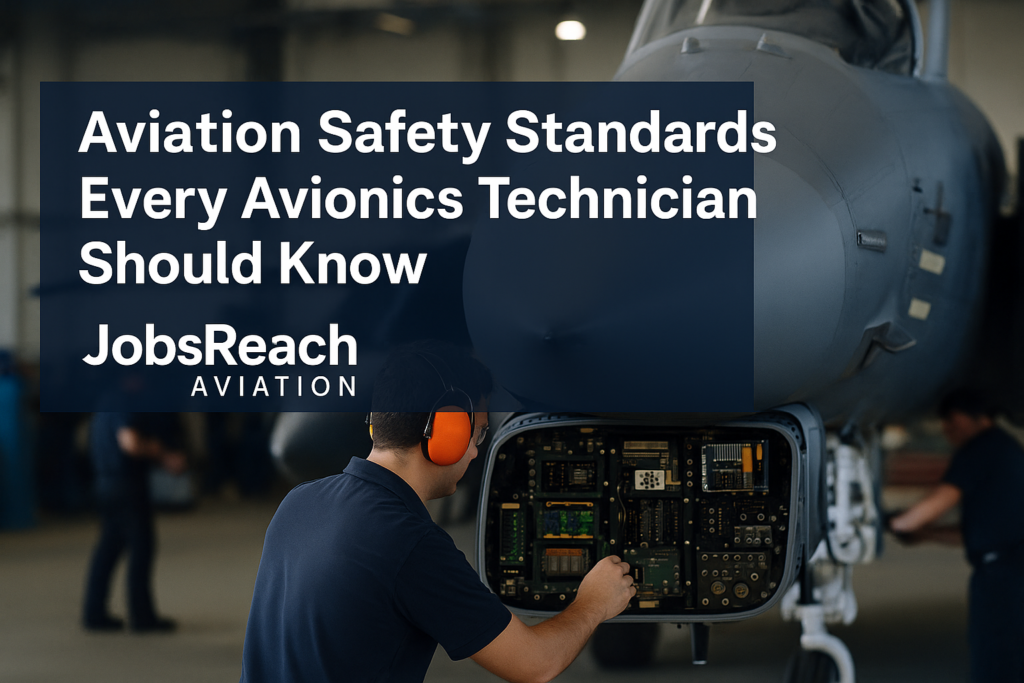
    Aviation is one of the most safety-driven industries in the world. Every system, procedure, and regulation is designed with one goal in mind: to protect passengers, crew, and aircraft. For avionics technicians, who maintain and troubleshoot the electronic systems that keep aircraft flying safely, understanding and following aviation safety standards is not optional, it’s essential.

    Why Safety Standards Matter in Avionics

    Avionics technicians deal with complex systems such as communication radios, navigation equipment, autopilot controls, and radar. A single mistake in maintenance or installation can compromise flight safety. International and national safety standards exist to minimize these risks and to ensure consistent, high-quality practices across the industry.
    Key Aviation Safety Standards and Regulations

    1. FAA and EASA Regulations

    FAA (Federal Aviation Administration) regulations govern all civil aviation in the United States.

    EASA (European Union Aviation Safety Agency) oversees aviation safety across Europe.
    Both agencies set strict requirements for training, maintenance procedures, and certification of avionics systems. Technicians must be familiar with the rules relevant to the region they work in.

    2. ICAO Standards

    The International Civil Aviation Organization (ICAO) provides global standards and recommended practices (SARPs). These guidelines promote international consistency, ensuring that an aircraft maintained in one country is safe to fly in another.

    3. RTCA DO-178C and DO-254

    DO-178C sets standards for software development in airborne systems.

    DO-254 applies to airborne electronic hardware.
    Avionics technicians must understand these standards to verify that hardware and software updates comply with safety requirements.

    4. Occupational Safety Standards

    Beyond technical regulations, technicians must follow workplace safety rules such as:

    • Proper use of personal protective equipment (PPE).
    • Lockout/tagout procedures when working with electrical systems.
    • Safe handling of hazardous materials like batteries and wiring insulation.

    5. Human Factors and Safety Management Systems (SMS)

    Many accidents trace back to human error. Aviation authorities emphasize Safety Management Systems (SMS) and human factors training, teaching technicians to:

    • Recognize fatigue and stress.
    • Follow checklists and standard operating procedures (SOPs).
    • Communicate effectively with pilots, engineers, and fellow technicians.

    Best Practices for Avionics Technicians

    • Always document maintenance actions in detail.
    • Double-check wiring and connections before powering systems.
    • Keep up with continuing education and certification renewals.
    • Stay updated on service bulletins and manufacturer advisories.

      How JobsReach Aviation Supports Avionics Careers

      Staying compliant with aviation safety standards is only one part of building a successful career as an avionics technician. Equally important is finding the right opportunities to apply your expertise and continue developing your skills. That’s where JobsReach Aviation comes in.

      JobsReach Aviation bridges the gap between MROs (Maintenance, Repair, and Overhaul organizations) and aviation professionals, making it easier for technicians to discover future opportunities within the industry. By connecting skilled professionals with employers, JobsReach Aviation not only helps expand career networks but also fosters collaboration across the aviation community.

      In addition, JobsReach Aviation maintains a growing directory of relevant training schools across the world, enabling avionics technicians to stay ahead of evolving safety standards and technological advancements. Whether you’re pursuing new certifications, expanding your knowledge of avionics systems, or seeking your next role in aviation, JobsReach Aviation provides a platform designed to support your professional journey.

      Conclusion

      Aviation safety standards are more than regulatory requirements—they are the backbone of safe flight operations. For avionics technicians, mastering these standards ensures not only compliance but also trust: trust from pilots, passengers, and the industry as a whole. By committing to safety, avionics professionals play a direct role in keeping aviation the safest mode of transportation in the world.
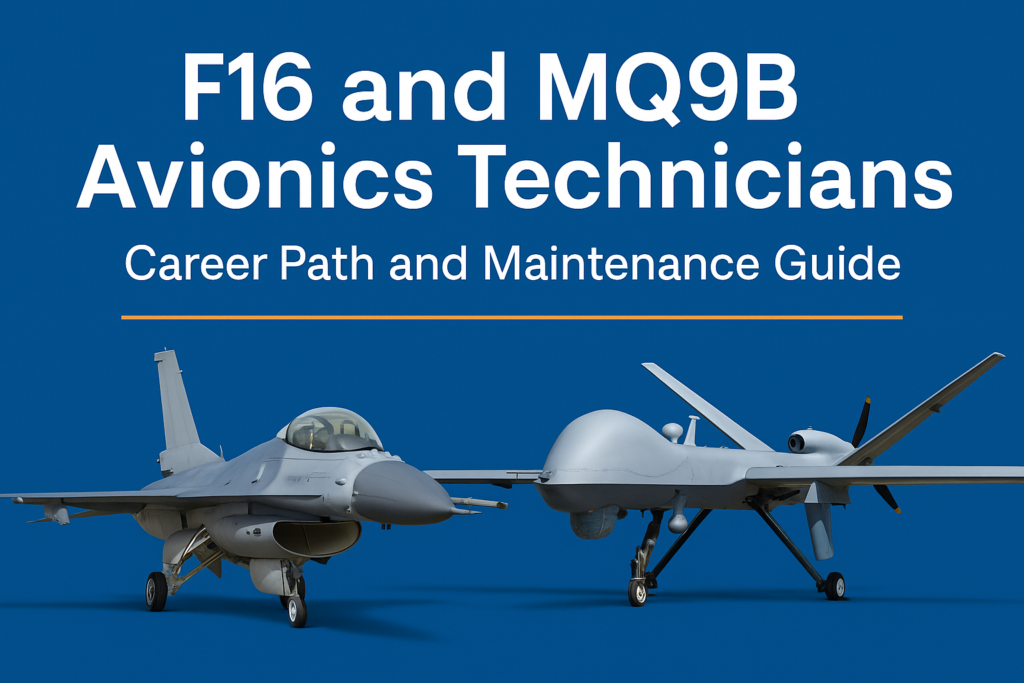
    1. F16 en MQ9B Avionica Technici: Carrièrepad en Onderhoudsgids

      Introductie

      Een carrière als F16 of MQ9B avionica technicus is zeer gespecialiseerd binnen de luchtvaart- en defensiesector. Professionals in deze rol zijn verantwoordelijk voor het onderhoud en de reparatie van avionicasystemen, waaronder radars, communicatiesystemen, navigatiesystemen en andere kritische avionica-apparatuur. Of je nu geïnteresseerd bent in preventief onderhoud of het oplossen van complexe vliegtuig-elektronica problemen, deze gids helpt je je carrièrepad te plannen.

      F16 and MQ9B image

      Wat doet een F16 Avionica Technicus?

      Een F16 avionica technicus zorgt ervoor dat het gevechtsvliegtuig veilig en efficiënt blijft opereren. Belangrijkste taken:

      • Preventief onderhoud van avionicasystemen
      • Reparatie en kalibratie van radars, communicatie- en navigatiesystemen
      • Naleving van veiligheidsnormen luchtvaart en aeronautische regelgeving
      • Documentatie van onderhoudsactiviteiten voor operationele gereedheid

      Carrièrepad voor MQ9B Avionica Technici

      De MQ9B Reaper is een modern onbemand vliegtuig gebruikt in militaire operaties. MQ9B avionica technici specialiseren zich in:

      • Onderhoud van avionica-apparatuur op de Reaper 9
      • Inspecties en testen van avionicasystemen
      • Naleven van strikte preventief onderhoud-schema’s voor operationele gereedheid
      • Samenwerken met operators om technische problemen op te lossen

      Een carrière in MQ9B avionica onderhoud vereist relevante opleiding en vaak een EASA Part-66 B2 certificering. Technici kunnen doorgroeien naar senior onderhoudsrollen of avionicasystemen engineering.

      Essentiële vaardigheden voor F16 en MQ9B Avionica Technici

      Om succesvol te zijn, moeten technici:

      • Technische expertise: kennis van avionicasystemen, radars en navigatiesystemen
      • Nauwkeurigheid: precisie bij preventief onderhoud
      • Probleemoplossend vermogen: storingen in complexe avionica-apparatuur oplossen
      • Veiligheidskennis: naleving van veiligheidsnormen luchtvaart en regelgeving

      Tips voor Preventief Onderhoud

      Preventief onderhoud is cruciaal voor gevechtsvliegtuigen zoals de F16 en onbemande systemen zoals de MQ9B. Tips:

      1. Regelmatige inspecties: Controleer alle avionica-componenten volgens schema
      2. Testen van communicatiesystemen en navigatie: Zorg voor betrouwbaarheid voor elke missie
      3. Documenteer onderhoud: Houd logs bij volgens regelgeving
      4. Blijf op de hoogte van veiligheidsnormen: Volg EASA- of FAA-richtlijnen voor militaire avionica

      Opleiding en Certificering

      Om een gekwalificeerde avionica technicus voor F16 of MQ9B te worden, is vaak vereist:

      • Formele opleiding in avionica, luchtvaart-elektronica of gerelateerde vakgebieden
      • EASA Part-66 B2 certificering of equivalent
      • Praktische ervaring met gevechtsvliegtuigen avionicasystemen
      • Doorlopende training in nieuwe avionicatechnologieën

      Conclusie

      Een carrière als F16 of MQ9B avionica technicus biedt unieke kansen in de luchtvaart- en defensiesector. Met de juiste vaardigheden, opleiding en focus op preventief onderhoud en veiligheidsnormen, draag je bij aan het operationeel houden van deze geavanceerde vliegtuigen.

      Bekijk de huidige F16 en MQ9B avionica technicus vacatures op JobsReach Aviation om de volgende stap in je carrière te zetten.

      JobsReach Aviation is dé brug tussen talent en de luchtvaartsector. Het platform brengt vacatures van luchtvaart- en MRO-bedrijven rechtstreeks naar werkzoekenden en richt zich specifiek op gespecialiseerde functies zoals avionica- en GSE-monteurs. Dankzij JobsReach Aviation kunnen kandidaten snel en eenvoudig de meest relevante banen vinden, terwijl werkgevers toegang krijgen tot gekwalificeerde professionals die klaar zijn om hun vaardigheden in te zetten. Zo zorgt JobsReach Aviation voor een directe en efficiënte verbinding tussen talent en kansen in de luchtvaartindustrie.

    2. Squawk Codes and Hijacking: How a Four-Digit Code Can Trigger Global Response

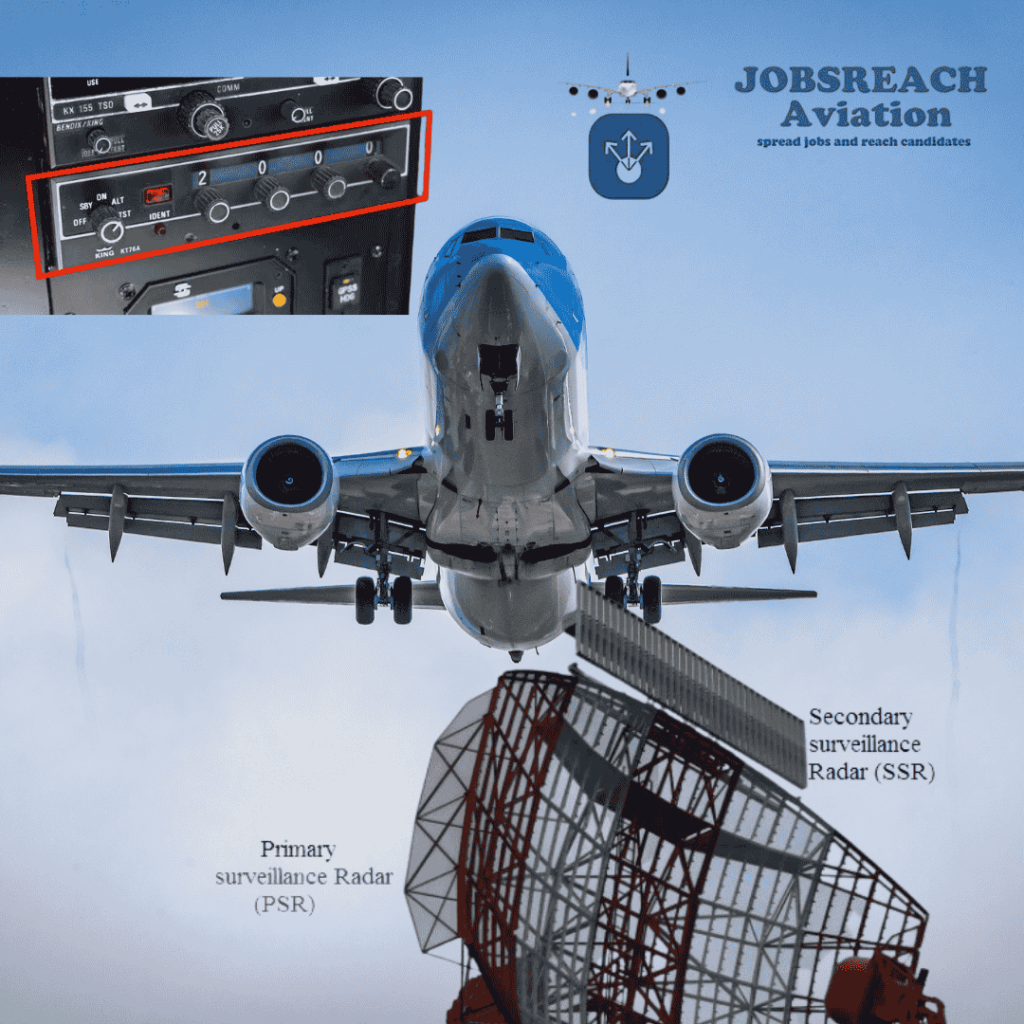
      JobsReach Aviation image illustrates how Squawk Codes are handled

      When you’re flying 35,000 feet above ground, every second counts and communication matters. In aviation, transponder squawk codes are one of the most crucial tools for silent communication between aircraft and air traffic control (ATC), especially in emergencies. Among these, one code holds particularly grave implications: 7500 the internationally recognized squawk for aircraft hijacking.

      This article unpacks how squawk codes work, what happens when 7500 is entered, and how pilots, controllers, and security forces respond to what could be a matter of life and death.

      ✈️What Are Squawk Codes?

      A squawk code is a four-digit number transmitted by an aircraft’s transponder to identify itself on radar and convey status information. These codes are assigned by ATC or set by pilots to signal specific situations. Three emergency codes are globally standardized:

      • 7700 – General emergency (engine failure, medical emergency, fire, etc.)
      • 7600 – Radio communication failure
      • 7500 – Unlawful interference or hijacking

      These codes can be changed manually by the flight crew using a cockpit transponder, allowing for rapid, discreet communication.

      🚨 Squawk 7500: The Silent Hijack Alert

      When a pilot dials in 7500, they’re not just updating a digital display, they’re triggering a full-scale emergency response. This code tells ATC that the aircraft is under unlawful interference (e.g., hijacking), and verbal communication may not be possible due to the threat onboard.

      What Happens Next?

      • ATC Response Protocol:
        • ATC will respond with a confirmation:
        • “(Callsign), confirm squawking seven five zero zero.”
      • No Response = Immediate Action:
        If the pilot does not respond or confirms under duress, ATC treats it as an active hijack.
      • Security & Military Scramble:
        National defence authorities, law enforcement, and emergency services are immediately notified. Fighter jets may be scrambled to intercept the aircraft.
      • Airspace Lockdown & Ground Prep:
        The destination airport is alerted, and security measures are heightened. Emergency response teams are mobilized on the ground.

      🧑‍✈️ Real-Life Cases: Hijack Alerts and Close Calls

      Korean Air Flight 085 (2001)

      During the chaos of 9/11, Korean Air Flight 085 mistakenly triggered squawk 7500. U.S. and Canadian military forces scrambled jets, and NORAD considered shooting the plane down. The aircraft ultimately landed safely in Canada after authorities confirmed it was a false alarm — but not before a full-scale alert had already been activated.

      Ethiopian Airlines Flight 702 (2014)

      A co-pilot diverted the aircraft to Geneva and reportedly locked the captain out of the cockpit. The flight squawked 7500 mid-air, prompting Swiss air defence to respond. The co-pilot later sought asylum, and no passengers were harmed.

      Real Hijack Incident: Ethiopian Airlines Flight 702 (2014)

      On February 17, 2014, co-pilot Hailemedhin Abera Tegegn hijacked Ethiopian Airlines Flight 702 from Addis Ababa to Rome by locking the captain out of the cockpit and squawking the hijack code 7500. Unusually, he deliberately used this code to alert authorities and safely divert the plane to Geneva, where he intended to seek asylum. Escorted by Italian and French fighter jets, the aircraft landed with minimal fuel, and the co-pilot surrendered peacefully. No one was harmed.

      Air India Flight AI2957 (2025)

      Shortly after take-off from Delhi, this domestic flight broadcast squawk 7500, prompting military notification and a high-security response in Mumbai. Investigation revealed it was accidental, but until that was confirmed, full hijack procedures remained in effect.

      Air Europa at Schiphol (2019)

      The pilot demoed squawk codes to a trainee and unintentionally set 7500, triggering a 4.5‑hour lockdown, passenger evacuation, and military police response

      🛡️ False Alarms: Why They’re Still Taken Seriously

      Mistakenly dialing 7500 is not unheard of — a slip of a finger or a confused crew can trigger the wrong code. However, false positives are treated just as seriously as real threats until proven otherwise.

      Why? Because the cost of ignoring a true hijack alert is potentially catastrophic.

      Pilots are trained to clarify errors immediately. A typical clarification might be:

      “Approach, N123AB, negative. Squawk 7500 entered in error. Returning to assigned code.”

      But until that clarification is confirmed, the assumption remains: the aircraft may be in danger.

      📋 ATC & Pilot Protocols in a 7500 Scenario

      ActionResponsibilityResponse
      Dial 7500PilotSilent hijack alert; minimal verbal communication
      Confirm squawkAir Traffic Control“(Callsign), confirm squawking seven five zero zero”
      No response or suspicious replyATCInitiate hijack protocol; notify defense/military
      Visual intercept (if needed)MilitaryFighter jets may escort or signal to land
      Ground coordinationAuthoritiesLaw enforcement prepare for hostage, negotiation, or tactical response

      Empowering Aviation Professionals Through a Global Platform

      JobsReach Aviation is a dedicated platform designed to support the growth and development of aviation professionals worldwide. It offers a space to share expertise, exchange insights, and foster career advancement within the aviation industry. Through this network, users can connect with peers across the globe, collaborate on professional opportunities, and contribute to each other’s learning journeys. The platform also delivers valuable content including videos, spotlight features, flash updates, and the latest industry trends ensuring aviation professionals stay informed and engaged with the evolving aviation landscape.

      Why 7500 Matters?

      The squawk code 7500 is more than just a number, it’s a lifeline for pilots under threat, and a critical signal for air traffic controllers to protect lives in the sky and on the ground. While its use is rare, every aviation professional is trained to respond to it without hesitation.

      Whether it’s a genuine hijacking or a mistaken code entry, one thing is certain: the world listens when 7500 is squawked.

    3. The Future of Autonomous Flight in Aviation

      Aircraft autopilot systems are designed to control the aircraft’s trajectory without constant input from the pilot. Modern aircraft use advanced autopilot systems that combine multiple levels of automation. These systems are often categorized into different modes, such as lateral and vertical navigation, as well as more complex functions like auto-landing. Below are some of the key autopilot software and systems used in commercial, private, and military aircraft:

      1. Collins Aerospace Pro Line Fusion

      • Type: Commercial and business jets.
      • Description: This is an integrated avionics system used in business jets and regional airlines. It offers advanced automation, synthetic vision, and a high degree of situational awareness for pilots.
      • Features:
        • Autopilot coupled with synthetic vision for low-visibility operations.
        • Integrated flight management system (FMS).
        • Terrain and weather avoidance capabilities.

      2. Honeywell Primus Epic

      • Type: Commercial, business, and military aircraft.
      • Description: A highly integrated avionics system used in commercial airliners and business jets. The system supports advanced autopilot features and enables auto-landing in certain models.
      • Features:
        • Auto-throttle management.
        • Vertical and lateral navigation coupled with autopilot.
        • Synthetic vision and situational awareness.
        • Airport navigation with runway safety alerts.

      3. Boeing Autopilot System (AFDS)

      • Type: Commercial airliners (Boeing 737, 747, 777, etc.).
      • Description: The autopilot and flight director system (AFDS) in Boeing aircraft is integrated with the flight management computer (FMC) to automate many aspects of flight.
      • Features:
        • Automatic takeoff and landing capabilities (on some models).
        • Control of all flight phases (climb, cruise, descent).
        • Integration with FMC for precise route tracking.

      4. Airbus Auto Flight System (A/THR, AP, FD)

      • Type: Commercial airliners (A320, A330, A350, etc.).
      • Description: Airbus’ fly-by-wire technology integrates the autopilot (AP), flight director (FD), and auto-throttle (A/THR) systems into a cohesive framework.
      • Features:
        • Automatic control of speed, altitude, and course.
        • Auto-thrust system that adjusts engine power based on desired speed.
        • Automated landing system, including CAT III auto-land.

      5. Garmin GFC 700 Autopilot

      • Type: General aviation (light aircraft, private jets).
      • Description: This autopilot is often found in smaller aircraft, such as the Cessna 172 or Piper series, integrated with Garmin G1000 or G3000 avionics.
      • Features:
      • Automatic pitch and roll control.
      • Vertical navigation (VNAV) for altitude management.
      • Coupling with GPS navigation and flight plans.

      6. Rockwell Collins Flight Control System

      • Type: Commercial, military, and private jets.
      • Description: Rockwell Collins provides advanced flight control systems that automate various flight operations in business jets and military aircraft.
      • Features:
        • Precision autopilot for all phases of flight.
        • Advanced flight management system integration.
        • Synthetic vision and heads-up display integration.

      7. L3 Harris Autopilot Systems

      • Type: Commercial, military, and unmanned aircraft.
      • Description: L3 Harris provides flight control systems with autopilot capabilities for both manned and unmanned aircraft.
      • Features:
        • Mission-based autopilot control.
        • Precision approach and landing.
        • Terrain avoidance and weather integration.

      8. Dassault Falcon Digital Flight Control System (DFCS)

      • Type: Business jets.
      • Description: Used in Dassault Falcon business jets, this digital flight control system integrates the autopilot with advanced avionics.
      • Features:
        • Full auto-pilot mode for complex flight phases.
        • Auto-landing and synthetic vision.
        • Enhanced flight envelope protection.

      9. SAAB Autopilot System

      • Type: Military aircraft (Gripen fighter jets, surveillance aircraft).
      • Description: SAAB offers advanced autopilot and flight control systems in its military platforms, including high-level automation for mission execution.
      • Features:
        • Automated target tracking and mission profiles.
        • Auto-navigation and threat avoidance.

      10. Thales Autopilot System

      • Type: Commercial and military aircraft.
      • Description: Thales provides advanced avionics systems for civil and military aviation, integrating autopilot with flight management and control systems.
      • Features:
        • Fully automated takeoff, cruise, and landing systems.
        • Integration with head-up display and enhanced vision systems.
        • Autothrottle and flight envelope protection.

      Common Features of Modern Autopilot Systems

      • Three Axis Control: Autopilots usually control three axes of movement: roll (banking), pitch (up and down), and yaw (turning left or right).
      • Flight Management System (FMS) Integration: Modern autopilots are tightly integrated with the flight management computer to automate navigation, altitude control, and engine settings.
      • Autoland: Many commercial autopilots include auto-landing capabilities, especially for low-visibility conditions (CAT III approaches).
      • Flight Envelope Protection: Prevents pilots from overstressing the aircraft by limiting the range of inputs.
      • Coupling with GPS and NAV Systems: Autopilot systems are often linked to GPS and navigation aids (like VOR, ILS) for precise navigation.

      Military-Specific Autopilot Systems

      In military aircraft, autopilot systems can be significantly more advanced, designed to assist in combat scenarios, autonomous missions, and complex maneuvers such as air-to-air refuelling. Some systems even feature “auto-recovery” functions that can bring the aircraft back to safe flight conditions if pilots lose control.

      Autopilot technology is continuously advancing, with growing emphasis on fully autonomous flight, including in commercial aviation. To explore the opportunities still available for pilots, read more here.

      Opportunities for Pilots Despite Autopilot Development

      Even with the ongoing advancements in autopilot technology, there are still numerous opportunities for pilots in the aviation industry. These opportunities reflect both the critical human roles in aviation and the evolving nature of the profession

      JobsReach Aviation’s Contribution to Hiring Pilots

      JobsReach Aviation for MRO Hiring and Recruitment

      JobsReach Aviation is transforming the pilot recruitment process by leveraging cutting-edge technology, automation, and social media strategies to connect the right talent with aviation opportunities.

      JobsReach Aviation is revolutionizing the aviation recruitment process by embracing AI, social media recruiting, and automation. By eliminating manual processes, improving recruitment turnover rates, and adapting to industry changes, JobsReach is playing a critical role in helping airlines quickly and efficiently fill pilot positions, while providing pilots with seamless access to global opportunities.