Europe is undergoing one of the most important structural changes in its modern economic history: a shift from being primarily a consumer and regulator of global technology to becoming a builder and controller of core digital infrastructure.
This transition is not driven by a single policy or industry trend. Instead, it is the result of overlapping pressures in geopolitics, artificial intelligence, supply chains, and industrial competitiveness.
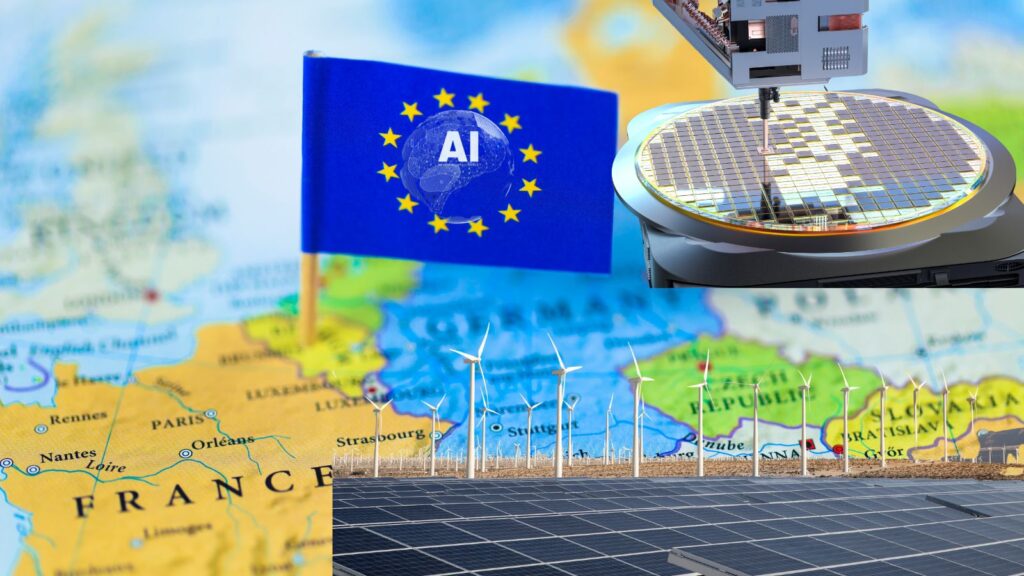
The Core Shift: From “Global Tech User” to “Tech Sovereign Builder”
For many years, Europe’s digital economy has depended heavily on external platforms, including U.S. hyperscalers such as AWS, Microsoft Azure, and Google Cloud, U.S.-developed AI models and APIs, and semiconductor manufacturing concentrated in Asia.
That model is now being actively reshaped under the concept of “tech sovereignty”—the idea that Europe should have greater control over key layers of its digital stack, including:
- compute infrastructure
- cloud hosting
- AI systems
- semiconductor supply chains
- data governance
Institutions like the European Commission and initiatives such as the EU Chips Act and AI governance frameworks reflect this long-term strategic pivot.
The key idea is simple:
Europe no longer wants its economy to depend on infrastructure it does not control.
Why This Shift Is Happening: The Real Drivers
Strategic dependency concerns
Europe realized it is heavily dependent on non-EU technology providers for critical systems, especially in:
- cloud computing
- AI model infrastructure
- chip manufacturing
This creates a structural vulnerability: if access is restricted or pricing changes, entire sectors could be affected.
Geopolitical fragmentation
The global tech landscape is increasingly shaped by:
- US–China technology competition
- export controls on chips and AI hardware
- rising concerns over data control and surveillance
Technology is no longer neutral infrastructure, it is now a geopolitical asset.
Europe’s response is to reduce exposure to external leverage.
The AI race pressure
Europe is widely seen as lagging behind the US and China in:
- frontier AI model development
- scale-up capital availability
- compute infrastructure
This has triggered urgency around building:
- AI gigafactories
- sovereign compute clusters
- domestic AI ecosystems (e.g., Mistral-style initiatives)
Supply chain shocks
The semiconductor shortages exposed how fragile global dependencies are:
- automotive production in Europe stalled
- manufacturing pipelines were disrupted
- reliance on Asian chip supply became a strategic risk
This directly led to Europe’s renewed focus on semiconductors.
Industrial competitiveness
Beyond security concerns, there is an economic motive:
Europe does not want to lose high-value industries in AI, cloud, and robotics.
The shift is therefore also about:
- productivity growth
- re-industrialization through AI
- maintaining global competitiveness
How This Shift Impacts Start-ups in Europe
The European startup ecosystem is being reshaped in several important ways.
1. Funding is shifting toward “strategic tech”
Investors and public funding bodies increasingly prioritize:
- AI infrastructure and tooling
- semiconductors and hardware innovation
- cybersecurity and data protection
- energy-efficient computing
- dual-use (civil + defense) technologies
Startups aligned with EU priorities have stronger access to:
- grants (Horizon Europe, EIC Accelerator)
- national innovation programs (e.g., Invest-NL in the Netherlands)
- public-private partnerships
2. Government procurement is becoming more “European-first”
Public institutions are increasingly:
- favoring EU-based technology providers
- requiring data residency within Europe
- enforcing compliance standards in procurement
This creates opportunities for European startups that previously struggled to compete with global hyperscalers.
3. Regulation is becoming a market gatekeeper
The EU AI Act and related frameworks mean startups must design for:
- transparency and explainability
- data governance and compliance
- risk classification of AI systems
While this increases early-stage complexity, it also creates a trust advantage in enterprise and government markets.
4. Industry-specific platforms are becoming more important
Europe is moving away from generic tech platforms toward sector-specific digital ecosystems, especially in regulated industries.
This is where platforms like JobsReach become highly relevant.
JobsReach Network: A Netherlands-Born Platform Shaping Industry-Specific Networks
Founded in the Netherlands and expanding across Europe and globally, JobsReach Network is building a new category of professional ecosystem platforms focused on industry specialization.
JobsReach Network is not positioning itself as a generic job board or broad professional network. Instead, it focuses on creating deep, structured communities within specific industries, starting with:
- ✈ Aviation
- 🏥 Healthcare
- 💻 Technology
According to its platform vision, JobsReach Network is designed as an ecosystem where professionals and employers do more than hire—they connect, collaborate, and grow within their industry context. JobsReach Network

Why Industry-Specific Platforms Matter in Europe Now
Europe’s regulatory and industrial structure makes generalized platforms less effective. Industry-specific platforms like JobsReach Network help solve key challenges:
- Relevance over noise through focused industry communities
- Compliance alignment in regulated sectors like aviation, healthcare and tech
- Better talent matching through industry-specific data structures
- Stronger professional identity tied to real industry ecosystems
Europe Is Building a Structured Tech Economy
Europe’s tech shift is not simply about catching up in AI or chips—it is about building a controlled, regulated, and strategically autonomous digital ecosystem.
In this environment:
- infrastructure matters more than apps
- compliance matters more than speed alone
- industry-specific platforms matter more than generic networks
Platforms like JobsReach represent this evolution clearly:
a move toward structured, industry-driven digital ecosystems that connect professionals, employers, and knowledge within clearly defined sectors.
Building digital sovereignty also requires solving Europe’s growing tech talent gap through stronger specialized hiring platforms and industry-specific talent ecosystems.
Start-up Implications: What This Means Going Forward
The rise of platforms like JobsReach Network signals a broader shift in European start-up dynamics:
- Vertical, industry-specific platforms outperform generic networks
- Trust, compliance, and structure become core competitive advantages
JobsReach Network reflects this trajectory by expanding from the Netherlands into Europe and across the globe, positioning itself as a professional ecosystem built for long-term industry growth rather than short-term transactional hiring.