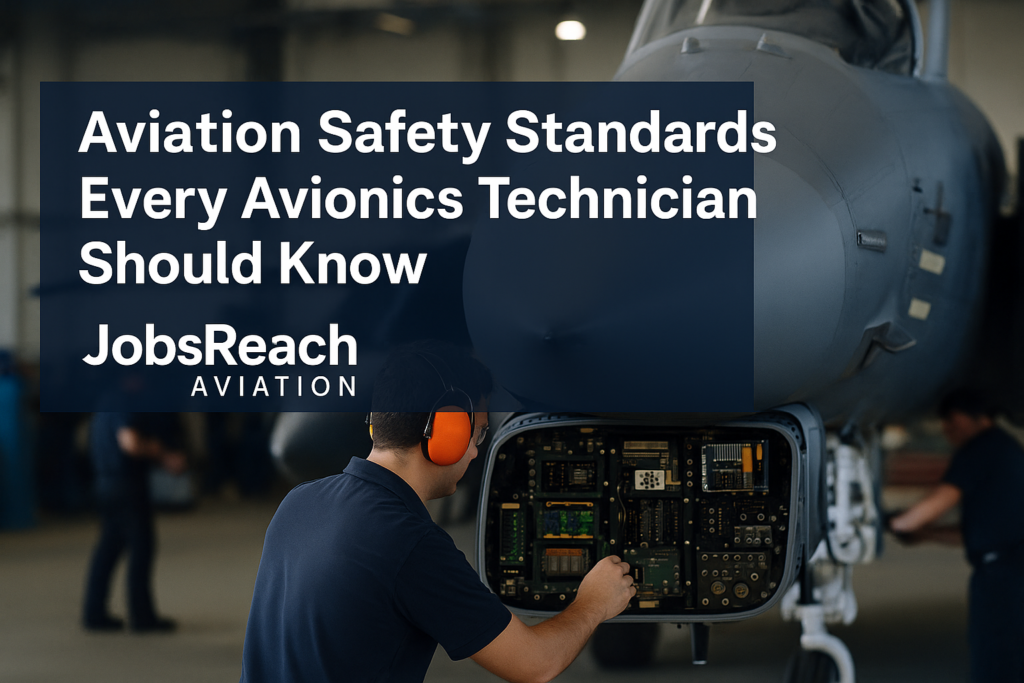
The aviation industry is soaring to new heights, driven by rising global travel demand, airline expansion, and technological advancements in aircraft design and operations. From ground support roles to flight crews, technical engineers, and administrative positions, the sector offers a wide range of career paths. Platforms like JobsReach Aviation are helping bridge the gap between talent and opportunity, enabling aviation professionals to connect globally and allowing airlines and aviation companies to find qualified, certified candidates efficiently.

Global Job Opportunities in Aviation
Europe: Countries like the UK, Germany, France, and the Netherlands are expanding airline networks and MRO facilities. There is demand for pilots, MRO engineers, CAMO specialists, and cabin crew due to retirements and post-pandemic travel growth (EASA Report 2024).
Middle East: GCC countries including UAE, Saudi Arabia, Qatar, Oman, and Bahrain are investing heavily in aviation infrastructure. Airlines such as Emirates, Qatar Airways, and Saudia actively recruit pilots, engineers, air traffic controllers, and cabin crew from Europe and Asia (CAPA Center for Aviation, 2025).
United States: The US aviation industry has an acute demand for pilots, maintenance engineers, and aviation technicians due to airline fleet expansions and the retirement of senior staff (Bureau of Labor Statistics, 2024).
Key Aviation Professions and Career Paths
1. Ground Support Personnel
Handle baggage, aircraft towing, fueling, and apron operations.
Qualifications: High school diploma, physical fitness, airport safety knowledge
Certifications: Aviation Security, Airport Handling, Forklift/Equipment training
Career Growth: Ramp Agent → Operations Supervisor → Ground Operations Manager → Airport Operations Director
2. MRO (Maintenance, Repair, and Overhaul) Engineer
Maintain, repair, and overhaul aircraft to ensure airworthiness.
Qualifications: Bachelor’s in Aerospace, Mechanical, or Avionics Engineering
Certifications: EASA Part-66, FAA license, type-specific endorsements
Career Growth: Junior MRO Engineer → Senior Engineer → Maintenance Manager → Director of Maintenance
Learn why B1/B2 aircraft engineer roles are in high demand in the Netherlands and explore opportunities in B1/B2 Aircraft Engineer Jobs in the Netherlands (2026): Why Demand Is Surging.
3. Sheet Metal / Aircraft Structural Technicians
Repair and fabricate aircraft structures.
Qualifications: Diploma in Aircraft Maintenance Engineering, metalwork skills
Certifications: EASA Part-66 B1/B2, Welding/Composite certifications
Career Growth: Apprentice → Senior Sheet Metal Worker → Structural Team Lead → Aircraft Maintenance Manager
4. CAMO (Continuing Airworthiness Management Organization) Engineer
Ensure aircraft compliance and manage airworthiness records.
Qualifications: Bachelor’s in Aeronautical, Aerospace, or Mechanical Engineering
Certifications: EASA Part-66, CAMO-specific approvals
Career Growth: CAMO Engineer → Senior CAMO Engineer → CAMO Manager → Airworthiness Director
5. Pilot
Operate aircraft safely for commercial, cargo, or private flights.
Qualifications: High school diploma minimum; aviation degree preferred
Certifications: PPL → CPL → ATPL, Type Ratings
Career Growth: First Officer → Senior First Officer → Captain → Chief Pilot / Flight Ops Manager
6. Air Hostess / Flight Attendant
Ensure passenger safety, comfort, and in-flight service.
Qualifications: High school diploma; degree in hospitality or communication preferred
Certifications: Cabin Crew Attestation, First Aid & CPR, Safety/Emergency Training
Career Growth: Flight Attendant → Senior Flight Attendant → Purser → Cabin Services Manager
7. Air Traffic Controller (ATC)
Manage aircraft movements and ensure airspace safety.
Qualifications: Bachelor’s in Aviation or Aeronautical Science
Certifications: ATC License, Medical Fitness Certificate
Career Growth: Junior Controller → Tower Supervisor → Area Controller → ATC Manager
8. Aviation Safety & Quality Inspectors
Monitor compliance with safety regulations and audit procedures.
Qualifications: Bachelor’s in Aviation, Aeronautical Engineering, or related field
Certifications: EASA Safety & Quality Auditor, ISO or aviation safety certifications
Career Growth: Safety Officer → Senior Safety Inspector → Safety Manager → Director of Safety
9. Flight Operations / Dispatch Officer
Coordinate flight planning, fuel, weather, and regulatory compliance.
Qualifications: Bachelor’s in Aviation or Aeronautical Science
Certifications: Aircraft Dispatcher License (FAA/EASA), ICAO compliance training
Career Growth: Flight Dispatcher → Senior Dispatcher → Operations Supervisor → Director of Flight Operations

How JobsReach Aviation Is Transforming Careers and Recruitment
JobsReach Aviation connects aviation professionals and employers globally:
- Global Talent Connectivity: Network with professionals, share experience, and explore new opportunities.
- Direct Hiring for Employers: Airlines and aviation companies can post vacancies, find qualified candidates, and verify certifications.
- Certification Verification: Ensures candidates meet regulatory standards, reducing hiring risks.
- Networking & Career Growth: Professionals can expand their network, find mentorship, and access roles across MRO, CAMO, flight, ground support, and safety positions.
This platform makes it easier for both professionals and employers to navigate the rapidly growing aviation industry while ensuring a certified, reliable workforce.
Growth in aviation
The aviation industry offers structured career paths, global mobility, and exciting opportunities for motivated professionals. From ground support to pilots, engineers, air traffic controllers, and cabin crew, there is a role for nearly every skillset. With platforms like JobsReach Aviation, aviation professionals can access global opportunities, while airlines can directly hire and verify qualified talent efficiently.
Aviation Career Summary Table
Comprehensive Overview of Key Aviation Roles
| Aviation Role | Basic Qualifications | Required Certifications | Career Path | Job Opportunities (Europe, Middle East, US) |
|---|---|---|---|---|
| Ground Support Personnel | High school diploma; physical fitness; airport safety awareness | Aviation Security, Airport Handling Certificates, Equipment Handling | Ramp Agent → Supervisor → Ground Ops Manager → Airport Ops Director | High demand in EU airports (France, UK, Germany), GCC hubs (UAE, Qatar, Saudi), US major airports |
| MRO Engineer (Maintenance Engineer) | Bachelor’s in Aerospace, Mechanical, or Avionics Engineering | EASA Part-66 / FAA A&P, Type Ratings | Junior Engineer → Senior Engineer → Maintenance Manager → Director of Maintenance | Strong demand due to fleet expansions in Europe, GCC MRO hubs (Dubai, Jeddah, Doha), and US airlines |
| Sheet Metal / Aircraft Structural Technician | Aircraft Maintenance Diploma; mechanical/metalwork skills | EASA B1/B2; Welding/Composites Certification | Technician → Senior Technician → Structural Lead → Maintenance Manager | Needed in European MRO centers, GCC heavy maintenance facilities, and US aircraft repair stations |
| CAMO Engineer | Bachelor’s in Aeronautical/Aerospace/Mechanical Engineering | EASA Part-66; CAMO-specific approvals | CAMO Engineer → Senior CAMO → CAMO Manager → Airworthiness Director | High demand in Europe’s regulated CAMO environment, expanding GCC fleets, and FAA-regulated US operators |
| Pilot | High school diploma; aviation degree preferred; strong physical fitness | PPL → CPL → ATPL; Type Ratings | First Officer → Senior FO → Captain → Chief Pilot | Massive shortage across European airlines, GCC premium carriers, and US regional & mainline operators |
| Flight Attendant / Cabin Crew | High school diploma; hospitality/communication preferred | Cabin Crew Attestation; First Aid & CPR | Cabin Crew → Senior Crew → Purser → Cabin Services Manager | High hiring activity across Europe, GCC luxury airlines, and US carriers |
| Air Traffic Controller (ATC) | Bachelor’s in Aviation/Aeronautical Science; strong concentration | ATC License (ICAO/FAA/EASA); Medical Fitness | Junior Controller → Tower/Approach Controller → Supervisor → ATC Manager | ATC shortages in EU (Eurocontrol), GCC new airport expansions, and US FAA |
| Aviation Safety & Quality Inspector | Bachelor’s in Aviation/Aeronautical Engineering | EASA/ICAO Safety Auditor Certificates; ISO Certifications | Safety Officer → Senior Inspector → Safety Manager → Director of Safety | Required across EU aviation authorities, GCC regulators, US FAA-related roles |
| Flight Operations / Dispatcher | Bachelor’s in Aviation; understanding of meteorology & planning | FAA/EASA Dispatcher License; ICAO training | Dispatcher → Senior Dispatcher → Ops Supervisor → Director of Flight Ops | High demand across airlines in Europe, Gulf carriers, and US major airlines |
How JobsReach Aviation Supports These Careers
| JobsReach Aviation Feature | Benefit to Aviation Professionals & Employers |
|---|---|
| Global Aviation Professional Network | Connect with peers, mentors, and recruiters worldwide |
| Direct Hiring Channel | Airlines & aviation companies can post vacancies and hire certified talent directly |
| Certification Verification | Ensures EASA/FAA/ICAO licenses are authentic and up to date |
| International Mobility Tools | Helps professionals explore jobs across Europe, Middle East, Asia, and US |
| Profession-Specific Talent Pools | Dedicated pools for pilots, MRO engineers, CAMO, ATC, cabin crew, and more |