Tag: JobsReach Aviation

  • Why Specialized Industries Are Struggling And How Purpose-Built Platforms Like JobsReach Can Drive Growth

    Why Specialized Industries Are Struggling And How Purpose-Built Platforms Like JobsReach Can Drive Growth

    In 2025, many specialized industries like aviation, healthcare, technology, engineering, and others faced systemic setbacks that go beyond cyclical business trends. These challenges were not just about economic headwinds, they revealed a deeper structural issue in how professionals connect, learn, and advance their careers.

    In crowded digital environments dominated by generic social media and broad professional networks, the voices and needs of specialized industries are often hidden, buried under content that has little relevance to the specific skills, insights, and opportunities these professionals require.

    Specialized professionals in aviation, healthcare, tech, and engineering are often buried under irrelevant content on generic platforms; JobsReach provides industry-focused networking and growth.

    To understand both the problem and the solution, it helps to look at the data.


    📉 The Hidden Crisis in Specialized Industries

    Healthcare: A Global Workforce Shortage

    The healthcare industry continues to grapple with a massive talent gap:

    • A projected shortage of at least 10 million healthcare workers globally by 2030 has been identified, with serious implications for public health outcomes and economic growth. Closing this gap could avert 189 million years of life lost and add $1.1 trillion to the global economy. McKinsey & Company
    • Many healthcare organizations report difficulty recruiting staff with specialized digital health skills, even as demand for AI and telemedicine roles grows. WifiTalents

    These shortages are not evenly distributed; they are most acute in roles that directly impact patient care, innovation adoption, and operational efficiency.


    Aviation: Growth Without Enough Workforce

    Although travel demand rebounded strongly post-pandemic, the aviation workforce has struggled to keep pace:

    • Estimates project a need for around 1.5 million new aviation professionals globally by 2034, spanning pilots, technicians, cabin crew, and air traffic controllers. VisaVerge
    • Aviation companies are investing heavily in upskilling, with 78% planning increased training, yet only about 35% of staff feel confident in their digital skills. WifiTalents

    This mismatch between workforce supply and industry growth threatens reliability, innovation adoption, and safe operations.


    Tech & Engineering: Skills Gap Continues to Hamper Growth

    The technology sector is facing some of the most intense competition for talent:

    • Nearly 50% of employers worldwide report difficulty finding candidates with the right skills, and 75% struggle to fill technology and digital roles. Market.biz
    • The World Economic Forum reports that 50% of employees will need reskilling by 2025 due to rapid technological change—a trend that spans across engineering and tech roles. Keevee

    In engineering and industrial sectors more broadly, 73% of employers say they are struggling to find the skilled talent they need, particularly in engineering, manufacturing, and tech domains. ManpowerGroup Nederland


    📣 Why Generic Platforms Fall Short

    So why is this happening, even as workforce shortages become more visible?

    JobsReach shifts the professional landscape by offering industry-focused platforms that connect talent with opportunities, insights, and peers in their field.

    Today’s major networking and job platforms are built for scale, not relevance. They prioritize broad engagement over focused industry insights, leading to several problems:

    • Noise over knowledge: Content unrelated to specific industries competes for attention, burying meaningful professional insights beneath marketing, lifestyle posts, and generic content.
    • Poor signal for specialized skills: Professionals in aviation, healthcare, technology, or engineering find it difficult to identify peer insights, emerging trends, and relevant opportunities.
    • Networking limitations: Generic platforms lack the context to facilitate deep mentorship, industry-specific collaboration, and targeted job matching.

    In short, professionals are present but their communities and career pathways are not being supported.


    🛠 The Case for Industry-Focused Platforms

    To unlock the full potential of specialized industries, professionals need focused ecosystems where:

    • Skills and insights are shared among true peers
    • Career pathways are visible and navigable
    • Employers and candidates can connect directly on relevant terms
    • Mentorship and growth opportunities are embedded in the network

    This is where specialized platforms make a difference.


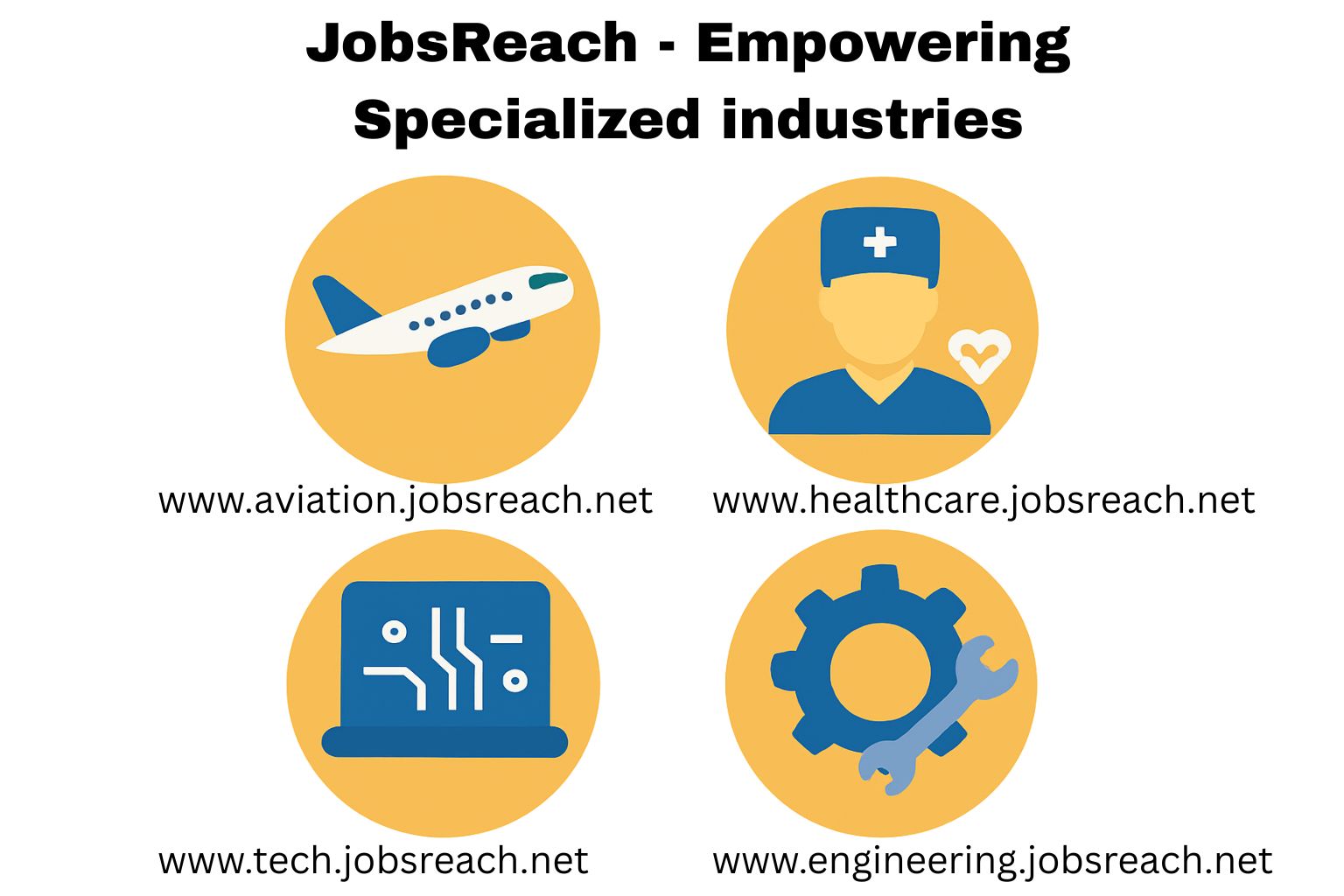
    🌐 Introducing the JobsReach Ecosystem

    JobsReach is pioneering a new model of industry-focused professional networking and opportunity discovery:

    🔹 JobsReach — A hub for industry-specific career growth and deep professional engagement.
    👉 https://jobsreach.net/

    A professional network for industry talent, JobsReach helps professionals find jobs, mentorship, and insights within their specialized fields.

    🔹 JobsReach Aviation — A dedicated community for pilots, engineers, maintenance professionals, and aviation leaders.
    👉 https://aviation.jobsreach.net/

    🔹 JobsReach Healthcare — A space for nurses, clinicians, allied health professionals, administrators, and healthcare innovators.
    👉 https://healthcare.jobsreach.net/

    🔹 JobsReach Tech & Engineering — Designed for software developers, engineers, data scientists, cloud and cybersecurity experts, and technology leaders.
    👉 https://tech.jobsreach.net/

    These platforms are built not to replicate generic social feeds, but to elevate industry relevance ensuring professionals find insights, connections, mentorship, and opportunities tailored to their field.


    🌟 The Way Forward: Growth Through Community and Mentorship

    In 2026 and beyond, growth will no longer be about being everywhere online, it will be about being where it matters.

    For aviation professionals, that means connecting with peers who understand the nuances of safety, regulation, and innovation.
    For healthcare workers, it means sharing insights on digital transformation and patient care frameworks.
    For tech and engineering professionals, it means collaborating around emerging technologies, skill pathways, and career acceleration.

    Mentorship, community, and focused knowledge sharing will be the engines of future industry growth. Generic platforms cannot serve these needs effectively not when industries are evolving faster than ever.

    With data showing persistent shortages, unmet training needs, and growing demand for specialized skills, the case for industry-focused networks has never been stronger.

    Emerging industry specialized platforms for professional growth
    Industry-focused platforms like JobsReach are stepping in to fill the gap for sectors such as aviation, healthcare, and technology.

    JobsReach is leading this transformation bringing professionals together in the spaces where their careers and industries truly grow.

    If you’re ready for meaningful connections and industry-specific opportunities, explore the JobsReach community today:

    🧑‍💼 / 👩‍💼 https://jobsreach.net/forcandidate.html

    👥/🏢 https://jobsreach.net/foremployer.html

  • Exploring Career Opportunities in the Growing Aviation Industry

    The aviation industry is soaring to new heights, driven by rising global travel demand, airline expansion, and technological advancements in aircraft design and operations. From ground support roles to flight crews, technical engineers, and administrative positions, the sector offers a wide range of career paths. Platforms like JobsReach Aviation are helping bridge the gap between talent and opportunity, enabling aviation professionals to connect globally and allowing airlines and aviation companies to find qualified, certified candidates efficiently.

    Aviation Career Opportunities
    Aviation Career Opportunities

    Global Job Opportunities in Aviation

    Europe: Countries like the UK, Germany, France, and the Netherlands are expanding airline networks and MRO facilities. There is demand for pilots, MRO engineers, CAMO specialists, and cabin crew due to retirements and post-pandemic travel growth (EASA Report 2024).

    Middle East: GCC countries including UAE, Saudi Arabia, Qatar, Oman, and Bahrain are investing heavily in aviation infrastructure. Airlines such as Emirates, Qatar Airways, and Saudia actively recruit pilots, engineers, air traffic controllers, and cabin crew from Europe and Asia (CAPA Center for Aviation, 2025).

    United States: The US aviation industry has an acute demand for pilots, maintenance engineers, and aviation technicians due to airline fleet expansions and the retirement of senior staff (Bureau of Labor Statistics, 2024).

    Key Aviation Professions and Career Paths

    1. Ground Support Personnel

    Handle baggage, aircraft towing, fueling, and apron operations.

    Qualifications: High school diploma, physical fitness, airport safety knowledge
    Certifications: Aviation Security, Airport Handling, Forklift/Equipment training
    Career Growth: Ramp Agent → Operations Supervisor → Ground Operations Manager → Airport Operations Director

    2. MRO (Maintenance, Repair, and Overhaul) Engineer

    Maintain, repair, and overhaul aircraft to ensure airworthiness.

    Qualifications: Bachelor’s in Aerospace, Mechanical, or Avionics Engineering
    Certifications: EASA Part-66, FAA license, type-specific endorsements
    Career Growth: Junior MRO Engineer → Senior Engineer → Maintenance Manager → Director of Maintenance

    3. Sheet Metal / Aircraft Structural Technicians

    Repair and fabricate aircraft structures.

    Qualifications: Diploma in Aircraft Maintenance Engineering, metalwork skills
    Certifications: EASA Part-66 B1/B2, Welding/Composite certifications
    Career Growth: Apprentice → Senior Sheet Metal Worker → Structural Team Lead → Aircraft Maintenance Manager

    4. CAMO (Continuing Airworthiness Management Organization) Engineer

    Ensure aircraft compliance and manage airworthiness records.

    Qualifications: Bachelor’s in Aeronautical, Aerospace, or Mechanical Engineering
    Certifications: EASA Part-66, CAMO-specific approvals
    Career Growth: CAMO Engineer → Senior CAMO Engineer → CAMO Manager → Airworthiness Director

    5. Pilot

    Operate aircraft safely for commercial, cargo, or private flights.

    Qualifications: High school diploma minimum; aviation degree preferred
    Certifications: PPL → CPL → ATPL, Type Ratings
    Career Growth: First Officer → Senior First Officer → Captain → Chief Pilot / Flight Ops Manager

    6. Air Hostess / Flight Attendant

    Ensure passenger safety, comfort, and in-flight service.

    Qualifications: High school diploma; degree in hospitality or communication preferred
    Certifications: Cabin Crew Attestation, First Aid & CPR, Safety/Emergency Training
    Career Growth: Flight Attendant → Senior Flight Attendant → Purser → Cabin Services Manager

    7. Air Traffic Controller (ATC)

    Manage aircraft movements and ensure airspace safety.

    Qualifications: Bachelor’s in Aviation or Aeronautical Science
    Certifications: ATC License, Medical Fitness Certificate
    Career Growth: Junior Controller → Tower Supervisor → Area Controller → ATC Manager

    8. Aviation Safety & Quality Inspectors

    Monitor compliance with safety regulations and audit procedures.

    Qualifications: Bachelor’s in Aviation, Aeronautical Engineering, or related field
    Certifications: EASA Safety & Quality Auditor, ISO or aviation safety certifications
    Career Growth: Safety Officer → Senior Safety Inspector → Safety Manager → Director of Safety

    9. Flight Operations / Dispatch Officer

    Coordinate flight planning, fuel, weather, and regulatory compliance.

    Qualifications: Bachelor’s in Aviation or Aeronautical Science
    Certifications: Aircraft Dispatcher License (FAA/EASA), ICAO compliance training
    Career Growth: Flight Dispatcher → Senior Dispatcher → Operations Supervisor → Director of Flight Operations

    Aviation Growth
    Aviation Growth

    How JobsReach Aviation Is Transforming Careers and Recruitment

    JobsReach Aviation connects aviation professionals and employers globally:

    • Global Talent Connectivity: Network with professionals, share experience, and explore new opportunities.
    • Direct Hiring for Employers: Airlines and aviation companies can post vacancies, find qualified candidates, and verify certifications.
    • Certification Verification: Ensures candidates meet regulatory standards, reducing hiring risks.
    • Networking & Career Growth: Professionals can expand their network, find mentorship, and access roles across MRO, CAMO, flight, ground support, and safety positions.

    This platform makes it easier for both professionals and employers to navigate the rapidly growing aviation industry while ensuring a certified, reliable workforce.

    Growth in aviation

    The aviation industry offers structured career paths, global mobility, and exciting opportunities for motivated professionals. From ground support to pilots, engineers, air traffic controllers, and cabin crew, there is a role for nearly every skillset. With platforms like JobsReach Aviation, aviation professionals can access global opportunities, while airlines can directly hire and verify qualified talent efficiently.

    Aviation Career Summary Table

    Comprehensive Overview of Key Aviation Roles

    Aviation RoleBasic QualificationsRequired CertificationsCareer PathJob Opportunities (Europe, Middle East, US)
    Ground Support PersonnelHigh school diploma; physical fitness; airport safety awarenessAviation Security, Airport Handling Certificates, Equipment HandlingRamp Agent → Supervisor → Ground Ops Manager → Airport Ops DirectorHigh demand in EU airports (France, UK, Germany), GCC hubs (UAE, Qatar, Saudi), US major airports
    MRO Engineer (Maintenance Engineer)Bachelor’s in Aerospace, Mechanical, or Avionics EngineeringEASA Part-66 / FAA A&P, Type RatingsJunior Engineer → Senior Engineer → Maintenance Manager → Director of MaintenanceStrong demand due to fleet expansions in Europe, GCC MRO hubs (Dubai, Jeddah, Doha), and US airlines
    Sheet Metal / Aircraft Structural TechnicianAircraft Maintenance Diploma; mechanical/metalwork skillsEASA B1/B2; Welding/Composites CertificationTechnician → Senior Technician → Structural Lead → Maintenance ManagerNeeded in European MRO centers, GCC heavy maintenance facilities, and US aircraft repair stations
    CAMO EngineerBachelor’s in Aeronautical/Aerospace/Mechanical EngineeringEASA Part-66; CAMO-specific approvalsCAMO Engineer → Senior CAMO → CAMO Manager → Airworthiness DirectorHigh demand in Europe’s regulated CAMO environment, expanding GCC fleets, and FAA-regulated US operators
    PilotHigh school diploma; aviation degree preferred; strong physical fitnessPPL → CPL → ATPL; Type RatingsFirst Officer → Senior FO → Captain → Chief PilotMassive shortage across European airlines, GCC premium carriers, and US regional & mainline operators
    Flight Attendant / Cabin CrewHigh school diploma; hospitality/communication preferredCabin Crew Attestation; First Aid & CPRCabin Crew → Senior Crew → Purser → Cabin Services ManagerHigh hiring activity across Europe, GCC luxury airlines, and US carriers
    Air Traffic Controller (ATC)Bachelor’s in Aviation/Aeronautical Science; strong concentrationATC License (ICAO/FAA/EASA); Medical FitnessJunior Controller → Tower/Approach Controller → Supervisor → ATC ManagerATC shortages in EU (Eurocontrol), GCC new airport expansions, and US FAA
    Aviation Safety & Quality InspectorBachelor’s in Aviation/Aeronautical EngineeringEASA/ICAO Safety Auditor Certificates; ISO CertificationsSafety Officer → Senior Inspector → Safety Manager → Director of SafetyRequired across EU aviation authorities, GCC regulators, US FAA-related roles
    Flight Operations / DispatcherBachelor’s in Aviation; understanding of meteorology & planningFAA/EASA Dispatcher License; ICAO trainingDispatcher → Senior Dispatcher → Ops Supervisor → Director of Flight OpsHigh demand across airlines in Europe, Gulf carriers, and US major airlines

    How JobsReach Aviation Supports These Careers

    JobsReach Aviation FeatureBenefit to Aviation Professionals & Employers
    Global Aviation Professional NetworkConnect with peers, mentors, and recruiters worldwide
    Direct Hiring ChannelAirlines & aviation companies can post vacancies and hire certified talent directly
    Certification VerificationEnsures EASA/FAA/ICAO licenses are authentic and up to date
    International Mobility ToolsHelps professionals explore jobs across Europe, Middle East, Asia, and US
    Profession-Specific Talent PoolsDedicated pools for pilots, MRO engineers, CAMO, ATC, cabin crew, and more

    References

    1. European Union Aviation Safety Agency (EASA) Annual Report 2024
    2. CAPA Centre for Aviation, GCC Aviation Recruitment Trends 2025
    3. Bureau of Labor Statistics, Aircraft Mechanics and Service Technicians Outlook, 2024
    4. ICAO – International Civil Aviation Organization
  • Pilot Career Growth: Taking Your Aviation Journey to New Heights

    The aviation industry continues to soar as one of the most dynamic and prestigious fields worldwide. Among its many career paths, becoming a pilot stands out as a journey defined by skill, discipline, and continuous growth. From flight training to commanding advanced jets, every stage of a pilot’s career represents both professional achievement and personal transformation.

    In recent years, with platforms like JobsReach Aviation offering digital career advancement and networking solutions, the opportunities for pilots to progress, connect, and succeed have become broader and more accessible than ever before.

    Pilot career progression

    1. The Foundation: Training and Certification

    Every pilot’s journey begins with rigorous training and internationally recognized certifications that ensure safety, professionalism, and regulatory compliance. The key stages include:

    • Private Pilot License (PPL): The first step that allows pilots to fly privately and build essential flight hours.
    • Commercial Pilot License (CPL): Enables pilots to fly professionally and receive compensation.
    • Instrument Rating (IR): Permits flight in low-visibility and instrument meteorological conditions (IMC).
    • Multi-Engine Rating (MER): Required for operating aircraft with more than one engine.
    • Airline Transport Pilot License (ATPL): The highest level of certification that qualifies a pilot to command commercial airliners.

    2. Aircraft-Specific Certifications in the Aviation Industry

    After obtaining core licenses, pilots must acquire aircraft-specific certifications, often referred to as Type Ratings to operate different aircraft families. Each aircraft model has unique flight systems, cockpit layouts, and performance characteristics.

    Below is an overview of common Type Ratings and certifications across various aircraft categories:

    A. Airbus Aircraft Certifications

    • Airbus A320 Family (A318/A319/A320/A321): Commonly used for short and medium-haul commercial routes.
    • Airbus A330 / A340: Used for long-haul and international flights.
    • Airbus A350 XWB: Advanced wide-body aircraft for ultra-long-haul operations.
    • Airbus A380: The world’s largest passenger aircraft; requires specialized training for multi-deck operations.

    B. Boeing Aircraft Certifications

    • Boeing 737 NG/MAX Series: Most common type rating among commercial airline pilots.
    • Boeing 747: Long-haul, wide-body aircraft known as the “Queen of the Skies.”
    • Boeing 757 / 767: Mid- to long-range operations, popular for transcontinental flights.
    • Boeing 777: One of the world’s leading long-haul wide-body jets.
    • Boeing 787 Dreamliner: Advanced next-generation aircraft using composite materials and digital systems.

    C. Regional and Turboprop Aircraft Certifications

    • ATR 42 / 72: Widely used for regional routes and short-haul connectivity.
    • Embraer E-Jet Series (E170 / E190 / E195): Common among regional airlines and domestic operators.
    • Bombardier Dash 8 Q400: Known for short-runway and regional performance.
    • Saab 340 / 2000: Popular in regional and charter services.

    D. Business Jet Certifications

    • Cessna Citation Series (CJ2, CJ3, XLS, Latitude, Longitude): Light to midsize business jets.
    • Gulfstream G Series (G450, G550, G650, G700): Ultra-long-range corporate aircraft.
    • Bombardier Challenger / Global Series: Preferred for luxury and corporate operations.
    • Dassault Falcon Series (2000 / 7X / 8X): High-performance business jets with advanced avionics.

    E. Cargo and Military-Converted Aircraft

    • Boeing 767 / 777 Freighters: Widely used in global cargo operations.
    • Airbus A330 Freighter: Efficient for medium- and long-range cargo transport.
    • Lockheed Martin C-130 Hercules (Civilian Version: L-382): Multi-purpose cargo and humanitarian missions.

    Each of these certifications requires a dedicated Type Rating course, consisting of:

    • Ground school and systems training
    • Simulator sessions specific to the aircraft model
    • Base and line training with qualified examiners
    • Regular proficiency checks (every 6 to 12 months)

    These certifications are issued under the authority of aviation regulators such as EASA (Europe), FAA (United States), or DGCA (India), and are mandatory for commercial operations.

    3. Structured Career Progression in Aviation

    Once certified, pilots typically advance through a structured hierarchy:

    • Junior First Officer (JFO): Entry-level pilot, assisting in flight operations and gaining experience.
    • First Officer (Co-Pilot): Handles navigation and flight duties under a Captain’s supervision.
    • Captain: Pilot-in-command responsible for the aircraft, passengers, and crew.
    • Training Captain or Examiner: Senior pilots who train and assess others for operational readiness.

    Career progression depends on flight hours, simulator performance, leadership ability, and airline requirements.

    4. Continuous Learning and Technological Advancement

    Modern aviation demands constant learning. With the evolution of fly-by-wire systems, digital flight management computers, and sustainable aviation fuels, pilots must undergo frequent refresher training to stay current.
    Technological advancements like AI-driven flight data monitoring and next-gen cockpit automation require pilots to be adaptable and continuously proficient.

    5. Beyond the Cockpit: Expanding Career Horizons

    Pilots often extend their careers into related aviation roles, such as:

    • Flight Operations and Safety Management
    • Training and Simulation Instruction
    • Corporate and Charter Aviation
    • Airline Management and Compliance

    These roles utilize a pilot’s expertise in leadership, precision, and operational safety, contributing to long-term career stability and diversification.

    Pilot career

    6. JobsReach Aviation: Empowering Pilots for Career Growth

    In today’s connected world, JobsReach Aviation is transforming the way pilots and aviation professionals build their careers.
    It’s more than a job platform, it’s a professional community designed exclusively for the aviation industry.

    JobsReach Aviation offers:

    • Networking Opportunities: Connect with fellow pilots, airline recruiters, and aviation companies worldwide.
    • Experience Sharing: Engage with peers to exchange flight stories, best practices, and industry updates.
    • Direct Job Opportunities: Access verified openings from airlines and aviation organizations without intermediaries.
    • Public Profiles and Video Introductions: Create professional profiles and self-introduction videos to showcase communication skills and personality allowing employers to evaluate candidates before the interview stage.

    This innovative platform empowers pilots to expand their professional visibility, build meaningful industry relationships, and fast-track their aviation careers through direct engagement with global employers.

    7. The Global Outlook: Rising Demand for Pilots

    According to leading aircraft manufacturers, global demand for pilots is expected to exceed 600,000 by 2040. Fleet expansion, increasing air travel, and pilot retirements are driving this surge.
    This creates immense opportunity for both aspiring and experienced pilots to grow and establish themselves in a thriving global market.

    8. Conclusion: A Sky Full of Possibilities

    A pilot’s career is not just about flying, it’s about growth, passion, and continuous evolution. From earning initial licenses to mastering complex aircraft systems, each milestone brings a new level of achievement.

    With the rise of advanced aircraft technology, global aviation expansion, and professional platforms like JobsReach Aviation, the path ahead for pilots is filled with endless opportunities.

    In aviation, growth never lands, it only climbs to new altitudes.

  • Top Flight Schools in Europe & USA: Training the Next Generation of Pilots

    Becoming a pilot is a dream shared by many, but turning that dream into reality requires choosing the right flight school. Across Europe and the United States, several world-class academies offer rigorous training, modern fleets, and structured programs designed to meet international aviation standards.

    In this article, we explore what makes these schools stand out and what it takes to be eligible for admission.

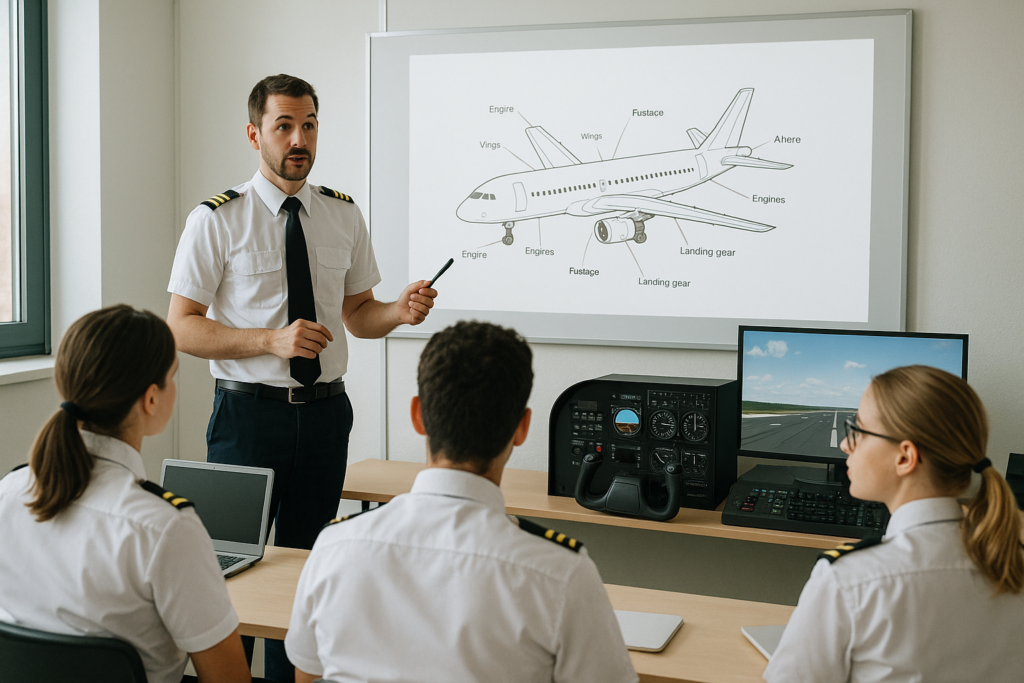
    Pilot Training

    🎓 Basic Eligibility to Join a Flight School

    While every school has specific requirements, most pilot training programs — whether EASA or FAA regulated — follow similar eligibility criteria:

    🧠 Educational Requirements

    • Minimum education: High school diploma or equivalent (10+2 or A-Level).
    • Preferred: Background in Science, Mathematics, or Engineering — especially Aeronautical Engineering or related disciplines.
    • Some integrated ATPL (Airline Transport Pilot License) programs prefer candidates with a university degree.

    🕒 Age Requirements

    • Minimum age: 17–18 years to start flight training.
    • Minimum 21 years for Airline Transport Pilot (ATPL) license issuance.

    🩺 Medical Fitness

    • Class 1 Medical Certificate (EASA or FAA, depending on region).
      • Vision: 20/20 (corrected acceptable).
      • No serious health conditions affecting flight safety.
      • Passed by an authorized aviation medical examiner (AME).

    🌍 Language Proficiency

    • Must demonstrate English language proficiency (ICAO Level 4 or higher).
    • Some European schools may require additional language assessment if English is not your first language.

    ✈️ Other Preferred Qualities

    • Strong aptitude for mathematics and physics.
    • Problem-solving skills and quick decision-making ability.
    • Passion for aviation and willingness to commit to rigorous schedules.
    • For some programs: clean background check and valid passport (for international students).

    🌍 Top Flight Schools in Europe

    SchoolLocationKey FeaturesEligibility Highlights
    CAE Oxford Aviation AcademyOxford, UKOne of the world’s best-known academies; strong airline partnerships (e.g., British Airways, easyJet).High school diploma (Math & Physics preferred), Class 1 Medical, strong English skills.
    L3Harris Airline AcademyUK, Portugal, & EUOffers EASA and FAA training; known for integrated ATPL programs and airline placement.18+, good command of English, strong academics, Class 1 Medical.
    FTEJerezSpainExcellent weather, strong airline pathways (e.g., Iberia, Aer Lingus).Minimum 18 years, high school diploma, clean medical record.
    BAA TrainingLithuania & SpainEASA-approved modular and integrated programs, global presence.18+, fluent in English, physics & math background, medical certification.
    Air Baltic Training CenterLatviaOperates with an airline partner; excellent cadet programs.Minimum 18, good academics, EASA Class 1 Medical.
    OxfordSaudia Flight AcademySaudi Arabia (EASA & GACA-approved)State-of-the-art training in Middle East with European standards.Degree or high school in science stream, English test, Class 1 Medical.

    🇺🇸 Top Flight Schools in the United States

    SchoolLocationKey FeaturesEligibility Highlights
    Embry-Riddle Aeronautical UniversityFlorida & ArizonaPremier aviation university with B.S. degrees in Aeronautical Science; airline & research tie-ups.High school diploma, strong math/physics foundation, Class 1 FAA Medical.
    University of North Dakota (UND Aerospace)North DakotaUniversity-based flight training with FAA programs and strong airline links.High school diploma (preferably in science/engineering), good academic standing.
    ATP Flight SchoolMultiple US statesAccelerated professional pilot program; pathways with regional airlines.18+, FAA Class 1 Medical, U.S. work eligibility, strong English.
    Phoenix East AviationFloridaOffers full FAA training; suitable for international students.High school diploma, Class 1 Medical, English proficiency (TOEFL if needed).
    Paragon Flight TrainingFort Myers, FLFAA-approved; offers structured and custom pilot pathways.18+, FAA medical, valid passport, proficiency in English.

    🧭 Choosing Between Europe & USA

    FactorEurope (EASA)USA (FAA)
    License RecognitionEASA widely accepted across Europe, Asia, Middle East, and Africa.FAA license accepted in the USA and some global carriers; may need conversion elsewhere.
    Training Cost€70,000–€120,000USD $60,000–$100,000
    Weather ConditionsSeasonal variations; Southern Europe offers year-round flying.Favorable in Florida, Arizona, Texas (ideal for consistent flight hours).
    Career PathwaysAirline cadet programs (Lufthansa, easyJet, Wizz Air).Airline pipelines like Delta Propel, United Aviate, American Cadet Academy.
    Visa SupportAvailable for EU/non-EU students via student visas.M1/F1 student visas with optional work permissions.

    💼 Why Training Matters: Pathway to a Pilot Career

    Pilot training is a significant investment, both financially and in time. However, with the global pilot shortage forecasted to exceed 600,000 new pilots by 2040, graduates from reputed schools stand at an advantage.
    Airlines are actively partnering with academies to fast-track cadets, often sponsoring part of the training or offering employment guarantees after program completion.

    📊 Reference:
    Boeing Pilot & Technician Outlook 2024–2043
    According to Boeing, the aviation industry will require over 600,000 new pilots globally by 2043 to meet fleet growth and replacement demand.

    JobsReach Aviation
    JobsReach Aviation connects Flight Schools

    🌐 The Role of JobsReach Aviation

    JobsReach Aviation is transforming how pilots and aviation professionals connect with global employers.

    • ✈️ Secure profile management: Upload and verify pilot licenses, training records, and medical certificates.
    • 💬 Direct communication: Built-in messaging to engage directly with airline recruiters.
    • 🌍 Industry insights: Learn about aviation developments, hiring trends, and training opportunities.
    • 🎓 Education partnerships: Featuring top aviation institutes and academies across Europe, the Middle East, and the USA.

    It’s a dedicated aviation ecosystem designed to bridge the gap between aspiring pilots, flight schools, and airlines, eliminating the noise of general job platforms.

    🧮 Comparing Program Types: Integrated vs Modular vs MPL etc.

    • Integrated ATPL: Full-time, immersive. Typically ~18-24 months in Europe. It includes all theory, flight hours, simulator, etc. Faster, structured, but costlier.
    • Modular: Train in parts; more flexibility, can pace modules over time. Good if working/studying concurrently. Lower upfront cost but total cost over time may be similar.
    • MPL (Multi-Crew Pilot Licence): Focused on airline-style training emphasizing crew resource management early. Requires airline partners.

    ✈️ Flight Schools & Programs: Costs, Requirements, and Advantages

    School / ProgramLocationApprox CostKey Eligibility RequirementsAdvantages & Highlights
    Aerocadet – Full Professional Airline Pilot Program (FPAP-EU)Europe (Romania)~ US$67,250 (zero to ATPL without type-rating) (aerocadet.com)• No experience required (“zero time” start) • Good English & aptitude • Class 1 Medical • Passoretical tests and screening • Internship commitment for instructor job option (aerocadet.com)Integrated ATPL + instructors internship Guaranteed airline placement support Accommodation included Option for FAA ATPL / type-rating is possible (aerocadet.com)
    Airbus Flight Academy (Europe Campus)Angoulême, FranceVaries; fees not always publicly listed; integrated ATPL cost in Europe often ~ €110,000 in many schools. (Flight Academy)• Pass online assessment (math & English) • On-site assessment (aptitude, situational awareness) • Must meet visa / residence conditions if non-EU • Class 1 EASA Medical • Age likely 18+ (Airbus Aircraft)High-quality assets: modern fleet, simulators, theoretical training in English Strong brand recognition Airline cadet pathways Good learning environment (weather, airspace) (Airbus Aircraft)
    Green Flight AcademySweden~ EUR 104,220 for the Integrated ATPL (18 months) program (greenflightacademy.com)• Meets the EASA approval • Medical certificate class 1 • Strong proficiency in English • Financial readiness for tuition + living costs over 18 months (greenflightacademy.com)New modern aircraft, strong sustainability focus Payment sample plan by instalments Good employment connection and support Campus accommodation and support services included (greenflightacademy.com)
    ATP Flight School (USA)USA (multiple locations)$86,995 → $116,995 depending on starting level (zero time to advanced fast-track)
    (https://atpflightschool.com/)
    • At least high school diploma • Class 1 FAA Medical • English proficiency • If starting from zero, must complete PPL, then instrument, multi-engine etc. • Living & exam costs extra (ThePricer)Recognized FAA training path Fixed-cost pricing (good for budgeting) Multiple centres so location flexibility Fast-track programs for serious candidates Large fleet & experienced instructors (ATP Flight School)
    Fly School Air AcademyEurope€80,000-€95,000 depending on program and simulator hours etc. (CPL/ATPL integrated) (https://www.flyschool.es/)• No previous flight experience for “integrated” route • Must satisfy English and mathematics background • Class 1 Medical • Ability to commit to full-time training for 18-24 months (pilotnetwork.eu)Includes significant simulator hours Multiple hours on B737/A320 sims Flight instructor course included in some cadet programs Good reputation and structured ADM (airline-style) prep (pilotnetwork.eu)
    Airways AviationEurope (UK, France, Spain, Germany, Italy, Cyprus) & Global campuses~ €90,000-€130,000 for an integrated ATPL / MPL pathway from zero hours (exact cost depends on location)

    (https://www.airwaysaviation.com/)
    Minimum age ~18
    High school diploma or equivalent with strong maths & physics
    English proficiency (often ICAO Level 4 or higher)
    Class 1 Medical (EASA standard)
    Pass aptitude / assessment tests (eg situational awareness, psychometric)

    🏢 Other Private / Well-Known Schools in Europe & USA

    SchoolLocation(s)Key ProgramsQualification RequirementsAdvantages
    Sabena Flight Academy (now part of CAE Global)Belgium (Brussels), also overseas campuses via CAE ✈️
    (Sabena Engineering)
    Integrated ATPL, Flight crew training, type rating, advanced courses. Same basics: Secondary school, medical, English, minimum age. Also require mental & skills assessment.
    Other European Modular / Private SchoolsEAS Barcelona (Spain), Aerofan FTO (Spain), various UK/Portugal/Italy based schoolsPPL → CPL → ATPL modular or integrated, ME/IR, MCC etc. Comparable entry requirements: Age, education, medical, English. Some modular routes are more flexible for working/part-time students.
    USA Private Flight SchoolsMany FAA-approved schools across States (Florida, Arizona, etc.)PPL, Instrument Rating, CPL, Multi-Engine, Flight Instructor, fast-track ATPFAA medical, English, academic competency (high school + sometimes college), sometimes university pathway programs.Advantage is good weather (especially in southern states), large availability, often lower cost per flight hour, strong post-training job market.
    Flight Schools in Europe and USA

    What to Look for When Choosing a Private Flight School

    • License standard (EASA, FAA, etc.) and recognition by airlines.
    • Medical & age eligibility at the start.
    • Fleet & training equipment, including simulators.
    • Location/weather (to minimize delays due to weather).
    • Cost vs funding options (scholarships, cadet partnerships).
    • Graduate success and airline placement, or job-pathway promises.
    • Flexibility (modular vs integrated) depending on your schedule and resources.

    Things to Watch Out / Hidden Costs

    • Living expenses: housing, food, transport; often not included in training fees. Schools in Eastern Europe are cheaper in this regard.
    • Equipment & Uniforms: headset, flight bag, uniforms, iPad/tablet often extra.
    • Exam & licence fees: theory exams, checkrides, license issuance may cost extra.
    • Visa / Travel Costs for international students.
    • Simulator or extra hours if weather or scheduling causes delays.

    ⚠️ Disclaimer

    Program fees, entry requirements, and listed advantages may vary by location, exchange rate, and training type (MPL, ATPL, modular, or cadet).
    It’s strongly recommended to contact each flight school directly for the most accurate, up-to-date information on costs, eligibility, course structure, and available financing options.

    🚀 Final Thoughts

    Whether you aspire to fly for a global airline or charter operator, choosing the right flight school is the most important first step.
    With the aviation industry expanding rapidly across continents, now is the time to invest in quality training and platforms like JobsReach Aviation make it easier than ever to turn passion into a lifelong career in the skies.

  • 🇹🇷 Türkiye Aviation Outlook: Soaring Growth and Global Hub Dominance

    Türkiye’s aviation industry continues its aggressive ascent, reinforcing its position as a critical global air travel and cargo hub. Driven by the strategic expansion of its flag carrier, Turkish Airlines, and massive investments in world-class airport infrastructure, the sector is experiencing unprecedented growth.

    Aviation Industry in Turkey

    ✈️ Turkish Airlines: Expanding the Global Bridge

    Turkish Airlines (THY) remains the primary engine of the nation’s aviation success, relentlessly increasing its global footprint. The airline is actively executing a long-term strategy aimed at solidifying its status as a world leader:

    • Fleet and Capacity: THY continues its massive fleet expansion, aiming to grow its fleet to approximately 530 aircraft by the end of 2025 and over 800 by 2033. This has directly translated into a substantial increase in Available Seat Kilometers (ASK), reflecting robust operational growth.
    • Network Growth: The airline is one of the world’s most connected, flying to more countries than any other. New and reinstated routes for 2025 are focusing on strategic global links, including new US destinations like Minneapolis, and significant expansion in Africa and the Asia-Pacific (with potential new routes to New Zealand).
    • Low-Cost Focus: The launch of Ajet as a separately incorporated low-cost subsidiary is a key strategic move. It allows the THY Group to aggressively compete in the price-sensitive short-to-medium-haul market while the mainline carrier focuses on premium, long-haul, and high-yield routes.
    • Financial Resilience: Despite global economic volatility and higher operational costs, THY has maintained solid profitability and is strategically reducing its debt, securing its long-term financial stability.

    🏗️ Infrastructure: The Megahubs Powering Growth

    Türkiye’s investment in airport capacity is crucial to handling the surge in traffic and maintaining its transit supremacy.

    • Istanbul Airport (IST): Already a globally acclaimed facility (named World’s Best Airport by multiple authorities in 2025), IST is on track for a major capacity upgrade. Its current capacity of 90 million passengers is set to increase to 120 million by the end of 2025 with the completion of the second phase of investments, and a long-term goal of 200 million passengers.
    • Regional Expansion: Major projects are underway beyond the capital, most notably the Antalya International Airport Expansion. Phase one of this extensive project, expected to be completed in early 2025, will significantly increase the airport’s annual passenger capacity from 40 million to 80 million, supporting the country’s booming tourism sector.
    • Cargo Dominance: The air freight market is thriving, projected to reach over $7 billion by 2033. This growth is underpinned by Istanbul’s strategic location and the success of Turkish Cargo’s state-of-the-art SMARTIST facility, reinforcing the country’s role in global e-commerce and logistics.

    🚁 The Defense and Aerospace Sector

    The Turkish aerospace and defense market continues its trajectory toward self-reliance and global exports, valued at over $15 billion in 2025.

    • National Platforms: The domestic development of sophisticated systems like the KAAN fifth-generation fighter aircraft is a technological milestone.
    • MRO and Maintenance: A key development for commercial aviation is the planned Rolls-Royce and Turkish Technic joint venture for a new Maintenance, Repair, and Overhaul (MRO) center at Istanbul Airport by 2027. This facility will significantly enhance regional engine maintenance capabilities for major engine types, reducing reliance on foreign maintenance providers.

    🧑‍✈️ Bridging the Talent Gap: The JobsReach Aviation Solution

    Amidst this rapid expansion, the need for specialized aviation talent from pilots and engineers to MRO specialists is accelerating. Filling these critical roles efficiently is paramount to sustaining growth.

    JobsReach Aviation is playing a vital role in this talent ecosystem by connecting aviation professionals across the globe with direct career opportunities from airlines. The platform is designed to:

    • Enable Direct Application: Professionals can apply directly to open positions, dramatically reducing the time to process their candidature. This service is utilized by many domestic carriers, including new and emerging operators like Wizz Air who seek highly qualified staff quickly.
    • Targeted Recruitment: Utilizing the JobsReach OutReach capability, the platform helps airlines reach the best candidates in a highly targeted manner, ensuring a better match for niche, high-demand roles.
    • Streamlined Process: By focusing exclusively on the aviation industry, the platform offers a more efficient and industry-relevant hiring process for both employers and job seekers, supporting the continuous operational expansion across Türkiye and the world.
    JobsReach Aviation public profile
    JobsReach Aviation public profile

    💡 Outlook: A Path to Unrivaled Connectivity

    Passenger numbers across Turkish airports have soared, with the major hubs handling millions of passengers in the first half of 2025. This momentum, combined with sustained investment and THY’s relentless route development, suggests that Türkiye is successfully cementing its future as the central aviation hub connecting Europe, Asia, and Africa. The sector remains a vital pillar of the Turkish economy, promising continued job creation and commercial connectivity.