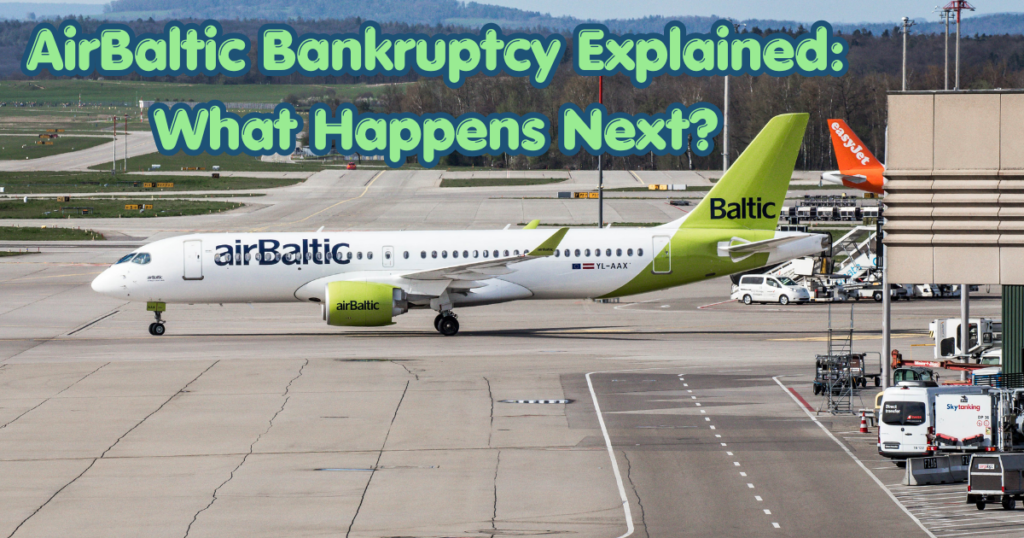
AirBaltic, Latvia’s national airline, has entered Chapter 11 financial reorganization in the United States, marking a major turning point in the airline’s financial and business strategy.
AirBaltic filed for Chapter 11 on September 14, 2026, in the U.S. Bankruptcy Court for the Southern District of New York. However, AirBaltic bankruptcy does not mean the airline has stopped operating.
AirBaltic says flights and customer services continue normally, existing tickets remain valid and passengers do not need to take action simply because of the restructuring.
The airline is using Chapter 11 to restructure its financial obligations while continuing to operate. AirBaltic has also secured a commitment for approximately €350 million in debtor-in-possession financing to support operations during the restructuring, which is currently expected to continue until around June 2027.
This guide explains the AirBaltic bankruptcy, why the airline entered Chapter 11, who owns AirBaltic, its fleet plans, financial problems, potential impact on employees and what the restructuring means for passengers.
AirBaltic Bankruptcy Timeline
The AirBaltic Chapter 11 filing is the result of several years of financial and operational pressure rather than one single event.
2020–2022: COVID-19 Causes Major AirBaltic Losses
The COVID-19 pandemic severely disrupted global aviation.
AirBaltic experienced a major decline in passenger demand and flight operations and accumulated approximately €455 million in losses between 2020 and 2022.
Although air travel later recovered, the pandemic left the airline with a weaker financial position and significant long-term challenges.
2022 Onward: Geopolitical and Operating Pressures
Russia’s invasion of Ukraine created additional challenges for European aviation.
AirBaltic operates in the Baltic region and faced a changing European aviation environment alongside higher fuel, labour, maintenance and financing costs.
2024–2025: Passenger Recovery but Continued Losses
AirBaltic continued expanding its network as European air travel recovered. In 2025, the airline carried approximately 5.2 million passengers and generated around €779.3 million in revenue.
Despite the increase in revenue, AirBaltic remained unprofitable and reported a net loss of approximately €44.3 million in 2025.
The airline’s investor information lists more than 3,000 employees and a fleet of 54 Airbus A220-300 aircraft.
March 2026: Higher Fuel Costs Add Pressure
Rapidly increasing fuel prices created additional financial pressure for AirBaltic in 2026.
Jet fuel is one of the largest costs for an airline, meaning a sharp increase can have a significant effect on profitability and cash flow.
The fuel-price shock added to AirBaltic’s existing financial challenges.
April 2026: Latvia Provides €30 Million Loan
The Latvian government provided AirBaltic with a €30 million state loan as the airline continued working on its financial position and long-term strategy.
August 2026: AirBaltic Reduces Its Fleet Strategy
AirBaltic began moving away from its previous aggressive fleet-growth strategy.
The airline had previously planned to expand its Airbus A220 fleet toward approximately 100 aircraft.
Its revised strategy is significantly smaller.
AirBaltic currently operates 54 Airbus A220-300 aircraft, with a target of approximately 36 aircraft by the end of 2026 and around 40 aircraft by 2031.
The fleet reduction is a major part of the airline’s restructuring strategy.
September 3, 2026: AirBaltic Agrees Up to €257 Million in Interim Financing
Before entering Chapter 11, AirBaltic agreed to up to approximately €257 million in interim financing.
The financing was intended to strengthen liquidity and support the airline’s revised business plan.
However, the additional financing did not remove the need for a wider financial restructuring.
September 14, 2026: AirBaltic Files for Chapter 11
AirBaltic voluntarily initiated Chapter 11 financial reorganization in the United States.
The airline and certain subsidiaries entered the court-supervised restructuring process.
AirBaltic also announced approximately €350 million in debtor-in-possession financing to provide liquidity while it restructures its financial obligations and implements its new business plan.
The airline currently expects the restructuring to continue into 2027, with completion targeted
What Happens to AirBaltic Aircraft Orders?
The reduction in fleet plans also raises questions about future aircraft deliveries.
AirBaltic previously pursued an ambitious Airbus A220 expansion strategy. With the new business plan targeting a much smaller fleet, the airline is expected to review and potentially renegotiate future aircraft commitments as part of the restructuring.
This is an important distinction between aircraft already operating in the fleet and aircraft that have been ordered but not yet delivered.
What Does the AirBaltic Bankruptcy Mean for Employees?
AirBaltic employs more than 3,000 people, making the restructuring an important employment issue in Latvia and the wider European aviation industry.
Reducing the fleet from 54 aircraft to approximately 36 could require changes to staffing levels and operations. AirBaltic has been consulting with labour representatives regarding workforce adjustments. However, the final number of jobs that may be affected has not yet been established.
Potentially affected areas could include pilots, cabin crew, maintenance, engineering, airport operations, administration and other support functions. The impact on employees will become clearer as the Chapter 11 restructuring progresses.
What Happens to AirBaltic Passengers?
AirBaltic says flights continue as normal and existing tickets remain valid. Passengers can continue to book and travel as usual. If a particular flight is changed or cancelled, passengers should follow AirBaltic’s instructions regarding rebooking or refunds.
Existing vouchers, credits and gift cards continue to be handled through the airline’s normal customer services. The important point is that entering Chapter 11 does not automatically cancel existing AirBaltic tickets.
Staying Connected With the Aviation Industry
The AirBaltic restructuring also shows how quickly conditions can change across the aviation industry. For aviation professionals, staying connected can help them understand these changes, exchange industry insights and discover new opportunities. Platforms such as JobsReach Aviation provide a space for aviation professionals to connect with peers and explore opportunities across different areas of aviation.
What Happens Next for AirBaltic?
AirBaltic will focus on restructuring its finances, reducing its fleet, adjusting its workforce and continuing flight operations. The airline currently expects to complete the Chapter 11 process around June 2027 and emerge as a smaller, more financially sustainable airline.