For aspiring aviation professionals from outside Europe, pursuing education and career opportunities in Europe can be a game-changer. With world-class flight schools, aerospace engineering programs, and a growing aviation industry, Europe offers the perfect ecosystem to learn, network, and launch a career. Here’s a guide to the best countries, pathways, and how platforms like JobsReachare revolutionizing opportunities for aviation professionals.
The Netherlands is renowned for its high-quality aviation and aerospace programs. After graduation, non-EU students can apply for the Orientation Year visa, allowing them to work freely for 12 months while exploring career opportunities. This flexibility makes the Netherlands ideal for students looking to gain hands-on experience in aviation engineering, airport operations, or airline management.
Key benefits:
Orientation Year visa grants work freedom for one year.
Strong English-taught programs in aviation technology and engineering.
Gateway to EU aviation industry jobs with a potential path to longer-term work visas.
2. Poland – Affordable Training with EU Credentials
Poland offers affordable pilot training programs and aerospace engineering courses, with a strong focus on practical experience. Students can work part-time during studies and, after graduation, apply for national work permits to continue in Poland or across the EU.
Key benefits:
Lower tuition and living costs compared to Western Europe.
Flight schools offering EASA-certified licenses accepted throughout Europe.
Clear pathway to employment post-graduation with work permit options.
3. Czech Republic – Central Location & Cost Efficiency
Czechia (Czech Republic) provides cost-effective aviation programs with solid engineering and flight training options. While part-time work during study may require extra permits, graduates can apply for work visas after completing their programs.
Key benefits:
Affordable training and living costs.
Strategic Central European location for networking in aviation hubs.
Opportunities to work in aviation engineering and operations with EU recognition.
4. Greece – Weather Advantage & Flight Experience
Greece is ideal for flight students thanks to favorable weather conditions, allowing more flying hours. While the post-study work process may be slightly more complex, the practical experience gained during training is invaluable.
Key benefits:
Optimal climate for flight training.
Hands-on experience in airport and airline operations.
Strong regional aviation industry connections.
Navigating Visa and Work Pathways
Non-EU students must secure a student visa or residence permit in their chosen country. Many countries allow limited part-time work during study. Post-graduation, pathways differ:
Netherlands: Orientation Year visa allows one year of unrestricted work.
Poland: Graduates can apply for work permits if they secure a job.
Czechia & Greece: Work permits typically require job offers.
Tip: Start building your professional network early. Airlines, airports, and aviation engineering firms often prefer candidates who demonstrate practical experience and industry connections.
How JobsReach Empowers Aviation Professionals
Navigating aviation careers in Europe can be challenging, but platforms like JobsReach are creating an ecosystem that makes it easier. JobsReach connects aviation students and professionals worldwide through a peer-to-peer (P2P) networking model, allowing you to:
Discover new opportunities in airlines, airports, and aerospace engineering.
Connect directly with other aviation professionals for mentorship, advice, and job referrals.
Stay visible to recruiters and industry leaders by updating your profile regularly.
By signing up and keeping your profile current, you can tap into a global network of aviation professionals, uncover hidden opportunities, and accelerate your career growth.
For a detailed breakdown of Dutch aviation education, training institutions, career pathways, and how students transition into aviation jobs, read the full article on JobsReach Aviation:
Europe is a hub of opportunities for aviation students, offering world-class training, international exposure, and pathways to employment. Whether you aim to become a pilot, engineer, or aviation operations expert, careful planning of your study, visa, and networking strategy is crucial. Platforms like JobsReach ensure that your skills and connections grow together, helping you take flight in your career.
Take action today: Sign up on JobsReach Aviation, update your profile, and start connecting with aviation professionals who can help you navigate your European journey and beyond.
Healthcare remains one of the fastest‑growing employment sectors in Europe, with strong demand in clinical, administrative, research, allied health and tech‑driven roles. In the Netherlands, a hub of world‑class healthcare systems and education opportunities are expanding for both domestic and international professionals willing to meet local qualification and regulatory standards.
This guide covers the top 10 healthcare careers, required qualifications, visa and labour entry pathways, and relevant Dutch educational institutions and training programs to help you plan your career path in 2026 and beyond.
1. Registered Nurse (RN)
Why in Demand: Aging populations and expanding hospital services drive demand.
Qualifications:
Bachelor of Nursing (HBO Verpleegkunde) or equivalent degree.
In the Netherlands, nurses must register with the BIG‑register before practicing in regulated roles such as injections or medical procedures.
Visa / Local Requirements:
For non‑EU professionals, employers can sponsor a GVVA (combined residence & work permit) or Highly Skilled Migrant status when salary thresholds are met.
Language: Dutch proficiency (often B1/B2 CEFR) is essential in patient‑facing roles.
Foreign qualifications must be recognized, and you may be asked to complete supplementary training or adaptation.
Educational Institutions (NL):
HAN University of Applied Sciences – School of Health Studies – Nursing, Allied Medical Care.
Amsterdam University of Applied Sciences (AUAS) – Health degree programmes.
Hanze UAS – International Health Care School – Nursing, Physiotherapy, Related health studies.
Hogeschool van Amsterdam (HVA) – Health and nursing pathways.
Windesheim University of Applied Sciences – Healthcare and wellbeing programmes.
Zuyd University of Applied Sciences – Nursing and healthcare tracks.
2. Medical Laboratory Scientist / Clinical Lab Technician
Qualifications:
Bachelor’s or associate degree in clinical laboratory science or related biomedical field.
Visa / Local Requirements:
Foreign degrees generally require recognition to meet Dutch labour standards.
Depending on job role, language requirements and registration with relevant associations may apply.
Educational Pathways:
Many Dutch universities of applied sciences (e.g., Inholland UAS, others) offer biomedical, laboratory and allied health programmes, with opportunities for international exchange/credits.
3. Allied Health Professionals (Physiotherapists, Radiographers, Occupational Therapists)
Qualifications:
Accredited bachelor’s degree in a relevant allied health discipline.
Visa / Local Requirements:
EU professionals benefit from automatic mutual recognition under EU professional qualification rules when available.
Non‑EU professionals must have diplomas recognized and may need a professional competence certificate from the relevant Dutch authority.
Institutes:
HAN University of Applied Sciences – Allied medical care and related tracks.
Windesheim – Physiotherapy, therapeutic care.
Hanze UAS – Physiotherapy and speech therapy programmes.
4. Healthcare Administrators / Hospital Managers
Qualifications:
Bachelor’s in Healthcare Administration, Health Management or related field.
Master’s degrees advantageous for senior roles.
Visa / Local Requirements:
Generally non‑regulated, meaning qualification recognition is employer‑specific and less stringent than clinical roles. However, work contract and residence permit rules still apply.
Institutes / Courses:
Business and management programmes with healthcare specializations are offered at many universities of applied sciences.
5. Medical Researchers / Clinical Scientists
Qualifications:
MSc or PhD in biomedical, clinical sciences or related discipline.
Visa / Local Requirements:
Research roles may be sponsored under the Highly Skilled Migrant or EU Blue Card schemes if salary and contract criteria are satisfied.
Academic research often requires strong language skills and project‑specific credentials.
Institutes:
Universities with biomedical faculties (e.g., Leiden, Utrecht, Amsterdam) often embed research pathways.
6. Pharmacists / Clinical Pharmacologists
Qualifications:
Master’s in Pharmacy and national registration/license where applicable.
Visa / Local Requirements:
Pharmacists are recognised regulated professions; diploma recognition is required for practice in the BIG or national register.
7. Mental Health Professionals (Psychologists, Psychiatrists, Counselors)
Qualifications:
Psychology degrees with master’s and specific professional licensing (varies by role).
Visa / Local Requirements:
Regulated roles require recognition in the Netherlands overviewed by the Regulated Professions Database.
8. Emergency Medical Technicians (EMTs) / Paramedics
Qualifications:
Vocational or bachelor training in emergency care.
Visa / Local Requirements:
EMT roles may be less tightly regulated than nurse/doctor; however, qualification evaluation and Dutch language ability remain important.
9. Health IT Specialists / Digital Health Experts
Qualifications:
Degrees in Health Informatics, IT or related tech fields.
Visa / Local Requirements:
Non‑regulated roles can often be sponsored under general work permits if skill thresholds and language requirements are met.
10. Public Health Specialists / Epidemiologists
Qualifications:
Bachelor’s and often master’s in public health or epidemiology.
Visa / Local Requirements:
Typically non‑regulated, professionals may work on research, policy, or NGO projects with appropriate employment contracts.
Visa & Labour Entry Pathways (for Foreign Professionals)
EU / EEA Citizens
EU qualifications in regulated professions (e.g., nurse, physiotherapist) may be recognized under mutual recognition agreements.
For practice, professionals must still register with Dutch authorities like the BIG‑register if applicable.
Non‑EU / International Citizens
Key Work Visa Paths:
GVVA (Combined Permit) – Employer‑sponsored work & residence permit.
Highly Skilled Migrant Permit – Employer‑sponsored, for skilled roles with salary thresholds.
EU Blue Card – For highly qualified workers (higher salary threshold, mobility benefits).
Orientation Year Visa (Zoekjaar) – For recent graduates to search for employment.
Professional Recognition Steps:
Have foreign professional diploma recognized by relevant Dutch authority.
In regulated roles, register with bodies like the BIG‑register to legally practice.
Often you must demonstrate Dutch language proficiency (varies by profession but generally B1/B2+ for clinical interaction).
Language & Local Integration Tips
Dutch proficiency is frequently required in clinical roles because patient communication is essential.
Employers often offer language support once hired, especially for care assistant positions.
Some specialised integration programs exist to help foreign healthcare professionals adapt to Dutch standards and practice.
Educational & Training Institutions in the Netherlands
Here’s a list of notable institutions offering healthcare and related programmes:
Universities of Applied Sciences (HBO)
HAN University of Applied Sciences – School of Health Studies – Nursing, allied care.
Amsterdam University of Applied Sciences (AUAS) – Health degrees.
Hanze UAS – International Health Care School – Nursing, physiotherapy etc.
Hogeschool van Amsterdam (HvA) – Health and wellbeing pathways.
Windesheim University of Applied Sciences – Care and social work.
Zuyd University of Applied Sciences – Nursing ↔ health care.
Inholland UAS – Broad programmes including health‑related ones.
Specialised Courses & Training Providers
Private and part‑time training (e.g., NCOI Zorg & Wellzijn) for upskilling in care and management.
Who Can Sponsor a GVVA or Highly Skilled Migrant Visa for Healthcare Professionals
For non‑EU/EEA healthcare professionals seeking to work in the Netherlands, the most common work and residence permit routes are the GVVA (Combined Work & Residence Permit) and the Highly Skilled Migrant (HSM) visa. Both require a sponsoring employer that is recognised by the Dutch immigration authority (IND).
🧑⚕️ 1. GVVA (Combined Residence & Work Permit)
The GVVA (Gecombineerde Vergunning voor Verblijf en Arbeid) allows an employer to sponsor you for both residency and work in one application.
Who Can Sponsor GVVA? A GVVA sponsor must be:
A Dutch employer or organisation that is legally established in the Netherlands and
Recognised by the Immigration and Naturalisation Service (IND) as a GVVA sponsor or willing to apply for sponsorship status for the employee.
Examples of organisations that commonly sponsor GVVA for healthcare professionals:
Hospitals and medical centres
Nursing homes and long‑term care facilities
Rehabilitation & physiotherapy centres
Clinical laboratories and diagnostic institutions
University medical centres involved in research roles
Healthcare staffing agencies that place international professionals with healthcare clients
💡 Important: Not all employers are automatically approved as GVVA sponsors, the company must either already hold sponsor status with the IND or apply for it before hiring a non‑EU professional.
🧑⚕️ 2. Highly Skilled Migrant (HSM) Visa
The Highly Skilled Migrant scheme is designed for employers to recruit international talent into specialised or high‑skilled roles, often with higher salary thresholds than regular work visas.
Who Can Sponsor Highly Skilled Migrant? To sponsor an HSM visa, the employer must be:
Recognised by the IND as a Highly Skilled Migrant sponsor
Able to pay at least the minimum salary requirement for HSM roles
Must meet a defined minimum gross salary level (higher than standard GVVA), which varies with age and role seniority.
⚠️ If the salary isn’t above the HSM threshold, the employer can still sponsor a GVVA instead, provided the role meets the IND definition of employment.
Employer Requirements to Sponsor
Regardless of visa type, the sponsoring employer must:
✔ Be legally registered and operating in the Netherlands ✔ Have a positive track record with the IND (good HR practices) ✔ Commit to the financial responsibilities of hiring foreign talent ✔ Provide a valid employment contract and meet salary standards
What Types of Healthcare Roles Typically Get Sponsored?
Commonly Sponsored Roles
These are roles where GVVA or HSM sponsorship is frequently approved:
GVVA Sponsors:
Nurses (ICU, ER, paediatrics, elderly care)
Allied health professionals (physio, occupational therapy, radiography)
EMT/paramedic roles
Healthcare assistants
Clinical lab technicians
HSM Sponsors (specialist or high‑skill roles):
Medical researchers (PhD/MSc level)
Health informatics / digital health specialists
Healthcare administrators / operations managers
Pharmacologists
Clinical trial experts
Public health specialists
How the Sponsorship Process Works (Step‑by‑Step)
Job Offer: You receive a formal employment contract from a Dutch sponsor.
Sponsor Application (if not already approved):
The employer applies or confirms existing sponsor status with the IND.
Submission to IND:
The employer submits the GVVA or HSM application to the IND on your behalf.
IND Decision:
If approved, you receive a combined residence & work permit or an HSM visa.
Entry & Residence:
You can travel to the Netherlands and start work under the permit.
Tips for Healthcare Professionals Seeking Sponsorship
✔ Target larger hospital networks & academic centres — more likely to have IND sponsor status. ✔ Prepare credential recognition early (especially for regulated roles like nursing). ✔ Highlight language willingness — show plans to learn Dutch if required. ✔ Use specialised recruiters who know the Dutch healthcare sponsorship landscape.
💰 2026 Highly Skilled Migrant Salary Thresholds (Minimum Income Requirements)
For a company to successfully sponsor an HSM visa, the healthcare professional’s monthly gross salary (excluding the 8% statutory holiday allowance) must meet or exceed the IND’s thresholds effective in 2026:
Category
Required Monthly Gross Salary (excl. holiday pay)
HSM – Age 30 and older
€ 5,942
HSM – Under age 30
€ 4,357
HSM – Reduced salary criterion (e.g., orientation year graduates)
€ 3,122
EU Blue Card (standard)
€ 5,942
EU Blue Card – Reduced
€ 4,754
(Thresholds for 2026)
🧠 What These Mean
Standard HSM criteria apply in most specialist, managerial and high‑skill healthcare jobs.
The reduced salary criterion is often available to recent graduates or those who previously held a search year visa.
EU Blue Card is another pathway with similar requirements but includes additional EU mobility benefits.
🩺 Practical Examples for Healthcare Roles
Highly Skilled Migrant Sponsorship
A hospital hiring a health IT specialist or clinical researcher earning €6,000/month can sponsor them as an HSM because the salary exceeds the €5,942 threshold. The employer must be a recognized IND sponsor.
GVVA Sponsorship
A nursing home recruiting a registered nurse from outside the EU with a valid employment contract can apply for a GVVA on the nurse’s behalf, even if the salary doesn’t meet the HSM thresholds. The employer still must meet Dutch work permit regulations and submit the application correctly.
🧩 Key Things Employers Must Do to Sponsor You
Whether sponsoring a GVVA or an HSM visa, employers must:
✔ Be recognised as a sponsor by the IND ✔ Provide a valid employment contract with appropriate salary ✔ Meet Dutch labour conditions and reporting obligations ✔ Submit the permit application to the IND on your behalf
For highly skilled migrant applications, salary compliance is strictly checked based on the IND’s thresholds for 2026, so employers must plan accordingly.
📌 Pro Tips for Healthcare Professionals
✅ Check employer sponsor status before accepting a job offer only recognised sponsors can submit GVVA/HSM applications. ✅ Verify that the job contract meets salary criteria if you expect HSM or EU Blue Card sponsorship. ✅ Prepare credential recognition early, especially for regulated roles (nurses, therapists, pharmacists). ✅ Improve Dutch language skills many clinical and patient‑facing roles expect at least B1/B2 proficiency.
Conclusion
The Netherlands and wider Europe offer diverse healthcare career opportunities across clinical, allied, administrative, research and digital roles. To succeed — especially as a foreign professional — you must meet educational requirements, obtain professional recognition (e.g., BIG registration) for regulated roles, secure the appropriate visa, and often demonstrate Dutch language ability.
With the right qualifications and preparation, healthcare professionals can build rewarding careers in one of Europe’s most advanced health systems.
Looking beyond the Netherlands? Explore healthcare jobs abroad in the UK, Canada, and Gulf countries Healthcare jobs abroad to discover high-demand roles and global opportunities.
References
🇳🇱 Government & Official Immigration / Professional Recognition
A Strategic Guide for Future Aviation Professionals
Powered by the JobsReach Aviation
The European aviation industry continues to evolve with growing demand for qualified pilots, licensed engineers, air traffic controllers, and airport operations specialists. Whether you are a student planning your entry or a professional considering specialization, understanding the right qualifications, certifications, and training pathways is essential.
This guide outlines the major aviation career routes in Europe with a focus on the Netherlands and highlights how the JobsReach Aviation Industry Guide can help you explore training institutions worldwide.
The aviation industry offers multiple professional tracks, each requiring specific training and regulatory certifications:
Commercial / Airline Pilot
Aircraft Maintenance & Engineering (MRO)
Air Traffic Control (ATC)
Airport Operations & Logistics
Cabin Crew & Passenger Services
Each pathway follows a structured qualification framework regulated by European authorities such as EASA (European Union Aviation Safety Agency) or national aviation bodies.
🎓 Basic Qualifications to Get Started
📘 Education Foundation
A strong academic base is essential:
High School Diploma (HAVO/VWO in the Netherlands or equivalent)
Strong background in Mathematics and English
Physics is beneficial for technical and pilot careers
For technical or management roles, a Bachelor’s degree (HBO) is often required.
🧠 Core Skills & Requirements
English proficiency (ICAO Level 4+ for pilots and ATC)
Analytical thinking and problem-solving
Attention to detail
Strong communication skills
Valid work authorization (for non-EU citizens working in the Netherlands)
🛫 Pilot Career Path in Europe
Becoming a commercial pilot requires structured licensing under EASA regulations.
Step 1: Medical Certification
EASA Class 1 Medical Certificate (mandatory before advanced training)
Step 2: Flight Licenses
Training must be completed at an EASA Approved Training Organisation (ATO).
Key licenses include:
PPL (Private Pilot License) – Entry-level recreational license
CPL (Commercial Pilot License) – Required for paid flying
ATPL (Airline Transport Pilot License) – Required to captain airline aircraft
Often achieved initially as a Frozen ATPL
Becomes “unfrozen” after meeting flight hour requirements
Step 3: Additional Ratings
Instrument Rating (IR)
Multi-Engine Rating
Upset Prevention & Recovery Training (UPRT)
Type Rating (specific aircraft qualification)
⏳ Duration & Cost
18 months to 3 years
Often €90,000–€120,000+ depending on program type (modular vs integrated)
MBO Level 4 diploma in Aviation Operations or similar field
Strong teamwork and situational awareness
🇳🇱 Leading Aviation Institutions in the Netherlands
Bachelor-Level Education
🎓 Hogeschool van Amsterdam – Aviation (HBO)
Offers specialization in:
Aviation Engineering & Technology
Airport Operations
Logistics
Airline & Flight Operations
Pilot Training Academies
KLM Flight Academy – Airline-linked ATPL pathway
EPST (European Pilot Selection & Training) – Integrated ATPL programs
Wings over Holland – Frozen ATPL programs
E-Flight Academy – Modular PPL to ATPL training
Airport Operations (MBO Level 4)
Summa College – Aviation Operations Specialist
ROC van Amsterdam – Aviation Operations
STC Group – Aviation Operations Specialist
These programs combine classroom learning with practical airport simulations.
📜 Key Certifications Summary
Career Path
Required Certifications
Pilot
EASA PPL → CPL → ATPL + Type Rating
MRO Engineer
EASA Part-66 License (A/B1/B2)
Air Traffic Controller
National ANSP License (Post-Selection)
Airport Operations
MBO Level 4 + Industry Certifications
Cabin Crew
Airline Training & Safety Certifications
🌍 Explore Global Aviation Training with JobsReach
Choosing the right training institution is critical. Aviation professionals should compare:
Regulatory approval (EASA, ICAO, Part-147, ATO)
Program structure (modular vs integrated)
Industry partnerships
Graduate placement rates
The JobsReach Aviation Industry Guide provides a global directory of aviation training schools, flight academies, engineering institutions, and specialized aviation colleges.
SAMCO Aircraft Maintenance (Part-147 Type Training) – Provides EASA Part-147 Type Training courses; useful for specific aircraft type endorsements (e.g., EWIS, HF). Website:https://www.samco.aero/services/technical-training/
🧠 Notes for Aspiring Aviation Professionals
EASA Approved Training Organisations (ATOs & Part-147): For pilots and maintenance engineers, training should be completed at organisations approved by EASA for licences and module exams.
Part-147 vs Part-66: Part-147 refers to approved training organisations for aviation maintenance; Part-66 refers to the licence framework for technicians.
Pilot pathways: Aside from broad ATOs, short-term training (e.g., Heli Holland rotorcraft) expands career options beyond fixed-wing.
ATC training is provided by the national NAV service provider (LVNL) rather than third-party schools.
In 2025, many specialized industries like aviation, healthcare, technology, engineering, and others faced systemic setbacks that go beyond cyclical business trends. These challenges were not just about economic headwinds, they revealed a deeper structural issue in how professionals connect, learn, and advance their careers.
In crowded digital environments dominated by generic social media and broad professional networks, the voices and needs of specialized industries are often hidden, buried under content that has little relevance to the specific skills, insights, and opportunities these professionals require.
To understand both the problem and the solution, it helps to look at the data.
📉 The Hidden Crisis in Specialized Industries
Healthcare: A Global Workforce Shortage
The healthcare industry continues to grapple with a massive talent gap:
A projected shortage of at least 10 million healthcare workers globally by 2030 has been identified, with serious implications for public health outcomes and economic growth. Closing this gap could avert 189 million years of life lost and add $1.1 trillion to the global economy. McKinsey & Company
Many healthcare organizations report difficulty recruiting staff with specialized digital health skills, even as demand for AI and telemedicine roles grows. WifiTalents
These shortages are not evenly distributed; they are most acute in roles that directly impact patient care, innovation adoption, and operational efficiency.
Aviation: Growth Without Enough Workforce
Although travel demand rebounded strongly post-pandemic, the aviation workforce has struggled to keep pace:
Estimates project a need for around 1.5 million new aviation professionals globally by 2034, spanning pilots, technicians, cabin crew, and air traffic controllers. VisaVerge
Aviation companies are investing heavily in upskilling, with 78% planning increased training, yet only about 35% of staff feel confident in their digital skills. WifiTalents
This mismatch between workforce supply and industry growth threatens reliability, innovation adoption, and safe operations.
Tech & Engineering: Skills Gap Continues to Hamper Growth
The technology sector is facing some of the most intense competition for talent:
Nearly 50% of employers worldwide report difficulty finding candidates with the right skills, and 75% struggle to fill technology and digital roles. Market.biz
The World Economic Forum reports that 50% of employees will need reskilling by 2025 due to rapid technological change—a trend that spans across engineering and tech roles. Keevee
In engineering and industrial sectors more broadly, 73% of employers say they are struggling to find the skilled talent they need, particularly in engineering, manufacturing, and tech domains. ManpowerGroup Nederland
📣 Why Generic Platforms Fall Short
So why is this happening, even as workforce shortages become more visible?
Today’s major networking and job platforms are built for scale, not relevance. They prioritize broad engagement over focused industry insights, leading to several problems:
Noise over knowledge: Content unrelated to specific industries competes for attention, burying meaningful professional insights beneath marketing, lifestyle posts, and generic content.
Poor signal for specialized skills: Professionals in aviation, healthcare, technology, or engineering find it difficult to identify peer insights, emerging trends, and relevant opportunities.
Networking limitations: Generic platforms lack the context to facilitate deep mentorship, industry-specific collaboration, and targeted job matching.
In short, professionals are present but their communities and career pathways are not being supported.
🛠 The Case for Industry-Focused Platforms
To unlock the full potential of specialized industries, professionals need focused ecosystems where:
Skills and insights are shared among true peers
Career pathways are visible and navigable
Employers and candidates can connect directly on relevant terms
Mentorship and growth opportunities are embedded in the network
This is where specialized platforms make a difference.
🌐 Introducing the JobsReach Ecosystem
JobsReach is pioneering a new model of industry-focused professional networking and opportunity discovery:
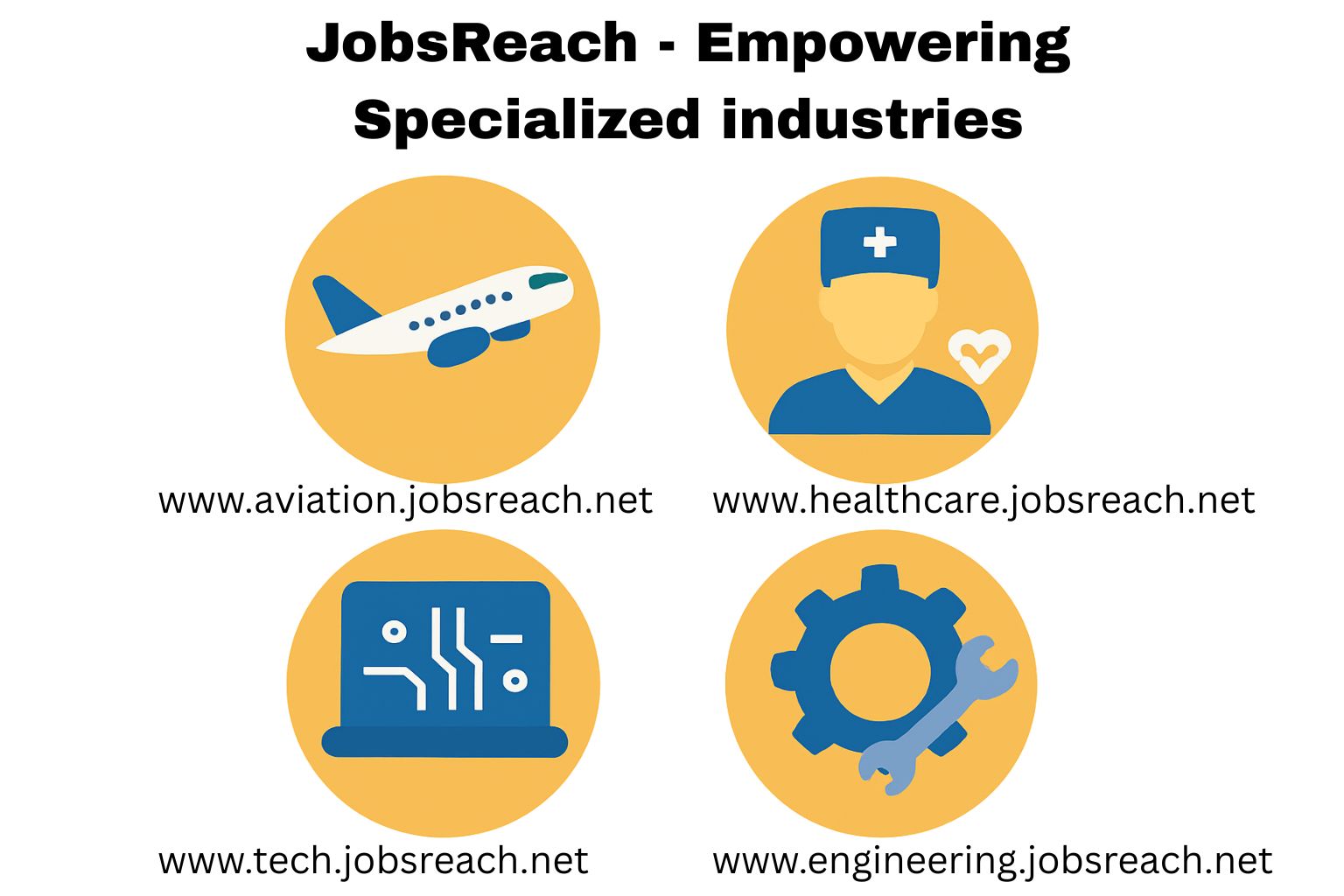
🔹 JobsReach — A hub for industry-specific career growth and deep professional engagement. 👉 https://jobsreach.net/
🔹 JobsReach Aviation — A dedicated community for pilots, engineers, maintenance professionals, and aviation leaders. 👉 https://aviation.jobsreach.net/
🔹 JobsReach Healthcare — A space for nurses, clinicians, allied health professionals, administrators, and healthcare innovators. 👉 https://healthcare.jobsreach.net/
🔹 JobsReach Tech & Engineering — Designed for software developers, engineers, data scientists, cloud and cybersecurity experts, and technology leaders. 👉 https://tech.jobsreach.net/
These platforms are built not to replicate generic social feeds, but to elevate industry relevance ensuring professionals find insights, connections, mentorship, and opportunities tailored to their field.
🌟 The Way Forward: Growth Through Community and Mentorship
In 2026 and beyond, growth will no longer be about being everywhere online, it will be about being where it matters.
For aviation professionals, that means connecting with peers who understand the nuances of safety, regulation, and innovation. For healthcare workers, it means sharing insights on digital transformation and patient care frameworks. For tech and engineering professionals, it means collaborating around emerging technologies, skill pathways, and career acceleration.
Mentorship, community, and focused knowledge sharing will be the engines of future industry growth. Generic platforms cannot serve these needs effectively not when industries are evolving faster than ever.
With data showing persistent shortages, unmet training needs, and growing demand for specialized skills, the case for industry-focused networks has never been stronger.
Industry-focused platforms like JobsReach are stepping in to fill the gap for sectors such as aviation, healthcare, and technology.
JobsReach is leading this transformation bringing professionals together in the spaces where their careers and industries truly grow.
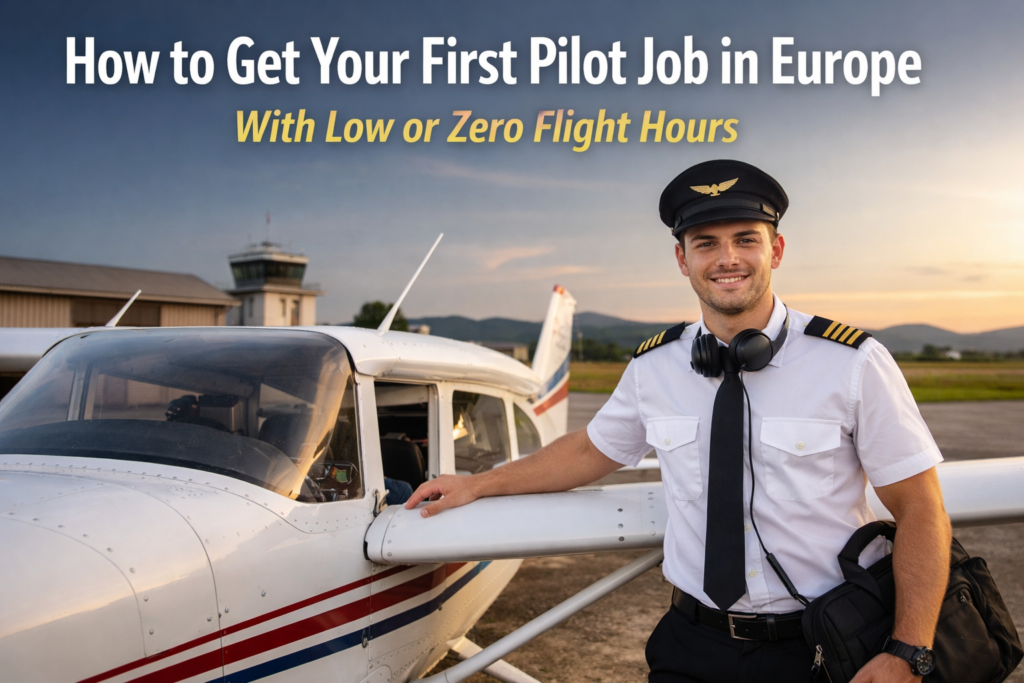
Getting your first pilot job in Europe is often the hardest step in an aviation career especially if you’re a newly graduated pilot with low or zero flight hours. Most job listings demand experience you don’t yet have, creating a frustrating cycle.
The good news is that many pilots before you faced the same problem and still succeeded. This guide focuses on practical, realistic ways to break into the European aviation market with minimal experience.
Why Getting Your First Pilot Job in Europe Is So Difficult
Europe has one of the most regulated aviation environments in the world. Operators prefer pilots who:
Are familiar with EASA regulations
Require minimal additional training
Already have real operational experience
As a low-hour graduate, your main objective is simple: build credible flight experience as efficiently as possible.
Flight Instructor: The Fastest Way to Build Flight Hours
Becoming a flight instructor is the most common first job for low-hour pilots in Europe.
Why flight instruction works:
You accumulate flight hours quickly
You improve decision-making and procedural discipline
Instructor experience is highly respected by airlines
You earn income while flying
Even if instruction isn’t your long-term goal, it is often the most reliable stepping stonetoward commercial or airline flying.
Entry-Level Pilot Jobs That Accept Low Hours
Not all pilot jobs require thousands of hours. Some entry-level flying jobs in Europe are accessible to new graduates:
Tourist and sightseeing flights
Aerial photography and survey flying
Agricultural or utility flying
Pipeline or powerline patrols
These jobs may be seasonal or location-specific, but they provide valuable operational experience and help you move beyond zero hours.
Small Airlines and Regional Operators in Europe
Major airlines rarely hire low-hour pilots directly. However, small and regional operators are often more flexible.
How to improve your chances:
Be willing to relocate anywhere in Europe
Apply directly to operators, not only job portals
Look for airlines offering mentorship or type-rating support
Many airline captains today started their careers with small regional companies.
Cadet Programs and Graduate Pilot Schemes
Several European airlines and flight schools offer cadet programsdesigned specifically for newly licensed pilots.
These programs often include:
Structured training and mentoring
A defined path to employment
Lower initial flight-hour requirements
Cadet programs are competitive, but they remain one of the best entry points for low-hour pilots in Europe.
Trained Outside Europe? Start License Conversion Early
If you completed your training outside Europe, you must convert your license to EASA standards before working commercially.
Typical requirements:
EASA theoretical knowledge exams
Skill test or simulator assessment
Possible additional flight training
Costs of approximately€10,000–€20,000
Timeline of 3–12 months
Starting the conversion early significantly increases your job options.
Networking: The Hidden Pilot Job Market
Many first pilot jobs are never publicly advertised.
Effective networking includes:
Staying in contact with instructors and examiners
Attending aviation expos and job fairs
Connecting with pilots and recruiters on LinkedIn
Joining European aviation forums and clubs
In many cases, a strong recommendation matters more than total flight hours.
Alternative Ways to Gain Aviation Experience
If flying jobs are limited at first, consider staying active within aviation:
Simulator or ground school instruction
UAV / drone operations
Dispatch or operational roles with flying companies
These positions keep you close to flying opportunities and strengthen your professional profile.
Key Takeaways for Low-Hour Pilot Graduates
Flight instruction is the fastest way to build hours
Entry-level and niche jobs provide valuable experience
Small airlines are more open to low-hour pilots
Cadet programs offer structured entry into aviation
Networking is essential in the European job market
Every flight hour matters, especially early on
Final Thoughts
Getting your first pilot job in Europe with low or zero flight hours is challenging but absolutely achievable. Success depends on flexibility, persistence, and smart career planning. Your first job doesn’t define your entire career, but it does open the door. Once you start flying, opportunities expand quickly.
If you’d like to explore more pilot career opportunities, take a look at the article below.
Over the past decade, social media platforms have evolved far beyond networking tools. They have become central hubs of entertainment, increasingly replacing traditional formats like television and movie theatres. Rather than passive consumption of scheduled content, modern audiences now experience real-time, interactive entertainment shaped by users themselves a cultural shift with profound effects on media consumption and social behaviour.
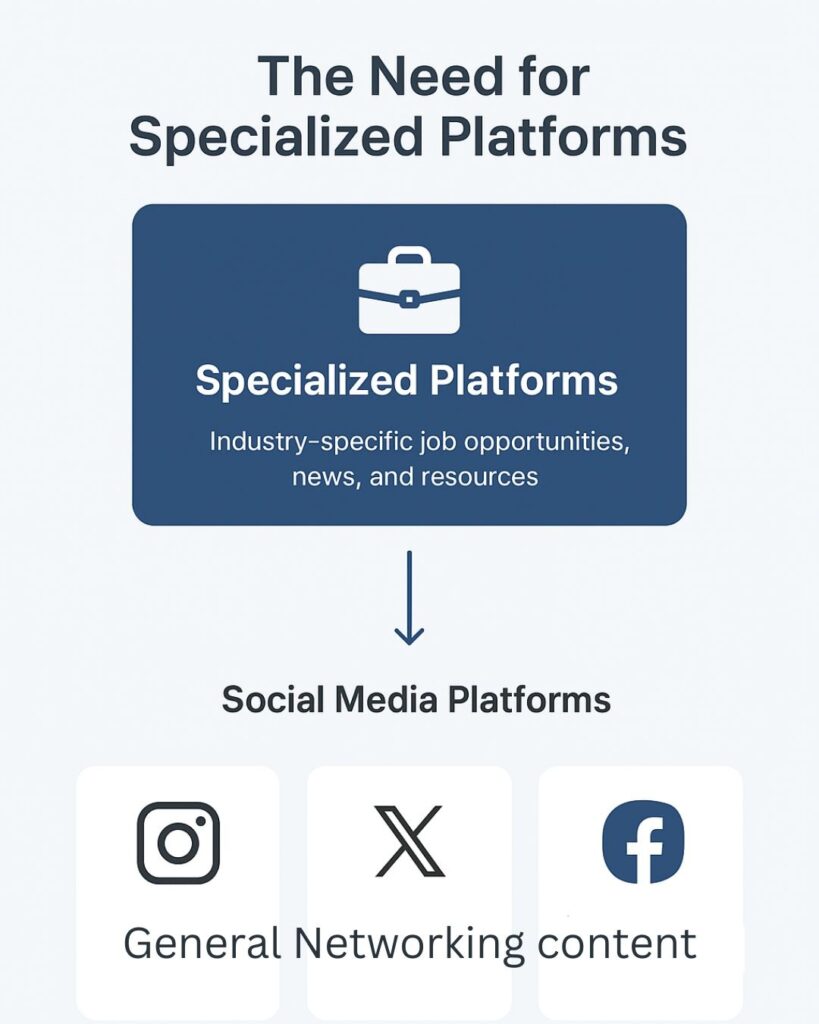
Social media is overtaking traditional media, making specialized platforms indispensable in fields such as aviation, healthcare, and technology
🌐 Social Media as the New Entertainment Powerhouse
Today’s platforms like TikTok, YouTube, Instagram and others are not just places to connect with friends. They have become primary entertainment destinations, especially for Gen Z and younger viewers who prefer short-form, personalized, and algorithm-driven content over traditional broadcast shows and long-form movies.
Shift in viewing habits: Social video now accounts for significant portions of what used to be television viewing, with sources reporting social platforms contributing up to roughly 20% of all TV consumption.
Ad revenue transformation: Creator-driven content on platforms such as YouTube and TikTok is poised to surpass traditional media in advertising revenue marking a pivotal shift in where money and attention are flowing.
Interactive formats: Features like live-streaming, duet challenges, and short clips have turned users into both content creators and consumers, reshaping entertainment into a participatory ecosystem.
This transformation is rooted in user-generated content, where creators entertain large audiences by sharing their daily lives, humour, talents, and opinions often exposing personal facets of their lives in public spaces to generate engagement and followers.
🎭 The Social Media Entertainment Effect: Exposure for Attention
Unlike traditional media, where professionals produce scripted shows or films, social platforms reward visibility and shareability. This often drives users to:
Exhibit parts of their personal lives publicly for entertainment.
Pursue viral reach by leaning into trends, challenges, and personal storytelling.
Prioritize content formats that maximize likes, comments and followers.
This dynamic has cultural implications: content driven by personal exposure and relatability dominates feeds, and algorithms amplify what is more shareable or sensational over what is informative or educational.
While this enhances entertainment value and social engagement, it also means many users focus on popularity metrics rather than meaningful skill-building or career progress.
📉 Why Mainstream Social Media Is Least Likely to Support Professional Growth
Although platforms like LinkedIn have evolved into professional networks, mainstream social media inherently prioritizes entertainment, virality, and broad engagement over career development. A few reasons for this include:
🔹 Entertainment Over Expertise
Content that captures attention (funny, sensational, emotionally charged) often crowds out content that fosters professional thinking and development.
Many people are drawn more by entertainment than educational or career-related content meaning the platforms’ design incentivizes viral entertainment over structured professional narratives.
🔹 Noise vs. Signal
With millions of posts per day, relevant expertise-driven content gets drowned out unless someone has already established a dedicated audience.
Metrics like “views” and “likes” signal popularity, not professional credibility or skill.
🔹 Algorithm Bias
Algorithms optimize for engagement and attention, not career advancement. Consequently, users interested in professional content often have to actively search for it, rather than it being delivered organically.
🔹 Limited Professional Tools
While some social platforms feature job listings or events, they lack the specialized tools for career progression like mentorship frameworks, industry-specific communities, role-based learning paths, or verified accomplishments.
📊 The Rise of Specialized Professional Platforms
Generic social media is poorly suited for structured career growth, which is why specialized platforms focused on professional development are gaining traction. Platforms like JobsReach illustrate this trend. According to the JobsReach article, such specialized industry platforms meet the needs of modern professionals by offering curated networking, tailored industry insights, relevant job opportunities, and sector-specific communities.
Whereas LinkedIn operates at a broad level, specialized platforms go deeper by:
Providing industry-targeted updates and trends (e.g., regulatory updates for aviation, research news for healthcare).(JobsReach blog)
Offering forums and discussions designed for professional advancement.(JobsReach blog)
Helping professionals stay connected with peers and mentors within their field.(JobsReach blog)
Connecting users transparently with job opportunities that match specific skill sets.
These focused solutions bridge the gap left by broad networks, which tend to dilute content relevance in favour of engagement and entertainment.
Expanding the Scope: How JobsReach Drives Industry-Focused Professional Growth Beyond Mainstream Platforms
While the original JobsReach article highlights the importance of niche platforms for professionals, it doesn’t fully capture the breadth of JobsReach’s impact across specialized industries. Platforms like JobsReach are not only connecting professionals in general, but actively promoting sectors such as Aviation, Healthcare, and Technology, offering targeted resources, insights, and communities for industry-specific growth.
This approach helps professionals:
Stay focused on their industry: By connecting with peers, mentors, and opportunities specific to their field.
Access curated industry knowledge: Including updates, trends, and best practices relevant to their sector.
Advance skills and careers effectively: Through targeted learning, networking, and job-matching opportunities.
Moreover, JobsReach and similar specialized platforms are emerging as the go-to destination for professional growth, bridging the gap left by mainstream social networks that prioritize entertainment and visibility over structured career development. By fostering industry-wide engagement, these platforms guide professionals toward meaningful advancement and provide tools for long-term success in their respective fields.
This broader perspective demonstrates that professional growth thrives in specialized ecosystems, where content, connections, and opportunities are all aligned with industry needs something general social media cannot deliver at scale.
The Next Evolution of Social Media: Professional Growth Beyond Entertainment
Social media has long dominated as a source of entertainment, reshaping how audiences consume content and shifting attention away from traditional television and movie theatres. Its interactive, fast-paced environment encourages creativity and visibility, but often prioritizes entertainment over structured career development.
The next generation of social platforms addresses this gap by focusing on professional advancement and industry-specific engagement. Specialized platforms like JobsReach offer curated communities, targeted industry insights, and tailored opportunities that mainstream networks cannot. By fostering expertise-driven networking, mentorship, and career-focused collaboration, these platforms are becoming the essential spaces for meaningful professional growth, guiding professionals toward purposeful development beyond social entertainment.
In today’s fast-paced professional landscape, the demand for specialized industry platforms has never been higher. Professionals in industries like Aviation, Healthcare, and Technologyface unique challenges that generic professional networks struggle to address. Platforms like LinkedIn, while widely recognized, are increasingly struggling to maintain active engagement, as users are often distracted by entertainment-driven social media platforms such as Instagram, TikTok, and others. As a result, professionals find it harder to access industry-specific insights, networking opportunities, and career-relevant updates on traditional platforms.
Why Specialized Platforms Are the Need of the Hour
The rise of specialized industries, with their complex regulations, rapidly evolving technologies, and sector-specific career pathways, demands dedicated platforms. Professionals need spaces that go beyond generic networking platforms that deliver industry news, skill development opportunities, mentorship, and job openings tailored to their expertise. Without these, valuable talent risks being disconnected from key opportunities, slowing personal and sector-wide growth.
Technology innovators need a hub for specialized IT insights, emerging trends, and collaborative opportunities.
Overcoming Industry-Specific Challenges
Professionals in these sectors require dedicated platforms to access industry insights, connect with peers, discover opportunities, and advance their careers. Generic platforms can leave them disconnected from critical sector-specific information and networking opportunities, slowing both professional and industry growth.
How JobsReach Addresses These Gaps
JobsReach is designed to bridge the gap left by generic professional networks. By offering dedicated, personalized platforms for each industry, JobsReach ensures that professionals have access to all the tools they need to grow, connect, and succeed.
Industry Connections: JobsReach enables networking within your own sector, allowing professionals to share insights, best practices, and mentorship opportunities.
Discussion Forums:Engage in meaningful discussions about emerging trends, challenges, and innovations specific to your industry.
Opportunities & Career Growth:Access curated job listings and career paths that match your specialization.
Industry Updates: Stay informed with sector-specific news, research, and regulatory changes.
Personalized Platforms for Career Growth
JobsReach goes beyond generic networking by creating personalized, industry-specific experiences. Professionals can engage with relevant content, participate in discussions, and explore opportunities that match their career stage and expertise. This not only enhances individual growth but also strengthens the industry by ensuring that skilled professionals are connected, informed, and contributing to sector advancement.
Driving Growth in Specialized Industries
The rise of specialized industries demands equally specialized platforms. JobsReach is answering this need by providing dedicated spaces that foster networking, knowledge sharing, and career development. By focusing on personalized engagement, sector-specific insights, and meaningful connections, JobsReach strengthens industries while helping professionals thrive within their fields.
By connecting professionals to relevant opportunities, insights, and peers, JobsReach ensures that users remain engaged, informed, and empowered to grow in their careers.
Specialized Industry Platforms: The Key to Staying Competitive
The future of professional growth lies in focusing on specialized industries rather than generic platforms. By tailoring expertise and solutions to niche sectors, businesses and professionals can maintain a competitive edge and thrive in their fields.
As professional networking evolves, specialized industries need platforms that truly understand their unique challenges and opportunities. JobsReach delivers on this promise, empowering professionals in Aviation, Healthcare, Technology, and other specialized sectors to connect, learn, and advance, bridging the gap left by generic professional networks.
In a world where generic solutions fail to meet the nuanced needs of specialized professionals, JobsReach empowers industries and individuals alike. By providing tailored platforms, it bridges the gap between opportunity and expertise, enabling professionals to grow within their industry and ensuring industries thrive with a skilled, connected workforce.
If you’re aiming to join a flight school or an airline cadet program, you will almost certainly encounter the COMPASS test one of the aviation industry’s leading pilot aptitude assessments. Despite its importance, many applicants feel unsure about what the test actually includes, how to prepare, and what the different modules truly measure.
This guide gives you one complete overview of the COMPASS test, including:
All modules explained clearly
What each section measures
Examples
Preparation tips
EPST-specific insights
Whether you’re applying to EPST Phase 1, CAE, FTE Jerez, or any school using COMPASS, this article will help you prepare with confidence.
What Is the COMPASS Test?
COMPASS stands for Computerized Pilot Aptitude Screening System. It is a computer-based assessment designed to measure a candidate’s pilot potential not aviation knowledge or flying experience.
It evaluates whether you have the native cognitive and coordination abilities required for flight training.
The COMPASS Test Measures: Hand eye foot coordination, Multitasking ability, Mental arithmetic, Short-term memory, Spatial orientation, English skills & Reaction time.
These abilities are essential for flying and help schools predict how well you will perform in aircraft or simulators.
COMPASS Test Modules
The exact modules vary slightly by flight school, but the main components remain the same. Below, you’ll find a complete explanation of each module.
1. Control Test (Tracking & Coordination)
The Control Test is one of the most important and challenging parts of COMPASS. It measures your ability to coordinate your hands, feet, and eyes simultaneously.
Your Task
You control two instruments at once:
A ball drifting left/right (controlled with rudder pedals)
A needle moving on a gauge (controlled with a joystick or yoke)
How Controls Work
If the ball drifts right, press the left pedal
If the ball drifts left, press the right pedal
This is based on real aircraft yaw control.
What Makes It Hard
You must constantly switch your focus
You can’t “fixate” on one instrument
Small, smooth corrections are required
It becomes harder as the speed increases
What It Measures
Coordination, Reaction time, Divided attention, Precision
Pro Tips
Don’t overcorrect
Keep movements smooth
Scan both instruments continuously
Stay relaxed — tension leads to jerky inputs
2. Math Test (Mental Arithmetic)
The Math module contains simple but fast-paced arithmetic. The difficulty is not the math itself, but the time pressure.
Included in This Section
Addition, Subtraction, Multiplication, Division, Long division & Multiplication tables.
What’s NOT Included
No algebra, No geometry, No word problems, No aviation questions.
Moderate level similar to secondary school English.
How to Prepare
Read aviation news, Practice grammar basics, Learn ICAO phraseology.
6. Multitasking Test
This test simulates cockpit workload. You will perform two or more tasks at once, such as: Simple calculations, Keeping a target centered and Responding to audio cues.
How to Improve
Multitasking games, Dual-task exercises, Practice math while doing a second task (e.g., tracking a cursor)
7. Physics/Science Module (Not Always Included)
Some flight schools include a simple science module.
Typical Questions
Speed = distance ÷ time
Basic forces
Pressure & temperature
Mechanics basics
Difficulty
Very basic high-school level.
What Passing COMPASS Really Means
The COMPASS test is designed to evaluate whether you have the natural abilities required to become a pilot. It doesn’t expect perfection. It doesn’t require experience. It simply checks whether you can learn to fly effectively.
If you understand the modules and practice the basics especially coordination, math, and multitasking. You’ll walk into the test with confidence.
The aviation industry is soaring to new heights, driven by rising global travel demand, airline expansion, and technological advancements in aircraft design and operations. From ground support roles to flight crews, technical engineers, and administrative positions, the sector offers a wide range of career paths. Platforms like JobsReach Aviation are helping bridge the gap between talent and opportunity, enabling aviation professionals to connect globally and allowing airlines and aviation companies to find qualified, certified candidates efficiently.
Aviation Career Opportunities
Global Job Opportunities in Aviation
Europe: Countries like the UK, Germany, France, and the Netherlands are expanding airline networks and MRO facilities. There is demand for pilots, MRO engineers, CAMO specialists, and cabin crew due to retirements and post-pandemic travel growth (EASA Report 2024).
Middle East: GCC countries including UAE, Saudi Arabia, Qatar, Oman, and Bahrain are investing heavily in aviation infrastructure. Airlines such as Emirates, Qatar Airways, and Saudia actively recruit pilots, engineers, air traffic controllers, and cabin crew from Europe and Asia (CAPA Center for Aviation, 2025).
United States: The US aviation industry has an acute demand for pilots, maintenance engineers, and aviation technicians due to airline fleet expansions and the retirement of senior staff (Bureau of Labor Statistics, 2024).
Key Aviation Professions and Career Paths
1. Ground Support Personnel
Handle baggage, aircraft towing, fueling, and apron operations.
Qualifications: High school diploma, physical fitness, airport safety knowledge Certifications: Aviation Security, Airport Handling, Forklift/Equipment training Career Growth: Ramp Agent → Operations Supervisor → Ground Operations Manager → Airport Operations Director
2. MRO (Maintenance, Repair, and Overhaul) Engineer
Maintain, repair, and overhaul aircraft to ensure airworthiness.
Qualifications: Bachelor’s in Aerospace, Mechanical, or Avionics Engineering Certifications: EASA Part-66, FAA license, type-specific endorsements Career Growth: Junior MRO Engineer → Senior Engineer → Maintenance Manager → Director of Maintenance
Learn why B1/B2 aircraft engineer roles are in high demand in the Netherlands and explore opportunities in B1/B2 Aircraft Engineer Jobs in the Netherlands (2026): Why Demand Is Surging.
3. Sheet Metal / Aircraft Structural Technicians
Repair and fabricate aircraft structures.
Qualifications: Diploma in Aircraft Maintenance Engineering, metalwork skills Certifications: EASA Part-66 B1/B2, Welding/Composite certifications Career Growth: Apprentice → Senior Sheet Metal Worker → Structural Team Lead → Aircraft Maintenance Manager
Operate aircraft safely for commercial, cargo, or private flights.
Qualifications: High school diploma minimum; aviation degree preferred Certifications: PPL → CPL → ATPL, Type Ratings Career Growth: First Officer → Senior First Officer → Captain → Chief Pilot / Flight Ops Manager
6. Air Hostess / Flight Attendant
Ensure passenger safety, comfort, and in-flight service.
Qualifications: High school diploma; degree in hospitality or communication preferred Certifications: Cabin Crew Attestation, First Aid & CPR, Safety/Emergency Training Career Growth: Flight Attendant → Senior Flight Attendant → Purser → Cabin Services Manager
7. Air Traffic Controller (ATC)
Manage aircraft movements and ensure airspace safety.
Qualifications: Bachelor’s in Aviation or Aeronautical Science Certifications: ATC License, Medical Fitness Certificate Career Growth: Junior Controller → Tower Supervisor → Area Controller → ATC Manager
8. Aviation Safety & Quality Inspectors
Monitor compliance with safety regulations and audit procedures.
Qualifications: Bachelor’s in Aviation, Aeronautical Engineering, or related field Certifications: EASA Safety & Quality Auditor, ISO or aviation safety certifications Career Growth: Safety Officer → Senior Safety Inspector → Safety Manager → Director of Safety
9. Flight Operations / Dispatch Officer
Coordinate flight planning, fuel, weather, and regulatory compliance.
Qualifications: Bachelor’s in Aviation or Aeronautical Science Certifications: Aircraft Dispatcher License (FAA/EASA), ICAO compliance training Career Growth: Flight Dispatcher → Senior Dispatcher → Operations Supervisor → Director of Flight Operations
Aviation Growth
How JobsReach Aviation Is Transforming Careers and Recruitment
JobsReach Aviation connects aviation professionals and employers globally:
Global Talent Connectivity:Network with professionals, share experience, and explore new opportunities.
Direct Hiring for Employers: Airlines and aviation companies can post vacancies, find qualified candidates, and verify certifications.
Networking & Career Growth: Professionals can expand their network, find mentorship, and access roles across MRO, CAMO, flight, ground support, and safety positions.
This platform makes it easier for both professionals and employers to navigate the rapidly growing aviation industry while ensuring a certified, reliable workforce.
Growth in aviation
The aviation industry offers structured career paths, global mobility, and exciting opportunities for motivated professionals. From ground support to pilots, engineers, air traffic controllers, and cabin crew, there is a role for nearly every skillset. With platforms like JobsReach Aviation, aviation professionals can access global opportunities, while airlines can directly hire and verify qualified talent efficiently.
Aviation Career Summary Table
Comprehensive Overview of Key Aviation Roles
Aviation Role
Basic Qualifications
Required Certifications
Career Path
Job Opportunities (Europe, Middle East, US)
Ground Support Personnel
High school diploma; physical fitness; airport safety awareness
The global healthcare sector is facing unprecedented workforce challenges. While Europe grapples with shortages of nurses, doctors, and allied health professionals due to ageing populations, burnout, and limited training capacity, the Middle East is emerging as a key destination for skilled European professionals. Countries in the Gulf Cooperation Council (GCC) are not only attracting talent through competitive compensation and modern infrastructure but are also setting a global example in strategic healthcare resource mobilization by creating structured recruitment pipelines, ethical hiring practices, and robust integration support for international staff.
1. Why the Middle East Is Tapping Into European Healthcare Talent
The Middle East, particularly the Gulf Cooperation Council (GCC) countries, is experiencing a booming demand for healthcare workers. Saudi Arabia alone needs an additional 175,000 medical professionals by 2030 including 69,000 doctors, 64,000 nurses, and 42,000 allied health professionals (agbi.com). This is driven by growing populations, rising expectations for high-quality care, medical infrastructure expansion, and increased demand for specialized services (cottm.com).
Many GCC hospitals rely heavily on expatriate staff, with some facilities having more than half of their workforce from outside the region (cottm.com).
This article explains the rising demand for European (especially UK) healthcare professionals in the Middle East and how JobsReach Healthcare is uniquely positioned to facilitate this cross‑regional mobility.
While many European healthcare professionals are exploring opportunities in the Middle East, there is also strong demand within Europe. Read our guide on 10 High-Demand Healthcare Jobs in the Netherlands & Europe to explore current opportunities and shortage roles.
2. Why European / UK Healthcare Professionals Are Moving to the Middle East
There is a growing trend of European healthcare workers, especially from the UK, relocating to Gulf countries. Reports indicate that around 70 nurses or midwives leave the UK weekly for countries like the UAE, Qatar, and Saudi Arabia (thenationalnews.com).
European professionals are drawn by competitive tax-free salaries, generous relocation packages, modern facilities, and professional development opportunities (thenationalnews.com). Recruitment drives in cities like London, Paris, and Berlin are actively sourcing nurses, doctors, and allied health professionals for Gulf hospitals (middleeasthealth.com).
In addition, European Parliament records show that since 2022, hundreds of European doctors and physiotherapists have already moved to Gulf countries. European Parliament
These trends are not just anecdotal, global staffing firms such as Medacs are actively running recruitment events in European cities (including London, Germany, France, and Sweden) to fill hundreds of roles in GCC hospitals.
3. Which Middle East Countries Are Most Attractive
United Arab Emirates (UAE): Top destination due to world-class hospitals, tax-free income, and high-quality living infrastructure (thenationalnews.com).
Saudi Arabia: Vision 2030 drives massive healthcare expansion and recruitment of European professionals (agbi.com, zawya.com).
Qatar: Offers high pay, advanced medical facilities, and research opportunities (europarl.europa.eu).
Oman: Attracts professionals with stable contracts, work-life balance, and a peaceful environment (elantisstaffing.wordpress.com).
Bahrain and Kuwait: Increasingly recruiting European staff in government and private hospitals, with visa sponsorship and benefits (thenationalnews.com).
4. Challenges and Ethical Considerations
Brain drain from Europe: Countries already facing staff shortages risk losing highly skilled professionals (europarl.europa.eu).
Expatriate dependency: Gulf systems may become over-reliant on foreign talent (cottm.com).
Integration and retention: Licensing, cultural adaptation, and long-term retention are ongoing challenges.
5. How JobsReach Healthcare Facilitates Global Talent Mobility
JobsReach Healthcare provides a digital platform connecting European healthcare professionals with employers across the Middle East and beyond.
Global Talent Network: Enables professionals to explore opportunities and connect with hospitals in Saudi Arabia, UAE, Qatar, Oman, Bahrain, and Kuwait.
Direct Hiring and Vacancy Posting: Employers can post open positions, browse verified candidate profiles, and initiate recruitment for qualified professionals.
Ethical Recruitment: Supports transparent, fair hiring processes, ensuring proper contracts, relocation assistance, and career pathways.
Integration Support: Offers credential verification and onboarding resources to help professionals adapt quickly to new healthcare systems.
By bridging European talent with Middle Eastern demand, JobsReach Healthcare ensures that both employers and professionals benefit from global mobility while maintaining fairness and sustainability.
6. Strategic Benefits for Both Sides
For Middle Eastern Employers: Access to high-quality, experienced European and UK healthcare staff helps fill specialized roles and scale operations quickly.
For European Professionals: Attractive career options, competitive pay, and international exposure without the long-term uncertainty of shifting permanently.
For Healthcare Systems Globally: A balanced, ethical model of talent mobility that supports workforce sustainability without over-exploiting any one region.
The demand for a good cause
The demand for European and UK-trained healthcare professionals in the Middle East is surging and for good reason. The region’s health systems are expanding rapidly, and they need talent with experience, specialization, and flexibility. Meanwhile, many European professionals are looking for fresh opportunities that offer better compensation and lower stress.
JobsReach Healthcare is uniquely placed to serve as a bridge in this dynamic ecosystem. By connecting global talent with regional demand in a responsible, structured way, it empowers both employers and professionals to benefit without compromising on fairness, integration, or sustainability.
To expand your global options, also check out our guide on the top 10 easiest countries for healthcare workers to work abroad in 2026Top 10 countries for healthcare workers