The tech industry has entered a challenging new phase. In 2026, enterprise software buyers are facing a wave of aggressive marketing known as “agent washing.” Much like the “cloud washing” era of a decade ago, legacy software vendors are rushing to rebrand basic automation tools, simple chatbots, and rigid workflows as autonomous “Agentic AI.”
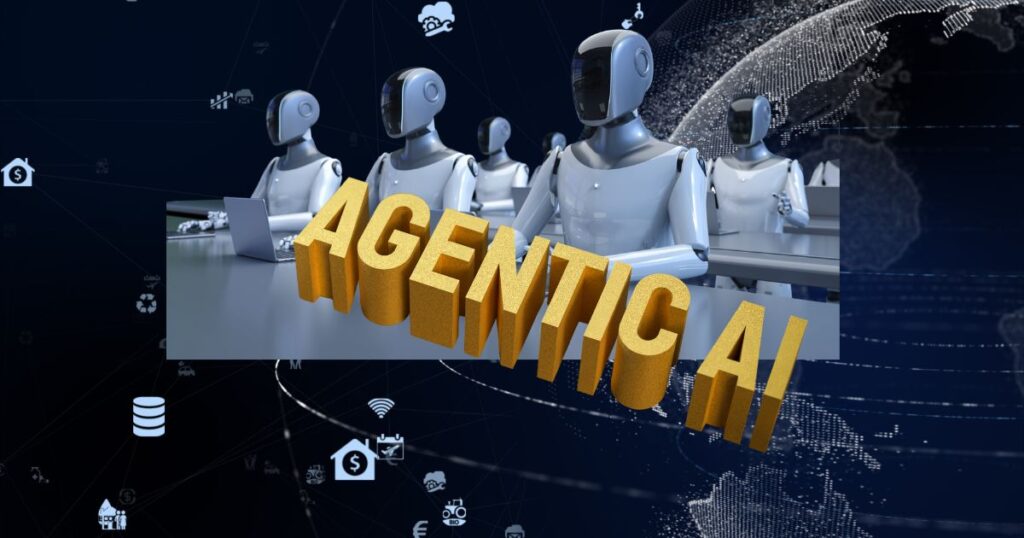
At the same time, organizations trying to build true autonomous systems are hitting a wall. According to recent Gartner market data, while over 60% of enterprise organizations plan to deploy AI agents, only 17% have done so successfully.
This stark divide has created a massive execution gap, the distance between boardroom expectations of self-managing digital workers and the messy reality of deploying them in production.
What is “Agent Washing”?
Agent washing occurs when software providers use the buzzwords of autonomous intelligence to market deterministic, rule-based software.
To make informed purchasing decisions, IT leaders must understand the fundamental difference between legacy automation and true agentic behavior:
| Feature | Legacy Automation / “Agent Washed” Systems | True Agentic AI Systems |
|---|---|---|
| Logic Engine | IF/THEN statements and rigid hard-coded scripts. | Dynamic reasoning, planning, and self-correction. |
| Edge Cases | Fails or throws an error when encountering unexpected data. | Evaluates alternatives and adapts to ambiguous situations. |
| Tool Usage | Restricted to specific, pre-built API integrations. | Can dynamically choose, sequence, and learn to use tools. |
| Goal Orientation | Executes a fixed, step-by-step process. | Given an abstract objective, it figures out the path itself. |
If a system cannot decide how to solve a problem on its own when the environment changes, it is not an agent. It is a script.
The Three Pillars of the Execution Gap
The enterprise failure rate for true agentic deployments remains high due to three distinct operational challenges.
1. The Token Cost Avalanche (Inference Economics)
Early pilots often look spectacular because they run on limited datasets. However, when scaled to enterprise volumes, agentic systems become financial liabilities. True agents operate via recursive loops—they think, plan, check their work, and call tools.
A single user objective can trigger dozens of internal LLM calls. If engineered poorly, a multi-agent system can burn through thousands of dollars in API tokens in a single afternoon, creating an unsustainable return on investment (ROI).
2. Pilot Purgatory and Cascading Errors
In a standard software pipeline, errors are deterministic and easy to patch. In an agentic workflow, errors compound.
If Agent A (the data extractor) makes a minor 5% error in sentiment analysis, Agent B (the strategist) bases its entire plan on flawed data. By the time Agent C (the executor) acts, the outcome is completely detached from reality. This unpredictability keeps 40% of enterprise agent projects trapped in permanent pilot phases, as teams struggle to guarantee output quality.
3. The Enterprise Permissions Wall
True agents require read and write access to enterprise systems to be useful. They need to query databases, send emails, and modify CRM records.
Most corporate IT environments are not built for non-human, non-deterministic actors. Granting an AI agent broad system permissions introduces severe security risks. Conversely, restricting their permissions too much turns them back into glorified search bars, rendering them useless.
How to Close the Gap: A Blueprint for Tech Leaders
To cut through vendor hype and deploy agentic systems that actually deliver measurable value, organizations should adopt a strict engineering framework.
[Define Narrow Objective] ──> [Enforce Human-in-the-Loop] ──> [Implement Model Mixology]
- Enforce “Model Mixology” (FinOps for Agents): Do not route every sub-task to expensive frontier models. Use a multi-tier strategy. Deploy hyper-efficient small language models (SLMs) like DeepSeek R1 for routine data parsing or drafting, and reserve heavy models exclusively for high-level reasoning and final planning.
- Establish Hard Circuit Breakers: Prevent infinite loops and token hemorrhages by embedding strict runtime guardrails. Build deterministic code walls that kill an agent’s execution if it exceeds a set token budget, a time limit, or a specific number of tool calls without reaching a resolution.
- Design Intentional “Human-in-the-Loop” (HITL) Gateways: True autonomy does not mean zero supervision. Define high-risk trigger events such as moving financial capital, emailing a client, or altering master data that require an explicit, physical click from a human manager before the agent can proceed.
The Path Forward
Agentic AI represents a genuine paradigm shift in software capabilities, but its value is currently obscured by aggressive marketing and flawed deployment strategies.
Success in this era requires tech leaders to look past glossy vendor slide decks. By treating AI agents not as magic software, but as complex, non-deterministic systems requiring strict budget caps, tight permission sandboxes, and rigorous evaluation frameworks, enterprises can successfully close the execution gap.
Navigating these dynamics requires a dedicated space for collaboration and learning. JobsReach Tech is a professional ecosystem designed specifically for tech industry professionals to connect with a focused network, share insights, exchange ideas, and discover growth opportunities. By bringing together everyone from developers and data scientists to product managers, the JobsReach Tech Community enables professionals to keep up with shifting paradigms like Agentic AI while building meaningful, industry-specific connections.