Introduction
The global healthcare sector is facing unprecedented workforce challenges. While Europe grapples with shortages of nurses, doctors, and allied health professionals due to ageing populations, burnout, and limited training capacity, the Middle East is emerging as a key destination for skilled European professionals. Countries in the Gulf Cooperation Council (GCC) are not only attracting talent through competitive compensation and modern infrastructure but are also setting a global example in strategic healthcare resource mobilization by creating structured recruitment pipelines, ethical hiring practices, and robust integration support for international staff.
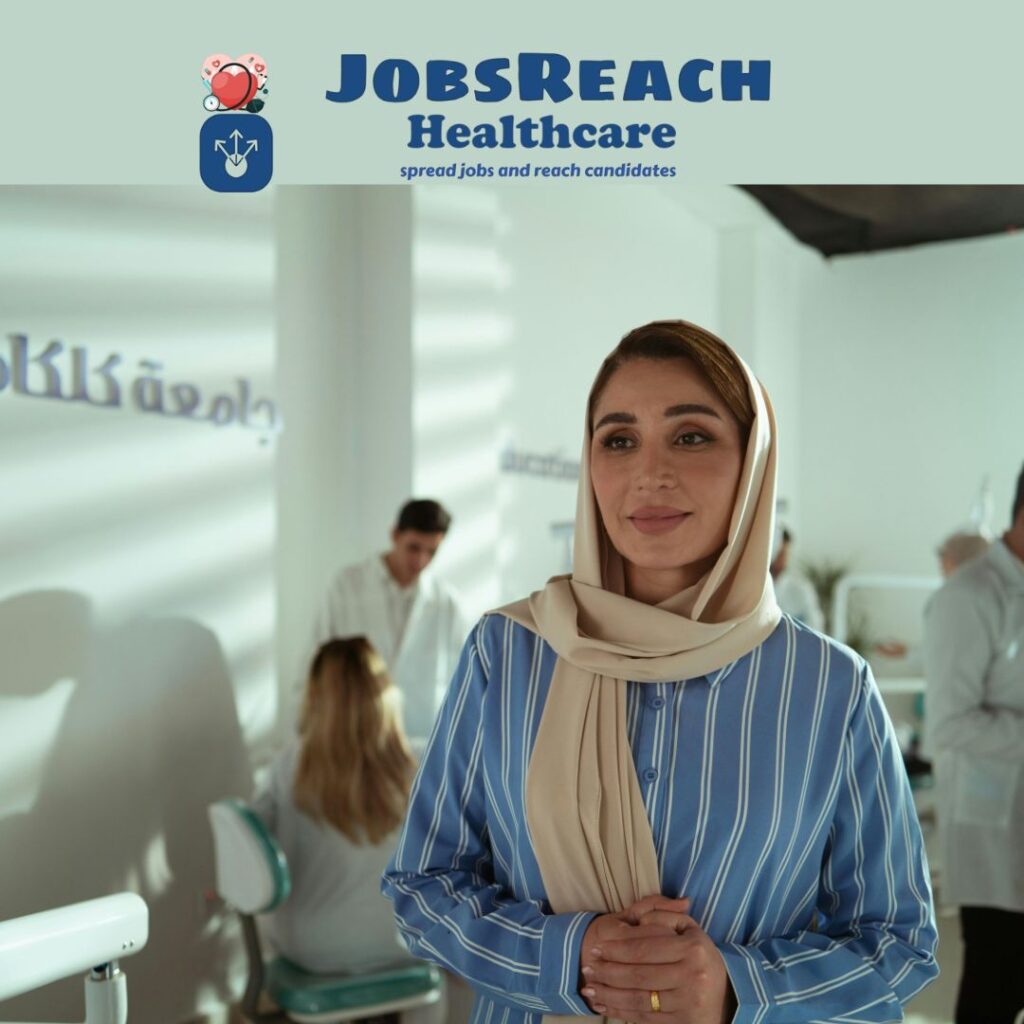
1. Why the Middle East Is Tapping Into European Healthcare Talent
The Middle East, particularly the Gulf Cooperation Council (GCC) countries, is experiencing a booming demand for healthcare workers. Saudi Arabia alone needs an additional 175,000 medical professionals by 2030 including 69,000 doctors, 64,000 nurses, and 42,000 allied health professionals (agbi.com). This is driven by growing populations, rising expectations for high-quality care, medical infrastructure expansion, and increased demand for specialized services (cottm.com).
Many GCC hospitals rely heavily on expatriate staff, with some facilities having more than half of their workforce from outside the region (cottm.com).
This article explains the rising demand for European (especially UK) healthcare professionals in the Middle East and how JobsReach Healthcare is uniquely positioned to facilitate this cross‑regional mobility.
While many European healthcare professionals are exploring opportunities in the Middle East, there is also strong demand within Europe. Read our guide on 10 High-Demand Healthcare Jobs in the Netherlands & Europe to explore current opportunities and shortage roles.
2. Why European / UK Healthcare Professionals Are Moving to the Middle East
There is a growing trend of European healthcare workers, especially from the UK, relocating to Gulf countries. Reports indicate that around 70 nurses or midwives leave the UK weekly for countries like the UAE, Qatar, and Saudi Arabia (thenationalnews.com).
European professionals are drawn by competitive tax-free salaries, generous relocation packages, modern facilities, and professional development opportunities (thenationalnews.com). Recruitment drives in cities like London, Paris, and Berlin are actively sourcing nurses, doctors, and allied health professionals for Gulf hospitals (middleeasthealth.com).
In addition, European Parliament records show that since 2022, hundreds of European doctors and physiotherapists have already moved to Gulf countries. European Parliament
These trends are not just anecdotal, global staffing firms such as Medacs are actively running recruitment events in European cities (including London, Germany, France, and Sweden) to fill hundreds of roles in GCC hospitals.
3. Which Middle East Countries Are Most Attractive
- United Arab Emirates (UAE): Top destination due to world-class hospitals, tax-free income, and high-quality living infrastructure (thenationalnews.com).
- Saudi Arabia: Vision 2030 drives massive healthcare expansion and recruitment of European professionals (agbi.com, zawya.com).
- Qatar: Offers high pay, advanced medical facilities, and research opportunities (europarl.europa.eu).
- Oman: Attracts professionals with stable contracts, work-life balance, and a peaceful environment (elantisstaffing.wordpress.com).
- Bahrain and Kuwait: Increasingly recruiting European staff in government and private hospitals, with visa sponsorship and benefits (thenationalnews.com).

4. Challenges and Ethical Considerations
- Brain drain from Europe: Countries already facing staff shortages risk losing highly skilled professionals (europarl.europa.eu).
- Expatriate dependency: Gulf systems may become over-reliant on foreign talent (cottm.com).
- Integration and retention: Licensing, cultural adaptation, and long-term retention are ongoing challenges.
5. How JobsReach Healthcare Facilitates Global Talent Mobility
JobsReach Healthcare provides a digital platform connecting European healthcare professionals with employers across the Middle East and beyond.
- Global Talent Network: Enables professionals to explore opportunities and connect with hospitals in Saudi Arabia, UAE, Qatar, Oman, Bahrain, and Kuwait.
- Direct Hiring and Vacancy Posting: Employers can post open positions, browse verified candidate profiles, and initiate recruitment for qualified professionals.
- Ethical Recruitment: Supports transparent, fair hiring processes, ensuring proper contracts, relocation assistance, and career pathways.
- Integration Support: Offers credential verification and onboarding resources to help professionals adapt quickly to new healthcare systems.
By bridging European talent with Middle Eastern demand, JobsReach Healthcare ensures that both employers and professionals benefit from global mobility while maintaining fairness and sustainability.
6. Strategic Benefits for Both Sides
- For Middle Eastern Employers: Access to high-quality, experienced European and UK healthcare staff helps fill specialized roles and scale operations quickly.
- For European Professionals: Attractive career options, competitive pay, and international exposure without the long-term uncertainty of shifting permanently.
- For Healthcare Systems Globally: A balanced, ethical model of talent mobility that supports workforce sustainability without over-exploiting any one region.
The demand for a good cause
The demand for European and UK-trained healthcare professionals in the Middle East is surging and for good reason. The region’s health systems are expanding rapidly, and they need talent with experience, specialization, and flexibility. Meanwhile, many European professionals are looking for fresh opportunities that offer better compensation and lower stress.
JobsReach Healthcare is uniquely placed to serve as a bridge in this dynamic ecosystem. By connecting global talent with regional demand in a responsible, structured way, it empowers both employers and professionals to benefit without compromising on fairness, integration, or sustainability.
To expand your global options, also check out our guide on the top 10 easiest countries for healthcare workers to work abroad in 2026 Top 10 countries for healthcare workers
References
- Saudi Arabia needs an extra 175,000 healthcare workers by 2030 – AG Bi
- Shortage of healthcare professionals in GCC set to soar – COTTM
- Record number of UK nurses move to the Middle East – The National
- European Parliament report on doctor migration to Gulf
- Leading global staffing group recruiting healthcare workers for Saudi Arabia – Zawya
- Doctors Job Vacancy in the Middle East – Elantis Staffing
- Middle East Health News – Recruitment Trends
- Al Arabiya English
- Agbi
Leave a Reply