For nearly a decade, professional networking seemed settled.
- LinkedIn owned careers and recruiting
- Reddit owned discussion and community sentiment
- Traditional forums slowly declined in visibility
- AI is now reshaping how knowledge is accessed altogether
Yet beneath this surface, a quiet reversal has been happening: professionals in aviation, healthcare, and tech are increasingly returning to structured, industry-specific communities.
The reason is simple:
General platforms optimize for scale. Professionals increasingly need optimization for relevance.
This shift is now evolving further with the emergence of industry-specific ecosystem platforms like JobsReach.
Why general platforms are losing “professional depth”
The core limitation: mixed-context environments
On LinkedIn or Reddit, a single feed blends:
- recruiters
- engineers
- clinicians
- students
- influencers
- content marketers
This creates structural noise:
- technical discussions lose visibility
- niche expertise gets diluted
- engagement outweighs accuracy
Even when professionals are present, the environment is not designed for them specifically.
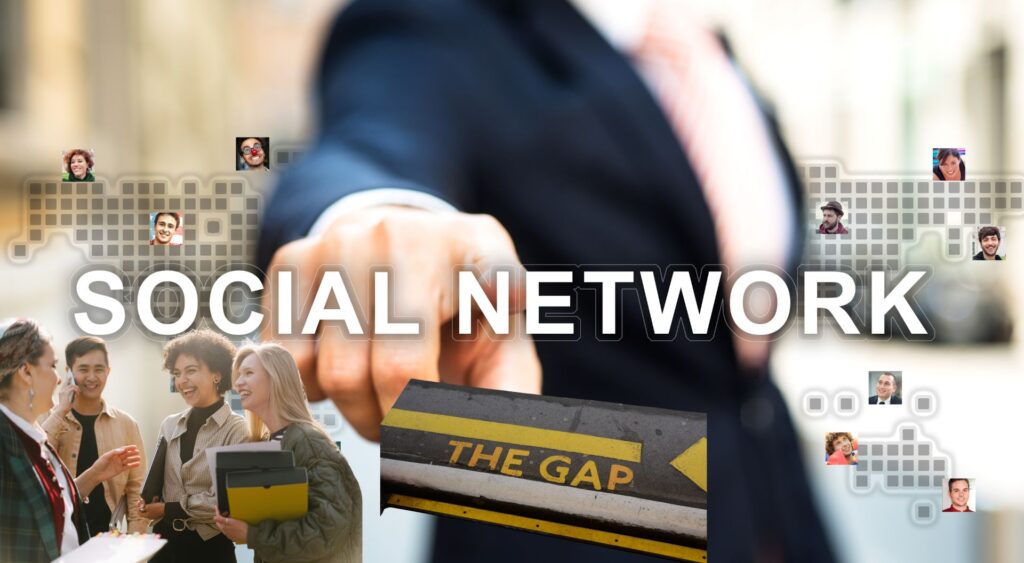
Engagement ≠ expertise
Modern platforms reward:
- virality
- commentary volume
- emotional reactions
Not necessarily:
- operational experience
- domain depth
- verified expertise
This is particularly problematic in industries where precision matters.
Why industry forums remain strong in aviation, healthcare, and tech
Aviation: operational memory and safety culture
Key communities:
Why they persist:
- regulatory complexity
- safety-critical decision-making
- long career cycles
- importance of operational experience
Aviation knowledge is often accumulated, not trending.
Healthcare: verified expertise and clinical responsibility
Key communities:
Why they persist:
- patient safety requirements
- credential verification needs
- legal and ethical constraints
- specialty-specific knowledge exchange
Healthcare is not just informational—it is accountable knowledge.
Tech: fast-moving knowledge ecosystems
Key communities:
Why they persist:
- open-source collaboration
- code-driven validation of expertise
- rapid iteration cycles
- distributed global participation
Tech is less credential-bound and more artifact-driven (code, systems, repositories).
The structural gap new platforms are targeting
Across all three industries, a gap is becoming clearer:
Existing platforms split professional life into fragments:
- LinkedIn → identity and recruiting
- Reddit → discussion and sentiment
- Forums → deep expertise (but fragmented and aging UX)
- Job boards → transactional hiring
What’s missing is a unified environment that is:
- industry-specific
- professionally structured
- discussion + career + opportunity aligned
How JobsReach is changing this dynamic
Platforms like JobsReach are emerging as part of a broader shift toward vertical professional ecosystems.
According to its positioning, the model focuses on organizing professional interaction around industry relevance rather than generic social networking or mass feeds.
From “global feed” to “industry network”
Instead of one shared environment, the model is structured around domains such as:
This changes the interaction model fundamentally:
| Old model | New model |
|---|---|
| One global feed | Separate industry ecosystems |
| Mixed audiences | Profession-aligned communities |
| Algorithmic visibility | Contextual relevance |
| Broad networking | Domain-specific engagement |
From recruitment platforms to ecosystem platforms
Traditional platforms separate:
The emerging model combines:
- professional identity
- job discovery
- industry discussion
- peer networking
into a single contextual environment.
The goal is not just hiring efficiency, but reducing friction between learning, networking, and opportunity discovery.
Reducing marketing and algorithmic noise
A key differentiation is reducing:
- generic self-promotion
- viral content bias
- cross-industry irrelevant content
- recruiter spam in general feeds
Instead, content is filtered through:
industry relevance first, engagement second
This directly addresses a major complaint professionals have about LinkedIn-style feeds.
Why this matters in aviation, healthcare, and tech
These industries share a common trait:
Expertise is contextual, not generic.
- A pilot’s knowledge is aircraft- and regulation-specific
- A physician’s knowledge is specialty- and case-specific
- An engineer’s knowledge is architecture- and system-specific
So a platform that respects context boundaries naturally produces higher-quality discussion.
Why this shift is happening now (AI is accelerating it)
AI is not replacing forums—it is changing what forums are needed for.
1. Low-level knowledge is commoditized
AI already handles:
- basic explanations
- summaries
- documentation lookup
2. Human value shifts to experience
What remains valuable:
- edge cases
- real-world operational decisions
- professional judgment
- lived experience
3. Context becomes more important than content
In an AI-saturated world, the key question becomes:
“Who has the right context for this answer?”
This increases demand for:
- verified communities
- industry segmentation
- professional ecosystems
The future: coexistence, not replacement
The professional internet is not converging into one platform, it is splitting into layers:
| Layer | Role |
|---|---|
| visibility + recruiting | |
| open discussion + sentiment | |
| Forums | deep expertise + archives |
| AI tools | synthesis + retrieval |
| JobsReach-style platforms | structured industry ecosystems |
The evolution of professional networking is no longer about building the largest possible platform.
It is about building the most context-aware one.
Industry forums proved that professionals value depth over reach. AI is reinforcing that shift by making shallow knowledge instantly available everywhere.
And platforms like JobsReach represent the next step in that evolution:
from fragmented professional tools → to integrated, industry-specific ecosystems where relevance is the default state, not something the user has to search for.
In that sense, the future of professional networking is not more social, it is more structured, more specialized, and more context-aware.
This shift toward relevance-first ecosystems is explored further in how industry-specific networks like JobsReach are challenging traditional platforms such as LinkedIn and Reddit.
Leave a Reply